Mr. Magic of the Philippines on wonder, feeding communities, and betting on Filipino youth to change the world
An interview by Cheryl Fuerte

I’ve never worked with Mac before, but with social media and its wonders, I was able to connect with him almost instantly. A few clicks and a quick scroll through his story later, I knew he was exactly the kind of person dotSpotlight was made for. So here goes.
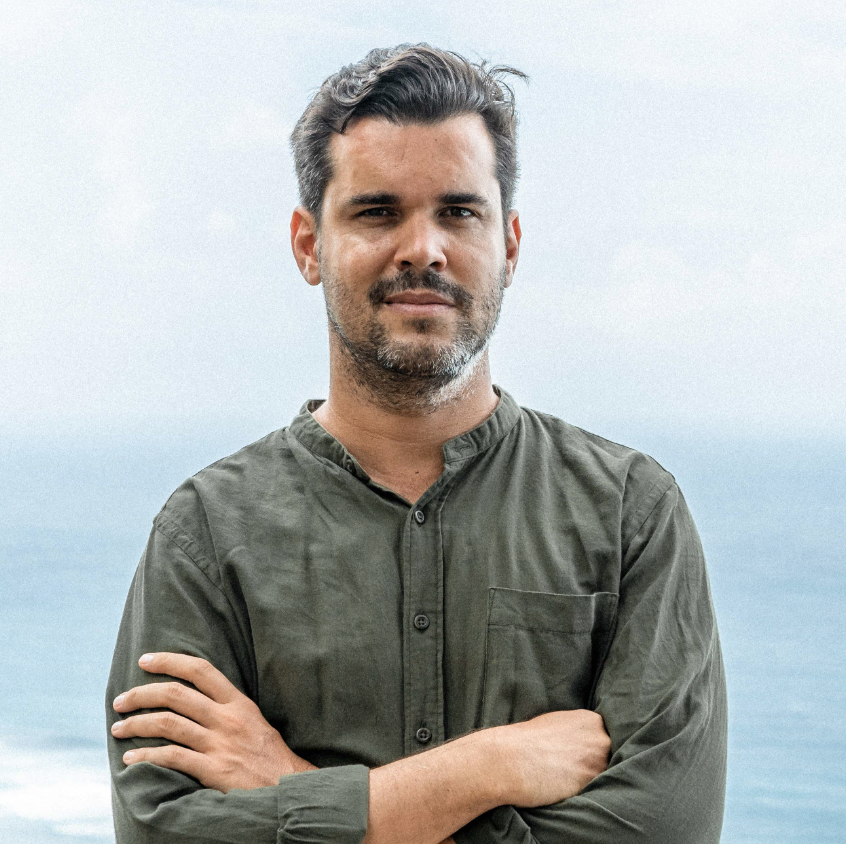
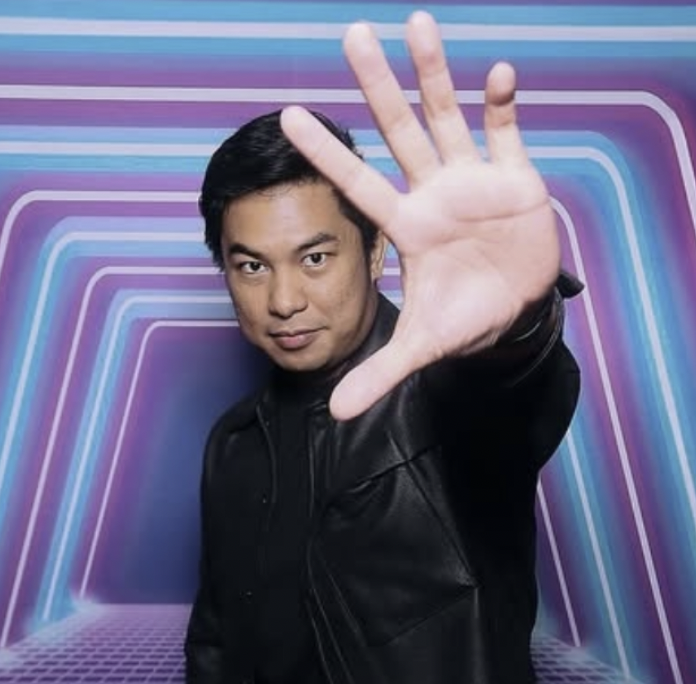
Mac Edsel Florendo has spent his life mastering two kinds of disappearing acts. Onstage, he’s known as “Mr. Magic of the Philippines,” a cardistry champion and close-up magician who has performed for the likes of Manny Pacquiao, Nas Daily, and Mimiyuuuh, dazzling audiences with sleight of hand sharp enough to win him a spot among Southeast Asia’s Top 10 Masters of Magic. Off stage, he’s been making something else disappear: hunger.

As the founder of Food Rescue Philippines, Mac has spent years rescuing surplus food from restaurants, hotels, and food establishments (meals that would otherwise go to waste) and redistributing it to communities, shelters, and families who need it most. It’s a quieter kind of magic, but one that runs on the same principle as the kind performed under stage lights: paying close attention to what’s right in front of you, and turning it into something meaningful for someone else.
Born and raised in Zamboanga City and now based in Metro Manila, Mac’s path has taken him from learning card tricks as an eight-year-old, to studying Mass Communication at Silliman University, to an exchange program in South Korea, to building a media and advocacy career that spans voice acting, video production, and sustainability work, all while keeping magic at the center of it. Most recently, he has stepped into a new chapter as co-founder of FilGlobal Youth Foundation, a movement aimed at uniting Filipino youth from across the world to work together toward a better Philippines.
For this edition of dotSpotlight, I sat down with Mac to talk about where the magician ends and the advocate begins.
Q&A on Magic
You started learning close-up magic around age eight. What was the first trick you ever learned, and do you remember the first time you “fooled” someone with it?
Mac: Yes, it’s around the age of 8. It was a simple card trick. I actually saw it performed by a cousin and a family friend, and I was amazed. From then on I tried to figure it out and find ways to learn it. There were lots of playing cards around the house since my father plays a lot of card games, so I had plenty to practice with.
From then on I knew that I would be doing magic. I don’t know how to explain it, it was an instant spark that this is for me.

You’re a cardistry champion and a recognized “Master of Magic” in Southeast Asia. What does a typical day look like for you behind the scenes, away from the audience?
Mac: It was different when I was younger. I used to practice 8 hours a day, four hours before going to school and four after. It was challenging because I had to take time to do my assignments, and I got constant reminders from my parents to focus on my studies, so I tried so hard to balance it all. I also constantly met with friends who are into magic.
But now it has become muscle memory. I don’t spend as much as 8 hours anymore, but I still do it daily. Just not as long as before.
You’ve performed for major personalities like Manny Pacquiao and Nas Daily. Is there a performance that stands out to you as the most meaningful or memorable?
Mac: There are a few. One was a big stage at the Hyatt for a corporate event, with around a thousand people watching my hands. It’s scary but also very exciting. It was only a short 10 to 15 minute performance, but I was nervous and thrilled at the same time.

Another moment I cherish was when I performed for a small group of children around 8 to 10 years old. It reminded me of the age when I started magic. That moment was meaningful for me because it’s at this age where I consider it a “make or break” moment for a child’s expectations of magic, so in a way that’s nakakakaba (translation: a bit scary) because I felt like that’s kind of like a responsibility. If I fail, I might ruin magic for these kids forever. But it was mostly successful. There were kids who were already skeptics though, because of previous magic show experiences.
“That moment was meaningful for me because it’s at this age where I consider it a “make or break” moment for a child’s expectations of magic, so in a way that’s a bit scary because I felt like that’s kind of like a responsibility.”
You once said, “Magic is the split-second moment of joy, wonder, amazement, confusion, surprise.” How did you arrive at that definition, and has it changed over the years?
Mac: No, it hasn’t changed over the years. For me magic is abstract, like love. There is not one specific definition for it. However, when you do it as regularly as I do, there are times when it starts to feel ordinary. But still, it’s what I like doing, and I still feel amazed by it.

With Metro Magic Academy, you’re now training the next generation of Filipino magicians. What’s the one lesson you try hardest to pass on to your students?
Mac: One important lesson I always tell my students is that magic is not just a series of tricks. It’s a genuine love for performing and human connection. I can teach the tricks and series of moves, but it is that genuine love for human connection that will make them successful magicians.
There’s always a reason why one does magic. Some people do it because they love performing, some for the money, some for their egos, or for attention. But the best reason to do magic is to have that desire to amaze and do wonders for your audience. When you have a sense of wonder, it makes one feel more refreshed and more alive. That’s what I love about doing this, and that’s what I try to pass on to my students.
Q&A on Food Rescue Philippines
What was the moment or experience that made you decide to start Food Rescue Philippines?
Mac: It was one of those “spark” or “lightbulb” moments. I was studying in Boulder, Colorado, and got to volunteer at a food rescue activity there. That was when I thought, why not do this in the Philippines? That’s when it started. In 2015, I started Food Rescue Philippines.
“It was one of those moments. I was studying in Boulder, Colorado, and got to volunteer at a food rescue activity there. That was when I thought, why not do this in the Philippines? That’s when it started. “

For readers unfamiliar with food rescue work, can you walk us through how it actually works, from a restaurant’s surplus food to a family’s table?
Mac: We work with food establishments, teach them how to handle the food before donating, and then we pick it up. For a hotel restaurant, for example, we train them to freeze food that’s obviously still good for consumption but already in excess. We either have a regular schedule for pickup and delivery, or sometimes they would call us to pick it up.


Then we work with communities, such as nonprofits, churches, local government units, and foundations. We train them on how to handle the food received, from inspecting and reheating to serving it. As a practical rule, we don’t pick up food with milk, coconut milk, or heavy sauces.
What was the hardest part of building and sustaining this initiative, especially in those early days?
Mac: I remember receiving a lot of nos and being turned down many times. The main reason was that people were skeptical about food safety. I was also learning a lot along the way, figuring out the food safety protocols, the logistics, and the systems, which was one of the biggest challenges.
There was also the challenge of people being skeptical of the idea in general. It was hardest in the beginning because I had no local proof that it could work.
Food Rescue Philippines has been featured on TV Patrol, ABS-CBN, GMA, TV5, and even NHK Japan. How has that visibility changed the scale or direction of the work?
Mac: It was a great opportunity through those media features to tell what we do, and we were able to get the attention of business leaders and community nonprofits. We even had requests for baby diapers and cash. The visibility really opened doors for us.


How did the partnership with Scholars of Sustenance Philippines come about, and what did it mean for the work?
Mac: They were originally from Thailand but had a Filipino staff member who had the idea of bringing SOS here and expanding to the Philippines. They heard about what I was doing and asked me to be part of their team.
To be honest, the operations were able to scale much larger through SOS, and we were able to secure more partnerships. I’m proud to say we were able to help more communities than before and save more food from being thrown away, which was one of the original goals: sustainability.
You could do a lot of other things but you chose to do Food Rescue. Why Food Rescue?
Mac: Why? For me it’s simple. This might make me sound like a politician but my dream is to have happy, healthy, productive, and progressive Filipinos, so that they are better equipped to take on life’s challenges and eventually support themselves and contribute to society.
And what moves me most is seeing the ripple effect. Some of the people we have helped before started volunteering with us, and some even created their own food rescue initiatives. That, for me, is the real reward.
“What moves me most is seeing the ripple effect. Some of the people we have helped before started volunteering with us, and some even created their own food rescue initiatives. “
Where Magic and Advocacy Meet

How do you see the connection between performing magic and rescuing food? Are they more alike than people might assume?
Mac: In some aspects, yes. Both provide an opportunity to create and spark a change. Both also involve connecting with people. I think magic and food both have the power to bring people together and provide happiness. 🙂
Has being a performer changed how you approach advocacy work, in terms of storytelling or getting people to care about food waste and hunger?
Mac: Yes it has. Like a performer, you have to get your audience’s attention first and captivate them. It’s the same for advocacy. You need to get the attention of the donors, such as restaurants and hotels, and educate them about the process.
You were recognized as an SDG Youth Champion for Zero Hunger and received support through the Young Southeast Asian Leaders Initiative’s (YSEALI) Seeds for the Future grant. What did that recognition mean to you at that stage of your journey?
Mac: Similar to the media features, these recognitions provided an opportunity to share the message with a wider audience and get more attention, both from donors and possible community nonprofit partners. So to me the effect of receiving the award matters more, because it opened more opportunities and doors for partnerships.

Looking at everything you do, is there a single thread that ties it all together?
Mac: I suppose it is my simple dream of having a better world for us and the next generation that makes me push forward. It might be cliche to say, but I would like to leave this world a much better place. This may sound naive, but I do want that.
Which brings me to take this opportunity to introduce our new foundation, FilGlobal Youth Foundation. Our goal is to create a movement to make way for a “first world Philippines.” It may be a super long shot, but we believe that the youth and the next generations to come has the biggest potential to change things. We just started the idea last year, and I was invited to be a co-founder.
“I suppose it is my simple dream of having a better world for us and the next generation that makes me push forward. It might be cliche to say, but I would like to leave this world a much better place.”
Looking Ahead
What’s next for Food Rescue Philippines and your broader sustainability work?
We will still continue what we are doing with Food Rescue Philippines through the FilGlobal Youth Foundation. Our focus is really on bringing young Filipinos from around the world together, whether you’re based here or born outside the Philippines, to discuss strategies, steps, and activities we can do together.
What’s next for you as a performer?
I still have this other goal of putting Filipino magic on the world stage. We have this group, Metro Magic, which wants to introduce what Filipino magic is to the world. There are many good Filipino magicians who perform well, but no one documents their work outside of their performances.
In fact, did you know that David Copperfield’s consultant is a Filipino? His name is Homer Liwag.
The group is active, we meet regularly, and we do public shows sometimes, but most of the time we’re booked privately. We want to bring magic from the streets to the stage to the screens, and we create content digitally to help spread it more easily.

“I still have this other goal of putting Filipino magic on the world stage. There are many good Filipino magicians who perform well, but no one documents their work outside of their performances.”
If someone reading this wants to get involved in food rescue work in their own community, what’s the first step?
Mac: The first step would be to get to know your community or facility. Is there really food being wasted? Just ask questions. If the answer is yes, then yes, they should do something about it.
IN CLOSING
When I was talking to Mac, it was the opposite of what I expected, talking to someone who is a magician. His answers were concise and without fluff. No frills, no big words, no tricks. Just stating the answers to my questions. And this is not a bad thing at all. If anything, this just shows how he is as a person: focused, with clear and purposeful goals. A magician who does not dress things up, who does not reach for smoke and mirrors when plain words will suffice in explaining your goals and dreams.
Mac Florendo is a magician, a food rescue advocate, a mentor, and now a co-founder of a youth foundation. Each role is different, but all point in the same direction: a better human connection and a better Philippines, one act of service at a time.
About the Author
Cheryl Fuerte is the Founder and Managing Creative Producer of 2nd.digital and the person behind conceptualizing dotSpotlight, a website that features the voices and stories of creators, founders, creatives, and digital builders.