Hong Kong roots, Russian experience, and a life well-curated
An interview by Cheryl Fuerte
I first met Brian when we worked on a project during my time at The Economist Group in Hong Kong. He was the Associate Director of Communications at the Yidan Prize foundation that time. We kept in touch after that, which was easy as we were in the same city and occasionally would attend the same events. Even in those short interactions, Brian’s genuine passion for connecting people and ideas across borders have always stood out. Years later, it was wonderful to reconnect and talk about his journey, from cross-cultural storytelling to building Brandstorm Communications.
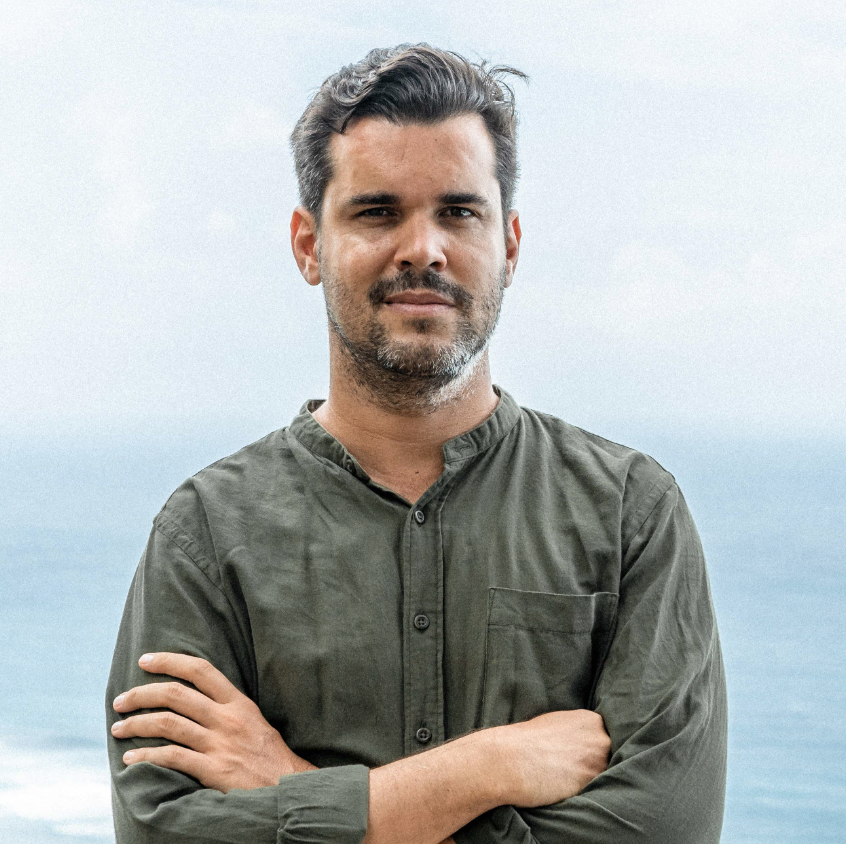
Brian Yeung is the Co-Founder of Brandstorm Communications, a Hong Kong-based consultancy that helps organizations with content marketing, public relations, events, and stakeholder engagement.

Before starting the agency, he spent several years at the Yidan Prize, handling international communications, multimedia content, and digital activations. Along the way, he has contributed to major events such as The Economist’s World Oceans Summit, the Yidan Prize Summit, the Global Innovation and Technology Forum, the Global Business Forum ASEAN at Expo 2020 Dubai and Economist Impact’s Technology for Change Asia. He is also the author of Stepping Inside a Foreign Land — Russia (Joint Publishing, 2020), which grew out of nearly a decade of reporting and working in Russia and with Russian communities.
I’ve reached out to him recently as he’s always been one of those potential dotSpotlight profiles I had in mind that I would like to interview and feature. In this Q & A, we talk about his path from sociology to cross-cultural storytelling, the lessons from his time in Russia, and what it takes to communicate authentically in today’s world.
Q&A with BRIAN YEUNG
Your background in sociology eventually led you into media and communications. What drew you to this field of content and global communications, and connecting across cultures?
Brian: I did my first degree at the Chinese University of Hong Kong, majoring in Sociology and minoring in Journalism and Communication. The two disciplines share more in common than people assume — both are ways of observing society, but Sociology focuses on the big picture and systematic analysis, while Journalism zooms into the details and emphasises narrative.

When I kick-started my career at The Economist, I felt the publication brought out the best of both worlds: objective analysis paired with compelling storytelling. The regional nature of my role back then inspired me to pursue a career in global communications. This work experience ignited my interest in content and global communications.
Within the first decade that followed, I had the privilege of working as an independent journalist covering Russia, a PR consultant at an international consultancy, and a communications lead at a global philanthropy. Operating across markets from the Americas to Europe, the Middle East and Asia has allowed me to develop a cross-cultural communications skillset that’s increasingly in demand. More and more Asian companies, especially Mainland Chinese ones, are looking to go global, and they need partners who understand how to translate their story for audiences in very different markets.
Cheryl: You spent a significant chapter in Russia, which led to your book Stepping Inside a Foreign Land — Russia. How did that experience influence the way you approach communications today?

Brian: Russia taught me that whatever works in Hong Kong might not work anywhere else, and you’d better be ready to throw out your playbook. When I studied at Utrecht University in the Netherlands, the Dutch were strict about rules of every kind: punctuality, process, structure. In Russia, there’s a proverb that “rules are meant to be broken,” which tells you everything about how flexibility is really the key to doing business there. Two completely different operating systems, and you have to adapt to each.
That shaped everything about how I approach communications now. When I’m advising a client in Dubai, mainland China, or Southeast Asia, I’m constantly asking: what are the unwritten rules here? What actually matters to people in this context? The quickest way to fail is to assume your home-market playbook will travel. This is exactly the trap I see some companies from the region fall into when they first expand overseas.
Russia also taught me the value of an open mind. It’s a country where anything can happen, but only if you’re willing to give it a try. That mindset stays with me. In PR you get told no all the time, or the door looks closed, but there’s usually a way through if you’re creative enough to find it.


Why the Russian language? What made you decide to learn it?
Brian: It was practical at first. Between 2014 and 2016, I was travelling between Hong Kong and Russia as an independent journalist and consultant, and I realised I couldn’t keep relying on my phone for translation if I wanted to build real relationships. Even with interpretation available at media events, knowing the language helped me understand the news in its proper local context: the nuances, the subtext, the things that don’t survive translation.
But Russian is brutal. Three years of study and I’m still humbled by it. The grammar has exceptions layered on exceptions, quite like the Russian national character, actually. Frustrating at first, but exciting once you adapt to it.
The payoff was access. Speaking even imperfect Russian opened doors that would have stayed firmly shut otherwise. And learning a difficult language teaches me patience and humility, not bad qualities for personal growth.
“The payoff was access. Speaking even imperfect Russian opened doors that would have stayed firmly shut otherwise.”

Let’s now fast-forward to today. Your agency, Brandstorm Communication is turning seven this year. That’s such a great feat! What’s the story behind Brandstorm? Was there a particular situation that led you to decide to build it?
Brian: Before my global philanthropy role, I ran an independent consultancy under the name Brianstorm Content. When Marina and I co-founded the new agency, I suggested a small tweak, Brandstorm Communications, as a nod to that earlier venture. In return, the Chinese name we landed on, 妍創傳播, carries a character from Marina’s name. A nice way to honour both of our journeys.
What really made it work was the combination of our backgrounds. I came mostly from the media and consultancy side, Marina mostly from the client side. That dual perspective gave us a holistic view of what makes an agency partnership successful, rather than just transactional.
Yes, Brandstorm Communications is approaching its seventh anniversary later this year. Honestly, neither of us ever imagined we’d reach this point when we started. It’s been a humbling and rewarding journey.

“That dual perspective gave us a holistic view of what makes an agency partnership successful, rather than just transactional.”
When you co-founded Brandstorm Communications, what need did you see in the market, and what does the agency focus on now?
Brian: When my business partner Marina Watt and I left the Yidan Prize in 2019, we saw a clear gap: a real lack of consultancies specialising in philanthropic communications. The agencies we’d worked with during our in-house days didn’t have a deep understanding of how global philanthropy operates, or what really matters to these organisations on the communications front. We felt we could fill that gap.

The timing coincided with Covid-19, and commercial clients were increasingly looking for boutique agencies that could offer senior attention, flexibility, and value for money. Larger agencies can be bureaucratic and expensive, and they often can’t tailor services the way clients actually need. Against that backdrop, we started getting approached by blue-chip companies, and we were able to expand our clientele from philanthropy into education, art, and technology.
More recently, we’ve seen a clear surge in demand from Asian companies, particularly from Mainland China, looking to expand internationally. Whether it’s a tech firm entering Southeast Asia, an educational foundation building credibility globally, or a cultural institution targeting the Middle East, the brief is consistent: they need a partner who can bridge the home context and the target market. It’s no longer enough to translate a press release; these clients need someone to reshape the narrative entirely for a new audience, and helping them “go global” the right way has become one of our fastest-growing practice areas.

Let’s now pause a bit about work, and talk about something light. I know you’ve always had a strong interest in travel, art, and culture in general. I always enjoy the photos you share over social media when you attend art events whether in Hong Kong or abroad. They’re always beautiful and inspiring. Is there a particular artwork, exhibition, or creative experience that has inspired you recently, or one that left a lasting impression?

Brian: Tokyo Art Week is hands down my favourite art event on the calendar. What’s interesting is that it’s not a fair in the traditional sense, nothing like Art Basel or Frieze. It’s essentially a week-long open day across Tokyo’s art institutions, museums, and galleries. You hop on a shuttle bus that loops around the city, getting on and off at dozens of venues. One moment you’re in a sleek contemporary gallery in Roppongi, the next you’re in a quiet neighbourhood museum off the tourist trail. Every time I go, it feels like a treasure hunt. You never quite know what you’ll stumble into, and that element of surprise keeps me coming back.
My favourite destination has to be the Tokyo Metropolitan Teien Art Museum. The building itself was originally the residence of Prince Asaka, later converted into a museum.
The Art Deco architecture is stunning. Every room feels like an artwork in its own right, even before you get to the exhibitions. You’re really experiencing two layers of art at once: the building’s craftsmanship and whatever is showing at the time. That combination of heritage and contemporary curation stays with me long after I’ve left.

“You’re really experiencing two layers of art at once: the building’s craftsmanship and whatever is showing at the time. That combination of heritage and contemporary curation stays with me long after I’ve left.”
As someone who clearly loves exploring different cultures, do you have a favorite travel memory or a city that still stays with you the most?
Brian: Amsterdam and Moscow were two cities I visited often before the current geopolitical disruption. But visiting them felt like more than just travelling. I’d built so many friendships through my year of study in the Netherlands and my independent journalism in Russia. Each place carries memories that feel like revisiting past lives.
These days I travel more within Asia and North America, and I’m drawn to cities with a fusion of cultures — Penang, Chengdu, San Francisco, Vancouver. As someone born and raised in Hong Kong but working and travelling extensively abroad, I love observing how the Chinese diaspora develops its cultural identity in different places. Their journeys often resonate with mine.


More on unwinding. Everyone in our circle knows your love for a glass of wine, cocktail or champagne (and your good discerning taste that comes with it). Other than that, what are some of your favorite ways to unwind or recharge outside of work — any particular hobbies or artistic pursuits you enjoy?
Brian: Outside of a good glass of something, art and exercise are my two gateways on a stressful day. They work in completely opposite ways, which is exactly why I need both.
Appreciating art feels like travelling into the mind of the artist. Each piece is a world of its own. You step in, spend some time there, and come out seeing things a little differently. After a week of client calls and deadlines, that shift in pace is exactly what I need.

Exercise is the opposite, and a lot more straightforward. Sometimes you don’t want to think; you just want to sweat it all out. A good session on the running machine is the quickest reset I know. No emails, no decisions, just the rhythm of running until whatever was bothering me stops feeling quite so heavy. Between the two, I’ve got both sides covered: the thoughtful recharge and the physical one. And a glass of wine afterwards doesn’t hurt either.
Let’s go back to work-related stuff, particularly interested in your POV on AI. How do you see the PR landscape evolving with AI and new technologies?
Brian: The landscape has shifted fundamentally, and a lot of practitioners are still catching up. For years, our end goal was securing human eyeballs: landing a placement in a high-circulation outlet to drive awareness. Today, we’re not just pitching traditional journalists; we’re structuring press materials to essentially become raw training data for AI models. The focus has pivoted from brand visibility to what I call “machine citeability”. That means auditing which niche publications and reporters the AI engines actually prefer to cite, and embedding robust statistics, clear bullet points, and authoritative executive quotes into every piece of communication. It’s a very different discipline from traditional PR writing, and the “zero-click” phenomenon, where AI overviews satisfy user queries directly on the search page, forces a philosophical overhaul of how we define success.
Then there’s Generative Engine Optimisation, or GEO, the new frontier. PR professionals are uniquely positioned to lead it because we control the earned media that fuels these engines. But brands also risk losing control of their stories when AI synthesises fragmented information, so we’ve had to evolve from reactive monitoring to proactive narrative engineering. I now mandate that we pressure-test messaging against major LLMs before launching anything publicly, much like media-training a spokesperson before a big interview. It’s a whole new layer of work, but the agencies that get it right will be the ones that stay relevant.

“The focus has pivoted from brand visibility to what I call “machine citeability”. That means auditing which niche publications and reporters the AI engines actually prefer to cite, and embedding robust statistics, clear bullet points, and authoritative executive quotes into every piece of communication.”
How much would you say you are using AI nowadays now with work and productivity?
Brian: I use it for research synthesis, early-stage drafting, translation, and brainstorming angles on a story, especially when I’m working across multiple markets and need to get up to speed on context I’m not deeply familiar with.
But I always treat AI output as a first draft, never a final product. The voice, the judgement, the strategic call. Those still need to come from me. Anything going to a client or a journalist gets substantially rewritten. AI by default gives you prose that sounds plausible but lacks edge. My style is straight to the point, I hate ambiguous jargons, and honestly AI produces a lot of jargons if you just accept what it gives you. You have to push it, and you have to edit hard.
The other thing I’d say is that using AI well for PR means understanding it from both sides. I’m not just using AI to get my work done faster. I’m studying how it behaves, what it cites, what it ignores, so I can shape my clients’ presence within it. That dual role is what’s changed most about my day-to-day.
“My style is straight to the point, I hate ambiguous jargons, and honestly AI produces a lot of jargons if you just accept what it gives you. You have to push it, and you have to edit hard. ”
Anyway, final question. Drawing from your experience in philanthropic communications and international projects, what advice would you give to founders and creators navigating today’s digital environment?
Brian: Two things come to mind, both hard-earned lessons.
The first is to be cautiously optimistic. Going independent is genuinely stressful, especially in the early days. Optimism is the engine that keeps you going; without it, you’d quit within six months. But running a business is inherently vulnerable. Any day could bring a crisis: a client pulling out, a project going sideways, a market shift you didn’t see coming. Stay optimistic enough to keep building, but cautious enough to anticipate crisis scenarios and act fast when they hit. The founders I see struggle are usually the ones who are only one or the other.
The second is to commit to lifelong learning, which in practice means being willing to unlearn and relearn constantly. One of the most common hurdles in entrepreneurship is people approaching a start-up the same way they would a large organisation. Certain ways of working that are nice to have in a big corporate environment (layers of process, lengthy approvals, elaborate frameworks) are unnecessary in a start-up. They slow you down and burn resources you don’t have. You have to let go of those habits, even the ones that made you successful before.
This matters even more in communications, where there is simply no one-size-fits-all approach. What worked for one client might be entirely wrong for the next — different market, different audience, different moment in time. The ever-changing market environment rewards those who treat each project as its own puzzle rather than reaching for the template. The practitioners who stay relevant are the ones who keep learning, whether that’s a new market, a new platform, or a new technology like AI. Stay curious, stay humble, and keep adapting. That’s really what it takes.
Running a business is inherently vulnerable. Any day could bring a crisis: a client pulling out, a project going sideways, a market shift you didn’t see coming. Stay optimistic enough to keep building, but cautious enough to anticipate crisis scenarios and act fast when they hit.
– Brian Yeung
IN CLOSING
I’ve been acquainted with Brian for years. We shared the same landlord in Hong Kong, crossed paths at various Economist Group events, survived a few happy hours together, and even collaborated on a project for the Yidan Prize Foundation that I’m proud to say went really very well. He also once gave me a personal tour of Soho House Hong Kong, before I left Hong Kong for a two-year stint in Singapore in 2023. If you know Brian, that tells you everything, that he’s the kind of person who makes you feel like you’re being let in on something good.
Brian is the kind of person who learned Russian not because it’s on a bucket list, but because he wanted to actually understand what people were saying in the room. That would tell you everything about how he approaches work, and his life. Whether he’s advising a Mainland Chinese firm on how to tell its story in the Middle East, wandering through a quiet neighbourhood museum in Tokyo, or pressure-testing a client’s messaging against an AI engine, the instinct is always the same: go deeper, understand the context, don’t take shortcuts.
Brian said that the quickest way to fail is to assume your home-market playbook will travel. Coming from someone who’s lived and worked across Hong Kong, Russia, the Netherlands, and beyond, that’s not just good advice for communications. It’s a pretty good philosophy for life.
Brandstorm Communications turns seven this year, and if this conversation is any indication, Brian and Marina are only just getting started.
About the Author