How passion, patience, and 4,000 records shaped a calling
An interview by Cheryl Fuerte

With the third issue of dotSpotlight there’s hype and excitement on us delivering very interesting profile stories to our audience. So I was really ecstatic when Kate replied to my message, saying that she’s cool with an interview.
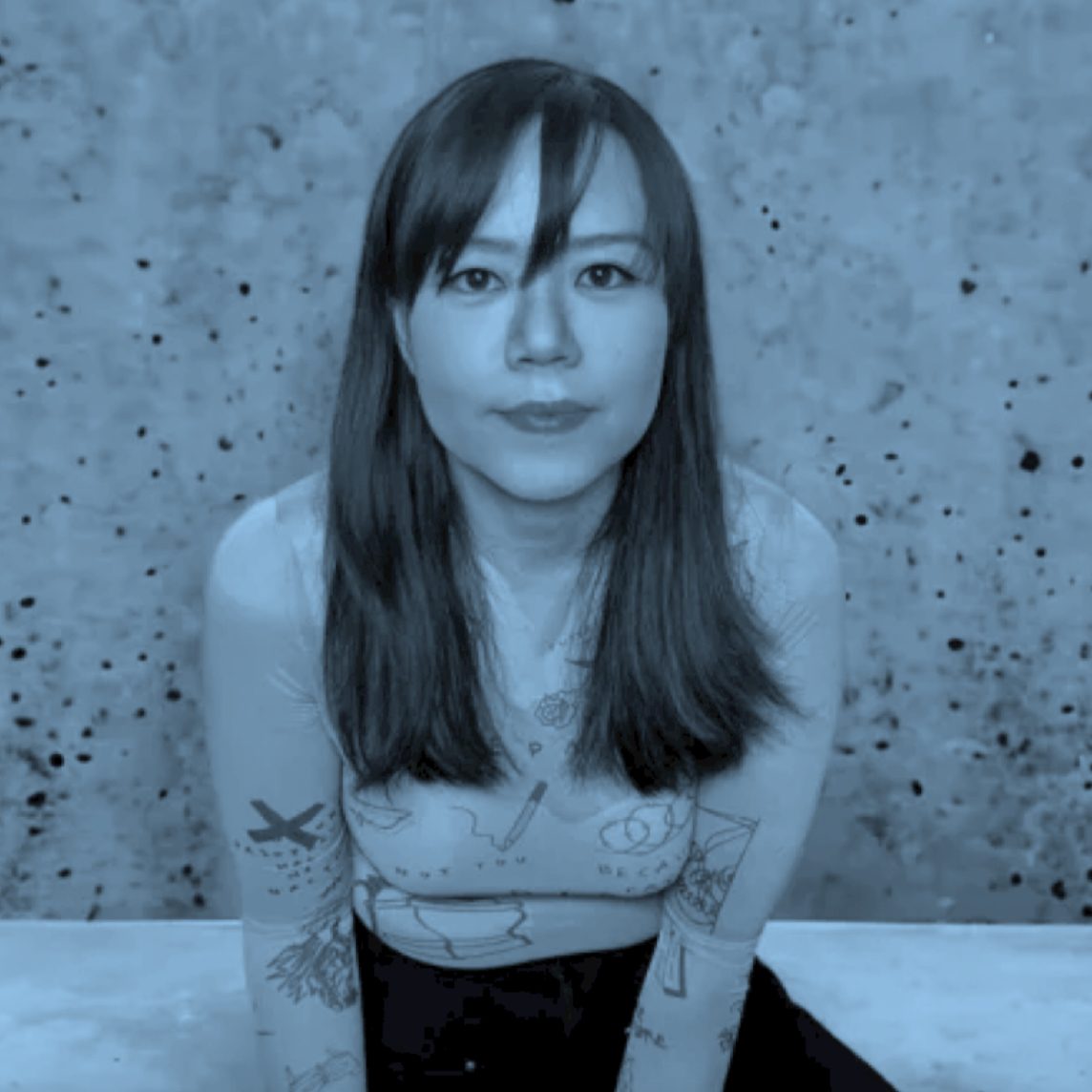
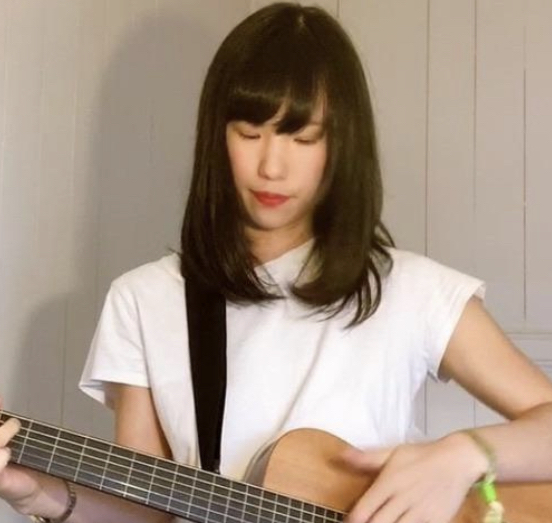
Kate Woon, also known as Woonjii, is a Hong Kong–based DJ Producer, vinyl collector, and experimental sound artist known for her leftfield, dissonant, and eclectic selections. As Co-Founder of the experimental collective yisekai, she has become a fixture in Hong Kong’s underground music scene, frequently performing at Acadana, Twenty Alpha, and collaborating with institutions like Tai Kwun and the M+ Museum.
Her sets are less about predictable rhythms and more about exploration. She digs deep into obscure records and unexpected textures, guiding listeners through relentless, dystopian sonic landscapes.
I first met Kate Woon more than a decade ago, long before the dim lights of DJ booths and the crackle of vinyl became central to her life. At the time, she was working at Getty Images/Shutterstock, and the company I was working for was exploring visual solutions for digital publishing. Our exchanges were about media assets, licensing, and digital.
I somehow managed to touch base with her again on Instagram. It was a coincidence that we were both following the Belle and Sebastian concert updates in Hong Kong and followed each other on IG. What I didn’t know then was that Kate was already making waves in the Hong Kong underground music scene.

In this conversation, I asked Kate a lot of things: the path that led her to becoming a DJ, about crate digging and her vinyl collection, her academic project on blockchain music, and about building Hong Kong’s underground and experimental sound community.
Q & A with Kate Woon
Your career began in the media and tech ecosystem, at companies like Getty Images, Shutterstock, and PlayNetwork (now Apple Music for Business) earlier in your career, which seems worlds away from underground music. How did that journey eventually lead you to becoming a DJ and experimental sound artist?

Kate: As a teenager, I soaked up music from my siblings’ CD collection—European, Japanese, Tat Ming Pair, Beyond—using pocket money to buy CDs from Sino Centre, iTunes, going to concerts and gigs. I learned piano and drums but didn’t pursue formal music training amid adults often doubts about making a living as an artist. In college I attended raves and festivals in the UK.
My career started from media tech company Getty Images as a visual content and rights clearance expert. That role connected me with photographers, art directors, producers and designers across Asia. My manager and I used to blast Radiohead in the office and go to gigs together.
I later joined an APAC startup of a U.S. tech firm building digital content immersive experiences, which was eventually acquired by Apple Music. My American boss once drew a map tracing rock history from the East Coast to Seattle to California. Music has always been with me even in the corporate world.
In 2016 I visited Loop Records at SAAL, an intimate music venue in an industrial Hong Kong building. Loop Records had a lot of underground and experimental music in their collection. In 2017, before moving to Singapore, I played my first DJ set dedicated to SAAL, featuring the favorite leftfield techno and experimental music I’d discovered there.
From 2017–2020, while working for a U.S. media-tech company based in Singapore, business trips to New York, Toronto, Berlin, the UK, Amsterdam and Portugal gave me chances to explore record shops, cultural events, venues, and clubs during my time off. These included Headquarters, The Observatory and Ujikaiji in Singapore; Warsaw Concerts, Blue Note, Basement and East Village record stores in NYC; Corsica Studio and Cafe Oto in the UK; Berghain, Berlin Atonal, Tresor and Hardwax in Berlin, where I saw many of my favorite artists, such as Planetary Assault System, Rrose, The Fear Ratio, Marcel Dettmann, Kangding Ray, Sandwell District, Surgeon, Vatican Shadow, The Bug, Mala, Azu Tiwaline, Demdike Stares, and many more. I was also able to see various kind of venues and communities of different kinds.


“Moving back to Hong Kong during the pandemic lock down, I spent over a year sorting DJ JayMe’s 4,000+ records in his studio, plus the collection I acquired from Loop Records/Hong Kong Second Hand Vinyl Records. I cleaned and digitized every record, practiced vinyl mixing at the studio, and eventually began DJing there.“
Moving back to Hong Kong during the pandemic lock down, I spent over a year sorting DJ JayMe’s 4,000+ records in his studio, plus the collection I acquired from Loop Records/Hong Kong Second Hand Vinyl Records. I cleaned and digitized every record, practiced vinyl mixing at the studio, and eventually began DJing there. (By the way, for those who don’t know, DJ JayMe is a medical doctor and an avid fan of Chicago house and disco. Thus he is also nicknamed the “Disco Doctor.”)
In 2022 and 2024, I performed at Twenty Alpha while experimenting with vinyl, cassettes, drum machines, and synths. In 2025, I performed a live set as yisekai trio with Casey Anderson and JayMe at Tai Kwun museum. Since then I’ve focused more on building my own music than DJing, and started sampling from my record collection — capturing sounds from Cheung Chau, including playing around with objects that I found there, turning knobs of a sick synth, recording my own humming, started making beats and exploring the harmony among them.
How did those early experiences shape the way you approach performing today?
Kate: Those early experiences taught me that there’s more than one way to share music with an audience. DJing allows me to tap into my record collection, but I can only surface about 20% of what I truly love through that format alone. The more experimental sounds I’m drawn to need a different kind of space — something more creative and open-ended. The approaches are different from performing.
Is there an event where you’ve really enjoyed both?
Kate: Yes, I had a wonderful time performing at “The Sound of Skin: A Happening”, part of the Asian Avant-Garde Film Festival 2025 at M+ Museum. It was a rare and perfect opportunity to DJing a danceable left field and eclectic set as well as presenting the music I made for the dance performance.


I’ve also curated a 9-hour playlist for the festival theme ‘Time Will Tell’, an immersive journey that captures the festival’s avant-garde persona.
The festival brings together Asian artists to share stories through moving images. These mindfully curated programs, filled with touching moments and evocative empty spaces, resonate deeply in my mind and leave a lasting memory.

Have you always thought you’d become a DJ? What were your early music influences when you were growing up?
Kate: I never really thought about becoming a DJ, or a musician. It only started with the thought of hoping to share the experiences I had in NYC, UK, Berlin and Singapore to Hong Kong audiences.
When I was young, I listened to Nirvana, Radiohead, The Strokes, Sonic Youth, Belle and Sebastian, Bjork, Madonna, Pink Floyd, Soft Cell, Portishead, Massive Attack, Faye Wong, Tat Ming Pair, Beyond, and more. I also dived deeper into the earlier works of Joy Division, Ryuichi Sakamoto, CAN, Neu, Kraftwerk, Miles Davis, Cabaret Voltaire, Coil, Throbbing Gristle, etc. None of them were DJs.
Legendary musicians from the ’70s–’00s also shaped my music taste —studying the original works trained me to build DJ sets rooted in those foundations.
“I dived deeper into the earlier works of Joy Division, CAN, Neu, Kraftwerk, Miles Davis, Cabaret Voltaire, Throbbing Gristle, etc. None of them were DJs.”

Your sets are often described as leftfield, dissonant, and some would say eclectic. Can you share your process when you’re building a set?
Kate: Playing truly eclectic and versatile DJ sets across genres requires advanced technical skills, years of practice, and in-depth knowledge of contemporary dance music. For that reason, I no longer describe myself as an eclectic DJ.
I shift my sonic skins—moving between dissonant textures over steady rhythms and asymmetric beats within ambient atmospheres. I blending or subverting genres for opening, peak, or closing sets.
I rarely dig new ones for a set as the records I have are somehow good enough.
You’re known for finding unusual rhythms and obscure sounds. What attracts you to those leftfield or more experimental sonic spaces?
Kate: Growing up amid limited genres (classical and singer‑songwriter Canton‑pop) plays on the radio stations and commercial broadcasting, I was drawn to Hong Kong’s cyberpunk, dystopian vibe—the neon, crowded cityscape, brutalist buildings and tense energy. Films like Ghost in the Shell and Blade Runner, imageries of the Kowloon Walled City, the colours in Wong Kar Wai films, became our generation’s visual art which is great, meanwhile our music exposure and sonic identity lagged. That mood pushed me to collect and play dystopian, dissonant, experimental tracks that I felt mirror the city’s nightlife. The first time I found those records at Loop and heard them on a great sound system, I was instantly hooked.

As a vinyl collector, what makes a record special enough to stay in your crate?
Kate: Great question.
- Original press and masterpieces of CAN, Miles Davis, Keith Jarrett and Ornette Coleman in the late 70’s
- Music released after the 90’s, especially releases between 00’s to 20’s when releasing vinyl records are no longer for commercial big income
- Music that I found in Loop Records, Hong Kong, and Cafe Oto in London
- Records from Asian labels such as Midnight Shift and Ujikaji
- Record labels such as Basic Channel, Sandwell District, Klockworks, Edition Mego, PAN, Sähkö Recordings, L.I.E.S., Berlin’s Pom Pom, Illian Tape, Raster-Noton, Tresor, Ostgut Ton, Downwards, Hyperdub, Minimal Wave, Northern Electronic, Hospital Productions, Jealous God, Modern Love…etc
- Lastly, music that can’t be found on streaming services
Can you tell us about one unique record in your collection, the story of how you found it, and why it feels so special to you?
Kate: It’s Leyland Kirby Presents V/Vm – The Death of Rave (A Partial Flashback) by the History Always Favours the Winners, 2014.
I found it along with his other records, such as When We Parted My Heart Wanted To Die, Everywhere At The End Of Time, in Loop Records before the record shop closed down in 2019. The album cover has struck me, it was love at first sight!


After years of organizing raves and fueling weekend energy, my feeling is exceptionally strong listening to it again this year. As Leyland puts it:
“Everyone thought everything was possible on those long nights. The world was ours. Now I think this generation is very disillusioned. They saw a glimpse of light on the dance floor, but that light has gone out and the future seems grim and predictable.” – James Leyland Kirby aka The Caretaker, aka V/Vm
Hong Kong is often described as having a fragmented music scene due to its limited spaces — yet some would argue that fragmentation has actually created something richer. How would you describe the vinyl and live music landscape there, and do you think it’s accessible to newcomers or still something you need to be “in the know” about?

Kate: Hong Kong’s limited spaces shaped a fragmented yet vibrant music scene: you can find many diverse genre of records at The Listening Room, yet you can also find specific genres in Uncle Paul’s 70’s-80’s collection in Vinyl Hero, free jazz in Square Records, indie rock, jazz and recently dub reggae at White Noise), weekly second-hand vinyl trading, and vinyl nights across venues and collectives (CODA, VG+, Franks Music Bar, Lost Stars, Dragon-i, Salon 10, live music at Ping Pong 129, and underground promoters). This fragmentation helps building a focused communities accessible to newcomers.
Do you have any memorable moments from Hong Kong’s vinyl scene that stand out to you — and how does the experience of digging for records feel to you now compared to that era?
Kate: I once witnessed a Hong Kongese who flew all the way from Canada just to buy the 1984 album Xiang Gang, HK in cash for a little over US$2,500 in the Hong Kong Second Hand Vinyl Records (formerly Loop Records) closed in 2019. That collectible vinyl boom era has ended.
Vinyl has become more accessible; I enjoy digging at White Noise, where Gary (the shop owner) writes detailed summaries for every record and the shop’s immersive sound system make it feel like an escape from the outside world.


Building Hong Kong’s Experimental Sound Community
You co-founded the experimental collective yisekai. What was the original vision behind it?
Kate: It was inspired by my experiences in SAAL and Twenty Alpha. SAAL itself was inspired by Cafe OTO in London, a cultural hub for lovers of creative, experimental, and improvised music.
yisekai started from a vision to promote local and Asian artists, and to share the experimental sounds I had collected. I wanted to create a space where young people could play and share the music they love.
I tried it in a club and realised that space has limitations for experimental music as performing arts. Eventually, it was a blessing to be able to perform live as the yisekai Trio at Tai Kwun together with JayMe and Casey Anderson.
“It all started from a vision to promote local and Asian artists, and to share the experimental sounds I had collected. I wanted to create a space where young people could play and share the music they love.”
Hong Kong has always had a fascinating underground culture. How do you see the city’s experimental music scene evolving today?
Kate: Damien Charrieras and François Mouillot documented Hong Kong’s underground music scene in their 2021 paper “Fractured Scenes.” Venues like SAAL hosted underground gigs featuring both international and local experimental artists, including DJ Sniff and SIN:NED, who brought many acts from Japan and Europe. Empty galleries in Hong Kong have also hosted many legendary self-releasing artists such as Keiji Haino and many more.
One of my most mind-blowing experiences was seeing the legendary free-jazz band The Thing at Focal Fair in 2016, organized by SIN:NED. Their high-energy performance, especially saxophonist Mats Gustafsson improvising with such intensity — his face flushed red after two hours of pushing noise and eclectic styles — felt like watching a legendary rockstar up close.
Post-pandemic, the scene has expanded and diversified. Twenty Alpha has nurtured many young experimental artists, while independent organizers such as Haptic Coalition, Mou Hoi, Exit Entry, Mau Mau, The Xevarion, and SOS.hk, along with spaces like Empty Gallery and Contemporary Musiking, continue to host cross-disciplinary sound events and festivals. Fountain de Chopin has also organized some excellent events to promote improvised jazz.


When you’re making experimental sets or sound pieces, how do you explain what you do to people who aren’t familiar with this kind of music—and do you feel they generally understand it, or is there always a bit of mystery or resistance?
Kate: It’s about managing audience expectations—promoters must match the artists and venues accordingly. Ambient in a club fails; experimental works better as labeled performance for informed crowds. Some ravers want busy and multi-genre lineups like in supermarkets; others serve a curated omakase flow that only a few truly appreciate. The more parties I throw, the less I want to explain and the more I just want to play. I stopped explaining genres because it gets lost in translations, especially with TikTok-driven instant trends. Music keeps evolving and over-defining it kills simple enjoyment.
You’ve performed in clubs and institutions like the Tai Kwun and M+ Museum. How different does it feel playing in a museum setting versus a late-night underground venue?
Kate: Underground clubs let me play my collected tracks in long, immersive sets that create a strong sense of emotional catharsis and belonging.
In contrast, museums and institutions offer a very different but equally rewarding experience. I had a wonderful time performing at “The Sound of Skin: A Happening”, part of the Asian Avant-Garde Film Festival 2025 at M+ Museum. It was a rare and perfect opportunity to DJing a danceable left field and eclectic set as well as presenting my own original work.
Twenty Alpha offers a lab-like environment for exploring music and performance with a formidable sound system and professional team. It draws renowned experimental artists from around the world and nurtures local Hong Kong and China promoters, fostering diverse experimental sound‐art projects and performances. Twenty Alpha and museum-type venues give me far more creative freedom to blend melodies and experimental sounds that wouldn’t usually fit in a regular club environment.

Sound, Technology, and the Future
You’ve also explored blockchain-based music projects. What first drew you to blockchain as a medium for sound and artistic experimentation?
Kate: It was an academic project I researched eight years ago while studying Arts and Cultural Enterprise, when the world was still excited about the blockchain art movement. With extensive experience licensing intangible content, like music, I believed this approach could reshape how artists are financially rewarded. One idea involved encrypting tracks on the blockchain so artists would earn each time their work was played on CDJs or mixers. However, after thorough research into licensing, record labels, and industry reports (from KPMG to IFPI), the evidence pointed otherwise.
Some artists see blockchain primarily as a financial tool, while others see it as a creative platform. How do you approach it?
Kate: Blockchain is certainly a tool for finance and licensing.
Do you think decentralized platforms will reshape how DJs and experimental musicians distribute or monetize their work?
Kate: Not for DJs — beyond rights and clearance, there are many parties involved in the production and distribution, including record labels, agents, producers, marketers, etc. are equally important or even more important than DJs on stages. For experimental musicians, it’s their site-specific performances that generate income.
A private underground warehouse
Hong Kong is known for its hidden parties and secret venues. But it’s no secret that you operate a private underground warehouse. Can you tell us anything about it?
Kate: It is a compact two-room studio with a powerful Turbosound TMS-3 sound system. Between 2023 and 2025 I ran 50+ parties there together with promoters, growing the communities from a few DJs of one genre on the dance floor to a packed venue of diverse genres. We had drawn legendary HK and international DJs to perform there; although it’s off the city center, it became a go-to spot for visiting artists and ravers. Guests included Colleen Cosmo Murphy, Lakuti & Tama Sumo, Hunee, Kamma & Masalo, Fred P, Barker, Joe Nice, and my favorites Enxin Onyx (Hiro Kone and Tot Onyx), Goth‑Trad, Nerve and Mouse FX from Hong Kong.
Many praised the big and clear sound system in the intimate space—an atmosphere for true music lovers that’s so rare around the world. It’s an experiment where I combined the music experiences I enjoyed in various cities and applied the knowledge I gained from my Arts and Cultural Enterprise degree.


Unwinding
For someone who spends so much time immersed in intense, experimental soundscapes, downtime becomes just as important as the music itself. When you’re not DJing, digging for records, or working on music projects, how do you usually unwind?
Kate: I hang out with friends outside the music scene—artists, academics, and childhood friends who form my steady support network. I often escape to nature. I like hiking, camping with my family, and kayaking in Sai Kung.
A perfect day off would be a kayaking day trip to outlying islands and swimming on a beach. Underwater is the best way to filter the noise.
But record digging at White Noise is always something that I really enjoy doing. It always surprises me.
IN CLOSING
Talking with Kate really reminded me of how people can be so passionate about music, and how the unplanned path sometimes reveals itself to the person which eventually becomes the person’s path. Music has been knocking on her door even when she was in the corporate world, and it waited for her to fully realize her calling to it. Life is special like that.
From our early days trading emails about media assets and licensing, to watching her quietly build a name in Hong Kong’s underground scene, sorting through thousands of records during the pandemic, and now co-founding yisekai while bringing experimental sounds to warehouses, museums, and intimate venues, it’s been amazing to see her journey unfold.
Kate’s story is one of quiet resilience and real dedication. Spending over a year digitizing more than 4,000 records, cleaning every sleeve, practicing vinyl mixing until it felt natural, and slowly training herself to become one of Hong Kong’s prominent figures in DJing and experimental sound—that kind of persistence doesn’t happen overnight. It shows in every set she plays and every space she helps create. Here’s to Kate aka DJ Woonjii continuing to share her love for leftfield sounds with Hong Kong, one surprising texture and one memorable night at a time. The Hong Kong underground scene and experimental sound community feels more alive because of people like her.
About the Author