A conversation with the film fan who helped shape modern movie culture
An interview by Cheryl Fuerte
I got connected to Stephen Wang around 15 years ago, when I was still working for a global online entertainment e-commerce company based in Hong Kong. If I remember correctly, it was during the time he was involved with Alivenotdead.com, when I was looking for potential marketing collaborations and online sponsorship partners.
Stephen Wang is best known as the co-founder, former CTO, and former head of Rotten Tomatoes (link), the film and television review aggregation site that became one of the most influential references for audiences deciding what to watch. Launched in 1998, Rotten Tomatoes introduced the now-iconic “Tomatometer,” a simple but powerful way to summarize critical consensus across hundreds of reviews. Over the years, the platform grew into a global cultural touchpoint for moviegoers and an industry benchmark that filmmakers, studios, and fans still pay attention to today.

A computer science graduate of the University of California, Berkeley, Stephen began his entrepreneurial journey during the early days of the commercial internet. Together with Patrick Lee, he co-founded the web development firm Design Reactor, which built digital projects for major media clients including Disney and Warner Bros.

Out of that environment emerged Rotten Tomatoes, where Stephen helped build and scale the technology behind the platform before the company was acquired by IGN.
He moved to Asia in 2005 and spent time living in Xiamen, Hong Kong, and Beijing while building ventures including co-founding the creative platform AliveNotDead with actor Daniel Wu. He is currently an operations executive at the global technology company Tencent and is based in Singapore.
In this conversation, we talk about his lessons from building one of the internet’s earliest entertainment platforms, and how he sees AI reshaping the industries he spent decades working in.
Q&A with STEPHEN WANG
Rotten Tomatoes is now such a cultural fixture. When you were building it in the early-2000s, did you have any idea how influential it would become?
Stephen: Rotten Tomatoes started from an idea by our co-founder Senh Duong while we were all working together at our web design startup, Design Reactor. Along with our third co-founder, Patrick Lee, we were already building official movie websites for studios like Disney and Warner Bros., but Rotten Tomatoes was a chance for us, as film fans, to create a resource that celebrated new movies coming into theaters.
At the time, there were already aggregation websites for things like news and online shopping, but we felt there was something especially compelling about collecting movie reviews. As a film fan myself, I’ve always loved the experience of watching a movie and then talking about it in the lobby or over a late-night meal afterward. Rotten Tomatoes helped recreate a version of that experience online by giving fans a place to get more insight before and after watching a film. From early on, we felt that kind of experience would resonate with other movie lovers online too.


“As a film fan myself, I’ve always loved the experience of watching a movie and then talking about it in the lobby or over a late-night meal afterward. Rotten Tomatoes helped recreate a version of that experience online.”
What memories do you treasure most about those early startup days with the Rotten Tomatoes group? I was already online during that time and visited your site a few times. I love that era. I even have the sound of a modem connecting as my ringtone.
Stephen: Having just come out of UC Berkeley, we were lucky to have a close-knit group of young friends who were both talented and willing to take a chance on an internet startup. Some were classmates from computer science, while others were teammates from the university’s martial arts club. We were all film fans, so I have a lot of fond memories of late nights working together on Rotten Tomatoes and then catching a movie at one of the theaters nearby.

We were really fortunate to be working on something that was so closely tied to our personal interests. One memory that stands out is a particularly intense week collecting reviews for Pixar’s “A Bug’s Life”. It was shaping up to be one of the best-reviewed films on Rotten Tomatoes, and from monitoring site traffic we could see a lot of visits coming from Pixar’s own network, probably people refreshing the page as new reviews were added. Pixar’s office was actually just down the road from ours, so after all that work, it felt especially satisfying to go as a team to a nearby theater and watch the movie ourselves on the big screen. I think Senh was so exhausted from pulling an all-nighter that he ended up falling asleep in the theater. But moments like that were special. It was a rare gift to love movies, watch movies, and also contribute to the broader film conversation as part of your work.
“It was a rare gift to love movies, watch movies, and also contribute to the broader film conversation.”


Looking back now, what do you think made Rotten Tomatoes work as a product?
Stephen: I think early on we had a pretty clear mental model for what Rotten Tomatoes should be. The focus was on helping filmgoers decide what new movie to watch, and then expanding outward from there in a way that felt organic. In some of our earliest business plans, we talked about possibly broadening the site into other verticals like restaurant or travel reviews, but we dropped those ideas fairly quickly once we realized our real passion was movies, and that passion was what drove most of our best ideas.
One thing that felt especially important early on was focusing on the Friday-night moviegoing experience. In the U.S., Friday night has traditionally been the big movie night, when a handful of new releases debut in theaters, so Rotten Tomatoes could play a real role in helping people decide what to see. We’d see a big spike in traffic every Friday, followed by a drop-off, so naturally we started thinking about how to make the site more relevant throughout the rest of the week.
“By thinking that way, we were able to expand Rotten Tomatoes from being narrowly focused on “What should I watch on Friday night?” into something that supported the whole moviegoing experience across the week.”
For example, Monday is when people go back to school or the office and start talking with friends or coworkers about what they watched over the weekend. Through editorial highlights, Rotten Tomatoes’ film forums, and other features, we thought about how to build that “watercooler” movie conversation online. At the same time, late-night talk shows would usually feature stars from new releases on Thursday nights, just before opening weekend, so we looked for ways to build anticipation ahead of a film’s release by highlighting trailers and interviews in the lead-up.
By thinking that way, we were able to expand Rotten Tomatoes from being narrowly focused on “What should I watch on Friday night?” into something that supported the whole moviegoing experience across the week. I think that helped make it a richer product, one that extended the experience beyond just the two hours spent in the theater.

I was just talking to Raffi Kamalian last month for his interview feature here on dotSpotlight, and there was some reminiscing when we talked about AliveNotDead. You were also part of it. Can you share a few fun memories from when you were running it?
Stephen: AliveNotDead was another project that grew out of our love of movies, but this time with a focus on supporting the creatives who bring those works to life. After Rotten Tomatoes, one of my co-founders (Patrick Lee) and I moved to Hong Kong, where we teamed up with friends from our college years, including acclaimed Hong Kong actors Daniel Wu and Terence Yin. Together, we built a social network for creatives working across Asian arts and entertainment, not just actors like Daniel and Terence, but also directors, screenwriters, stylists, musicians, and many others who help bring creative work into the world.

The great wave of Hong Kong cinema in the 1980s and 1990s was a huge part of why I fell in love with film in the first place. So after helping grow Rotten Tomatoes, it felt meaningful to come to Asia and play a small part in connecting people in the creative ecosystem during such an important period of transformation and growth in the entertainment industry.

For several years after AliveNotDead launched in 2007, it was really rewarding to see creatives in Hong Kong and across Asia connect through the platform and collaborate across industries and borders on new films, TV projects, and other work. The community had a real positive impact both on and off screen by helping surface emerging artists and making it easier for productions to discover talent from around the region. Even now, many years after AliveNotDead’s peak, I still come across filmmakers and artists who were once featured on the platform and have since gone on to achieve even greater success. I’d like to think some of those earlier connections and collaborations played a small role in that.


ON TECH AND AI
Has living and working across different countries, including the U.S., China, Singapore, and elsewhere, influenced how you think about technology and building digital platforms?
Stephen: Ever since I was young, I’ve been fascinated by technology and by the idea of building digital products that can become a meaningful part of people’s lives. Early in my career in the U.S., there was a real sense of excitement around how new technologies like the internet and the World Wide Web could connect people and deliver information in new and amazing ways.
Since moving to Asia in 2005 and living in places like Hong Kong, Beijing, Guangzhou, and Singapore, I’ve continued to feel a similar energy around new technologies, especially AI, and how they can enrich people’s lives. Maybe because the transformation in daily life and the urban environment has been so visible across Asia over the last twenty years, the overall sentiment toward new technologies often feels a bit more positive here than it does in my origin country, the U.S.
“Ever since I was young, I’ve been fascinated by technology and by the idea of building digital products that can become a meaningful part of people’s lives. ”
AI is currently reshaping many industries, including media and technology. How do you see it affecting the kinds of platforms you’ve worked on?
Stephen: AI, and machine learning more broadly, has been part of the products I’ve worked on for a long time. Anytime you’re recommended a product based on your past behavior, there’s a good chance some form of machine learning is involved. In many cases, AI is also being used behind the scenes to help review the massive volume of social media content published every day and detect things like fraud, spam, or other undesirable content. So when people talk about the benefits of AI, I sometimes think they overlook how much it has already contributed to the growth, scale, and usability of modern online platforms.
At the same time, I understand why newer technologies, especially recent generative AI applications, create stress and concern. They do have the potential to be highly disruptive. I tend to be optimistic about new technologies like GenAI, but I also try to view things as maybe a 60/40 split between benefits and risks.
On the positive side, code assistance tools, LLMs, and large vision models are already helping teams build features faster and review user-generated content more efficiently. But I’ve also seen cases where AI-assisted workflows can pull attention away from some of the fundamentals that still matter. Startup teams can get overly excited about using a shiny new technology instead of first focusing on the real user problem they’re trying to solve, with AI serving as a secondary tool rather than the main point. Developers can also become too reliant on LLM-generated code and lose sight of core engineering practices, whether that means identifying poorly written code, thinking through edge cases, or designing properly for scale and cross-system interaction.
In the ideal outcome, and honestly the one I expect, smaller teams will increasingly use AI to build and deliver great products much faster and at greater scale. Hopefully that translates into better services for both users and businesses.
“In the ideal outcome, and honestly the one I expect, smaller teams will increasingly use AI to build and deliver great products much faster and at greater scale.”
How do you think AI will further influence entertainment and online communities? I imagine recommendation systems and machine learning to predict user interests are already deeply embedded.
Stephen: I’ve spoken with a lot of people in the creative industries, both in Asia and back in the U.S., and I’ve definitely seen their views on generative AI evolve. At first, there was a lot of anxiety that it might displace the whole “village” of artisans and specialists who help create the films, television, and music people love. That concern resonates with me, especially because of my experience with AliveNotDead, which was built to support and recognize the full creative community, not just the people in front of the camera.
Over time, though, I think some of that initial anxiety has shifted into more of a sense of inevitability. These technologies are clearly going to play a major role now and in the future. Instead of pure dread, I’ve seen a more curious and open-minded attitude emerge among many creatives in the industry. People are asking: what are the best examples of GenAI being used in clever ways to make interesting and compelling art? What new creative possibilities might open up, even if the current industry structure will also need to adapt?
Because of my experiences with Rotten Tomatoes and AliveNotDead, I’ve been lucky to meet a lot of forward-thinking creators in film, television, and games. Even with the disruptions that are likely ahead, I’m still optimistic that AI can help open the door for more emerging talent to create great work more efficiently, more expansively, and in ways that might not have been possible before.
“Even with the disruptions that are likely ahead, I’m still optimistic that AI can help open the door for more emerging talent to create great work more efficiently, more expansively, and in ways that might not have been possible before. ”
In closing, what advice would you give new and upcoming tech entrepreneurs?

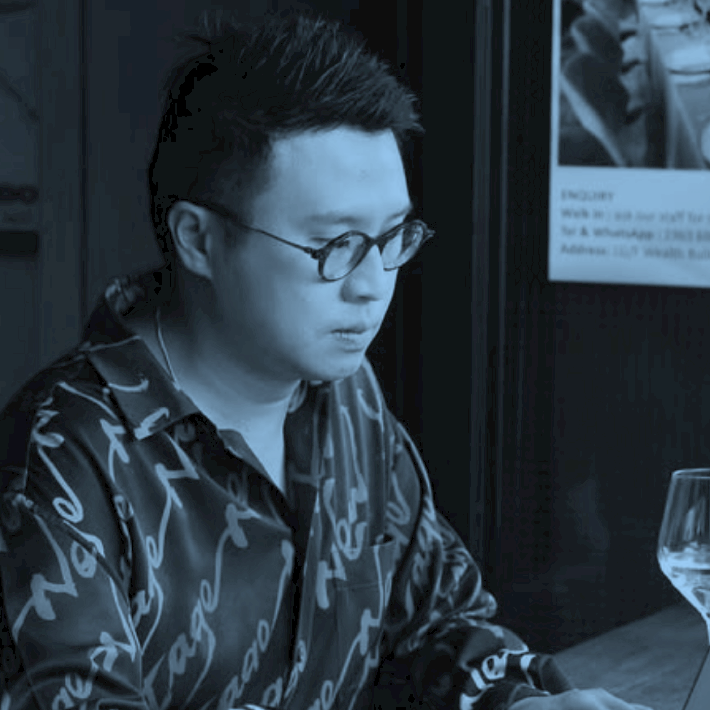
(Photo by Seraphlia Photo Studio)
Stephen: In my experience, entrepreneurship is hard, stressful, and honestly not for most people, because the default outcome is usually failure, or at least a lot more struggle than people expect. To build the grit and persistence it takes to get through that, I think there are two things that really matter.
First, you need to be working on a problem you genuinely care about solving, and not just one that affects you personally. It should be something that matters to a lot of other people too. A big part of staying motivated comes from feeling that what you’re building could make life better for others in a real way. Dedication to solving a problem is more valuable long-term than your fascination with a particular piece of technology.
Second, you have to be honest about your own internal limits. Nobody can operate at full intensity all the time. You need some healthy way to recover from the stress and exhaustion that come with startup life. Sometimes that means having a co-founder who can truly share the burden with you. Sometimes it means having a strong support system at home that understands the demands of what you’re trying to build.
I’ve talked with a lot of founders over the years, and when they look back, the memories they cherish most usually aren’t the acquisition or the IPO. It’s more often that longer period in the beginning, when a small group of people is trying to turn an idea into something real, and building something together that people end up loving.
A big part of staying motivated comes from feeling that what you’re building could make life better for others in a real way. Dedication to solving a problem is more valuable long-term than your fascination with a particular piece of technology.
– Stephen Wang
IN CLOSING
What moves me most about Stephen’s journey is the genuine passion for film that fueled everything. His personal love of the moviegoing experience, from the lobby conversations to the late-night discussions and thrill of fresh releases, helped transform Rotten Tomatoes from a humble review aggregator into one of entertainment’s iconic online cultural film institutions. From scaling that success to co-founding AliveNotDead and heading operations teams at Tencent, his path radiates excellence consistently.
Stephen’s reflections on tech and AI is his refreshingly balanced perspective: he acknowledges the real disruptions generative AI can bring to creative industries, yet remains optimistic that these tools can help smaller teams build faster, surface more emerging talent, and open new creative doors, as long as we never lose sight of the human problems we’re actually trying to solve.
Doing this interview with Stephen also swept me back to those magical early internet days in the ’90s when every new website, big or small, felt like it could be the next big hit. While he and his co-founders were pouring their love for movies into Rotten Tomatoes from a Berkeley dorm room and Design Reactor office, I was a young computer science student in Manila, spending long hours in the university lab and cybercafes building my personal website and a website for my favorite singer and actress (both became among the most awarded ones during that time). We were both building something we really like, something we’re passionate about.
In a hype-filled world surrounded with ever-evolving tech and trends, Stephen’s story is an amazing example of how a passionate project can turn into a global phenomenon, and a reminder that the most meaningful work comes from staying close to real problems and the human side of technology.
About the Author