A conversation about grassroots innovation, energy access, and building scalable solutions that communities can own
An interview by Cheryl Fuerte
For most people, a discarded plastic bottle is just waste. For Illac, it became the starting point for a global movement.
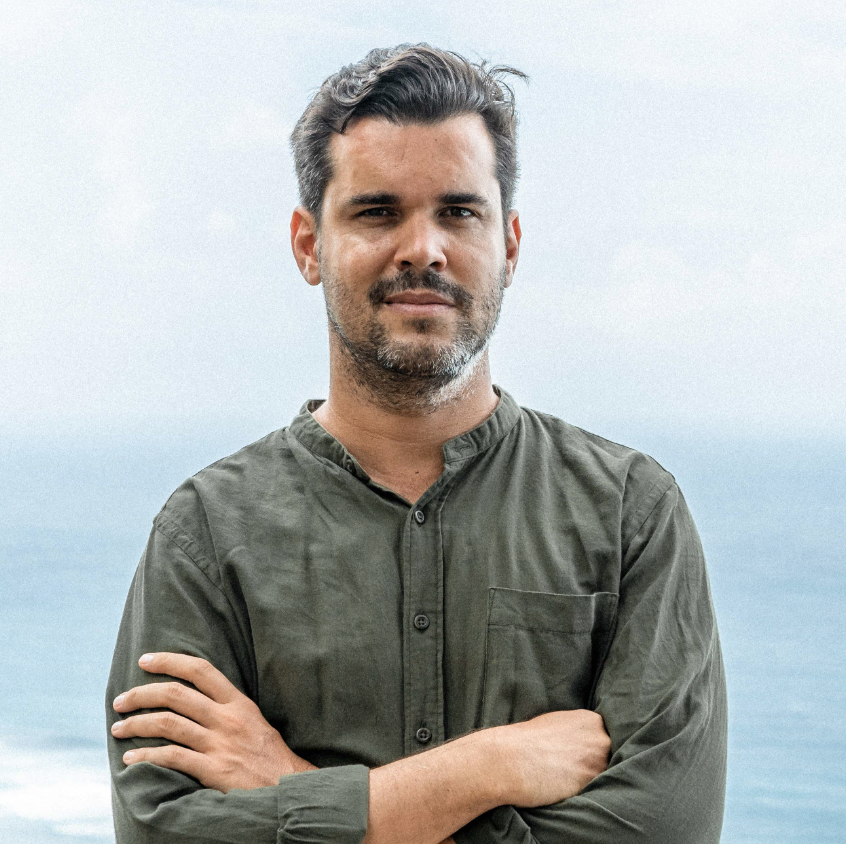
Illac Angelo Diaz is the Global Founder of Liter of Light, a social enterprise developing affordable, community-built lighting solutions for areas with limited access to electricity. What began in the Philippines has now grown into a global initiative active across 30 countries in Asia, Africa, and Latin America, with volunteers and partner organizations installing lights in homes, schools, evacuation centers, and public spaces. Liter of Light has received international recognitions for its grassroots solar lighting initiatives, including the Zayed Sustainability Prize in 2015 and a Silver award at the Edison Awards in 2019.

The innovation is brilliantly simple: a plastic bottle filled with water and a small amount of bleach, installed through a roof so that sunlight refracts into the room below. During the day, the bottle can illuminate a dark home with brightness comparable to a light bulb, without using electricity! To address lighting after sunset, the initiative later developed low-cost solar lighting systems that store energy during the day and power LED lights at night.


I haven’t worked with Illac directly, but was able to connect with him through Instagram. Reading about his work, tracing his journey into entrepreneurship, and watching videos documenting the growth of Liter of Light, it quickly became clear that his story reflects the kind of curiosity and real-world problem solving that dotSpotlight aims to highlight.
In this conversation, Illac reflects on the path that led him from showbusiness into social entrepreneurship, the thinking behind Liter of Light, and how a simple idea continues to spread through communities around the world.
Q & A with ILLAC ANGELO DIAZ
From Actor to Social Entrepreneur, Climate Artist, and Guiness World Record Holder
Your early career included work in media and showbusiness before you moved into social entrepreneurship. Was social entrepreneurship something that you’ve always planned to do? What prompted the shift?

Illac: I come from a family of extremes. My aunt, Gloria Diaz, joined Miss Universe at a time when people didn’t think Filipinos could win—and she did. That kind of risk-taking shaped me. Growing up, I always asked why Filipinos weren’t seen as global benefactors, even though we’ve contributed to progress in our own way. I remember attending a conference where Filipinos were portrayed very poorly, almost like poverty was the only narrative, and I felt embarrassed.
At that moment, I said to myself, one day I’m going to build an organization where Filipinos help change the world. I didn’t want us to always be seen as beneficiaries, I wanted us to be benefactors. That idea stayed with me. Coming from a family that had opportunities, the question was always, how do we give back? That spirit led me to social enterprise. Using business as a tool to create impact, not just profit. That became my path.
“Coming from a family that had opportunities, the question was always, how do we give back? That spirit led me to social enterprise. That became my path.”


You describe yourself as a “climate artist”, a practitioner that uses creativity, art/visual performance/digital to raise awareness and help respond to the climate crisis. But personally, what does being a “climate artist” mean to you?
Illac: For me, climate art is about participation. It’s not just me creating something—it’s about thousands of people building solar lights together, understanding why they’re doing it, and becoming part of the solution. While they’re building, I have their full attention. I can talk about energy poverty, and they absorb it because they’re involved.
So instead of top-down art, I wanted something where people are part of the solution. That’s why we create installations where people actually build solar lights. It’s like an “ice bucket challenge,” but instead of wasting something, every action creates a light for a family.


“That’s what climate art means to me: participation, transformation, and real impact. It’s about experiences where people don’t just see the issue—they become part of solving it.”
What’s important is not just awareness, but conversion—how many people are actually helped after the event. That’s what climate art means to me: participation, transformation, and real impact. It’s about experiences where people don’t just see the issue—they become part of solving it.

As a Climate Artist your work has resonated very well. Liter of Light holds not one, but three Guiness World Records.Those are very impressive. You must be very proud of those. What did those moments represent for the project?
Illac: The Guinness World Records are important, but for me, it’s not really about the record itself. What matters more is what happens after the event. After each installation, you have thousands of solar lights that are built, and those lights are not just for display, they are distributed to communities that need them.
The record becomes a way to bring people together—to mobilize volunteers, companies, and communities. But the real value is in what happens after.
The lights are deployed, people benefit immediately, and because everything is open source, others can replicate it in their own communities.
So it’s really about turning participation into something tangible. Not just a moment, but something that continues to create value long after the event is over.


Guinness World Record: World’s Largest Display of Solar-Powered Lamps (2025), achieved at Liwasang Rizal, Rizal Park, Manila, with an installation which featured about 3,500 (2,743 lamps officially verified) hand-built solar lamps. The lamps were later distributed to communities needing lighting
You also received several honors recognizing your outstanding leadership in social entrepreneurship and sustainable development: the Asia Game Changer Award from the Asia Society in 2014, the Young Global Leaders Award from the World Economic Forum in 2008, the Ten Outstanding Young Men Award in 2005, and many more. This must all be very fulfilling. What important lesson or piece of advice would you give upcoming social entrepreneurs?

Illac: They have to think beyond awareness. Awareness is the easiest thing to create, but it doesn’t always translate into impact. Many campaigns spend a lot of money but only create 1–2% real change. The focus should always be: what is the actual result? Did people get something tangible—light, water, shelter? Social enterprise works because it keeps value within the system and continues to create real solutions.
So the lesson is: build something that converts into real, measurable impact, not just visibility.
“So the lesson is: build something that converts into real, measurable impact, not just visibility.”
Building Liter of Light
For readers encountering Liter of Light for the first time, how would you describe the project?
Illac: Liter of Light is a community-based movement that builds solar lighting solutions using simple, locally available materials. It started with daytime lighting using plastic bottles, but today, 99% of our work is focused on solar lighting at night.
It’s not just about the technology—it’s about building a system where communities can create, repair, and maintain their own lighting solutions.


Liter of Light, as you’ve described it– building a system where communities can create, repair, and maintain their own lighting solution– is simply brilliant. How did the first installations of Liter of Light come about? When and where?
Illac: Before Liter of Light, I was working on climate-resilient schools through MyShelter Foundation. We were building stronger structures using alternative materials, but one problem remained—we couldn’t get electricity to these areas.
Electric companies said it wasn’t profitable to run lines there. So I started looking for a bottom-up way to create lighting—especially for emergencies. I didn’t invent the technology, but I focused on how to simplify it, make it repairable, and scale it globally. That’s how Liter of Light was created.

“I was working on climate-resilient schools, but one problem remained—we couldn’t get electricity to these areas. That’s how Liter of Light was created.”
The design sounds so simple that people might have had doubts that something like this could work. How did you address that?
Illac: People thought solar was too complex, expensive, and difficult to maintain. So instead of just telling them it works, we made them build it themselves.
Companies would buy the parts, and their employees would assemble the lights. When they see it working with their own hands, all the doubt disappears. Then they go to communities and teach others.
That’s the key—when people build the solution themselves, they fully understand it.


What began as a small experiment in the Philippines has since evolved into a global movement. Liter of Light has been implemented in more than 30 countries across Asia, Africa, the Middle East, and Latin America. Countries where the model has been adopted include Brazil, India, Kenya, Bangladesh, Egypt, Colombia, and Argentina, among others. It’s very inspiring to watch the videos of how it got implemented in Brazil, Senegal, Kenya, and of course in the Philippines. What made it possible for the idea to spread easily to other countries?

Illac: It spreads because it’s open source and community-driven. We don’t have factories in any of the countries we operate in. Everything is built locally using the Bayanihan spirit—people working together.
We focus on creating change-makers. When people learn how to build and repair the lights, they take that knowledge back to their communities. That’s how it scales—not through one organization, but through many people replicating it.


“It spreads because it’s open source and community-driven. We don’t have factories in any of the countries we operate in. Everything is built locally using the Bayanihan spirit—people working together.”

I’ve read about the large-scale campaigns. One of your global campaigns is called “Light It Forward.” How did that idea come about?
Illac: It came from the idea of participation.I was inspired by the Ice Bucket Challenge, but I wanted every action to produce an output. So instead of just donating, people build a light, then challenge someone else to do the same. Every action creates a real output—a light for a family.
It’s about creating a chain reaction, but with real impact along with visibility and awareness.
So with Light It Forward, people build solar lights and then challenge others to do the same. Each light built goes to a family. It’s participation with purpose.


“With Light It Forward, people build solar lights and then challenge others to do the same. Each light built goes to a family. It’s participation with purpose.”
With the rise of social media and now AI tools, I’d suppose building and scaling the initiative become easier in some ways?
Illac: In some ways yes, but it’s also more difficult. People now “like” or “comment” instead of participating. Before, if you believed in something, you would volunteer or donate. Now, engagement often stops at liking or commenting.
We’ve worked with influencers and campaigns, but it’s increasingly monetized. What matters is still getting people physically involved in building solutions.
What has been one of the more difficult lessons or challenges while building Liter of Light?
Illac: One of the biggest challenges is that energy poverty is also a business for some people. There are systems where people profit from selling kerosene or generator power.
In one case, I was warned that people wanted to harm me because we were disrupting someone’s business. So you have to be careful—there’s no such thing as a vacuum. You’re always entering an existing system.
“So you have to be careful—there’s no such thing as a vacuum. You’re always entering an existing system.”

Let’s talk a bit about you. In dotSpotlight we don’t just talk about the amazing invention or product, but we also put the spotlight on the founder that created it. So the next questions will be mostly about you, your thoughts, your reflection on the path you took as an entrepreneur.
Looking back on your journey, what was the moment that most changed the direction of your path as an entrepreneur?
Illac: One early moment was in Luneta Park, where I met seafarers sleeping outside while waiting for paperwork. They had jobs but couldn’t afford accommodation. That led me to build the Pier One Seafarer Center, which became my first social enterprise.
That experience shaped how I approach problems—by talking to people directly and understanding their situation.
“One of the biggest challenges is that energy poverty is also a business for some people.”
After years of working across different countries and communities, with different stakeholders, what keeps you motivated?
Illac: I’m motivated by solutions that have immediate and measurable impact. When we build a light, a family benefits right away for years.
I also love that this work allows me to contribute globally, from the Philippines to places like Brazil, Colombia, and Mexico. It changes the narrative for the Philippines from being a beneficiary to being a benefactor. I’m really inspired by this.


Where do ideas tend to come together for you?
Illac: Ideas come from working with people, especially in rural communities. I call it the “genius of the poor.” They already know how to solve problems—you just bring in new technology and work with them. I also believe in “serendipity walks”—walking around, talking to people, observing. You can’t create solutions from an ivory tower.

What about a specific place or city that you would always love to visit to recharge?
Illac: Batulao. I’m planning to build a mountain home there, which will also be a social enterprise center where I can teach leadership and how to use business for social good.
Is there a habit that keeps you grounded?
Illac: Talking to different people, seeing their happiness. Spending time in the villages. It reminds me that people with less can actually be happier. It shifts your perspective on what wealth really means.
Was there something else that you would enjoy learning if you had the time?
Illac: I would like to study architecture. I’ve done a lot of work in climate-resilient design, but I was never formally trained. It’s something I’d like to pursue.
If you could clone yourself, what would the other Illac probably do? 😀
Illac: You know, I think there was always this idea that with all my degrees, connections, and travel, if I just focused on business, I could have been a great businessman. And I’ve always tried to understand if that version of me would have been better.
But I really cannot see it. I don’t think I would be happier just focusing on money, wealth, and that kind of life. I think what I’m doing now—social enterprise, traveling around the world, working on projects in different countries—is the greatest adventure.
So if there was another me, I think he would still choose this path. I don’t think that other version, just focused on business, would have been better.
“If there was another me, I think he would still choose this path. I don’t think that other version, just focused on business, would have been better.”
IN CLOSING
I’m very glad to have interviewed Illac Angelo Diaz for this dotSpotlight article. It had been a very insightful one. It’s amazing how many of the things he has built didn’t really start as big ideas. They came from very specific situations—like the seafarers in Luneta, or trying to solve problems for communities that simply didn’t have access to electricity. And instead of moving on, he stayed thinking of those problems long enough for a solution to take shape.
Even now, the way he talks about Liter of Light or the larger installations doesn’t feel any different from how he describes those early moments. It’s still very grounded, very direct. There’s no shift in tone when the scale changes, which probably explains why the work continues to hold, regardless of where it’s applied.
Throughout the interview, he constantly shows his unwavering passion for solving problems and on doing actions that provide an impact, in a very down-to-earth manner. The way he talks about his projects now, there’s very little emphasis on scale or recognition. It’s more matter-of-fact—if something works, people use it, and it continues.
There should be more Illacs in the world, and more Filipinos like Illac who would like to contribute to global progress, provide solutions to help alleviate the climate crisis, and help the less fortunate ones. Illac was amazingly able to address all those with Liter of Light.
Links:
Liter of Light (link)
Liter of Light on Instagram (link)
Illac Angelo Diaz on Instagram (link)
About the Author