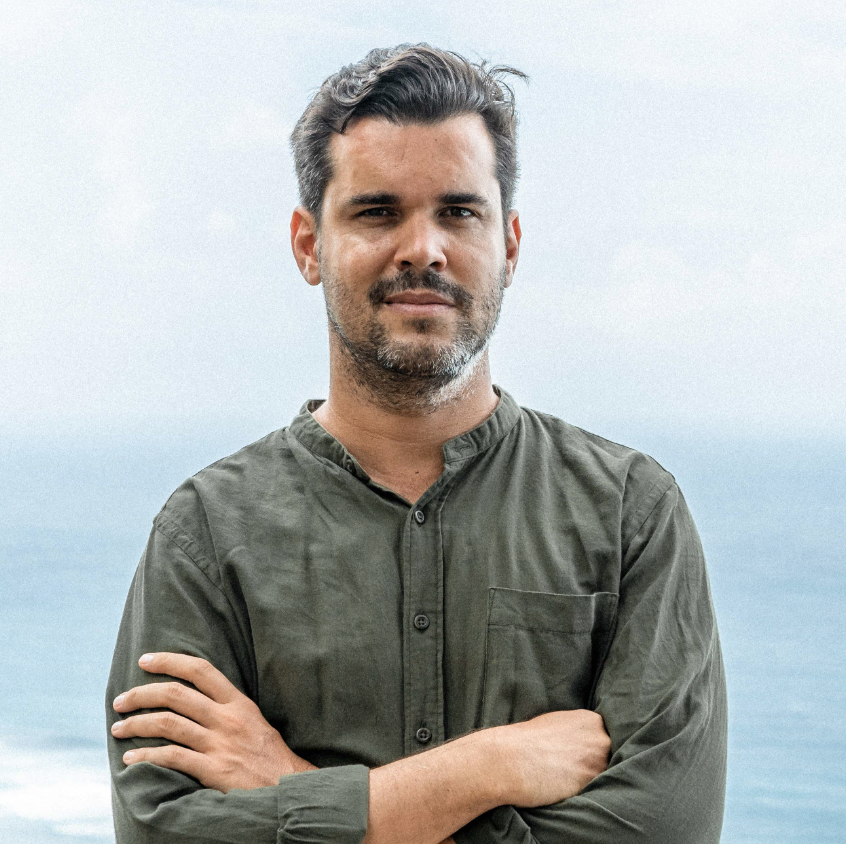
A blogger’s honest journey through travel, algorithms & family life
An interview by Stefan Janssens
I first worked with Liza Skripka years ago in the travel industry, when conversations mostly revolved around loyalty programmes, booking systems, so-called “zombie hotels” and the sometimes mysterious logic behind how hotel rooms appear in online booking engines. Even then she had an analytical way of looking at things. If something didn’t make sense, she would take it apart piece by piece until it did.
Long before that, she and her husband José had already started building something of their own. After university, they lived in different countries. He in Scotland, she in St. Petersburg and met once a month somewhere in Europe. All that travel sparked an idea: a small project together.
What began as a blog to promote their travel budgeting app eventually outlived the app itself. The app disappeared. The blog stayed.

Over time, it grew into a full travel platform of articles, YouTube videos, and itineraries, all shaped by a very relatable constraint: seeing as much of the world as possible while holding down a full-time job and working within limited annual leave. Despite the work constraints she has visited 108 countries, and counting. She also has a growing Instagram channel, with over 27,000 followers (link), and over 12,000 subscribers on Youtube (link).
In this dotSpotlight interview, Liza and I spoke about how the project evolved, how travel blogging changed around it, and why honesty might now be the only sustainable approach left in the industry.
Q&A with Liza Skripka
Today you run a blog, Instagram, and YouTube channels. But I’m curious about the very beginning. How did it all actually start? And back then, did you ever imagine it might grow into something bigger?

Liza: Not at all. It started for a very practical reason.
My husband and I were in a long-distance relationship. We met at university in Scotland, but after graduating he stayed there working as a software developer and I moved back to my hometown, St. Petersburg.
So every month we would meet somewhere in Europe. Just choosing a place that was convenient for both of us.
Because we were travelling so often, we started thinking it might be interesting to build a small project related to travel. My husband had experience building iPhone apps, so the idea was to create an app that would estimate how much money someone might need for a trip.
Basically a travel budget calculator.
“We created the blog to promote the app. The app disappeared, but the blog stayed.”
You could adjust things like accommodation, food, shopping, or activities across different levels. For example, maybe you want to stay in a luxury hotel but you’re happy eating supermarket food and not doing many excursions. You could toggle those preferences and the app would estimate the approximate budget for a trip.
At the time there really wasn’t much information online about travel budgets in different countries. If you were planning a trip somewhere like Cambodia, Thailand or Mexico, it wasn’t obvious what a typical mid-range trip would cost.
So we built the app and called it Tripsget.

And then we realised something slightly disappointing. Apps are very hard to monetise. Even charging one pound can feel expensive to someone who has never heard of your product. And keeping the app in the App Store also costs money each year.
So we created a blog to promote the app.
The funny part is that the blog survived. The app didn’t.
I remember you once mentioning that you’d love to visit as many countries as possible. Is that still something you’re aiming for?
Liza: I would love to visit as many countries as possible, but I try to be realistic.
With everything that’s happening in the world, some places are simply not wise to visit right now. Sometimes it’s not safe, and I don’t think it makes sense to chase a number if it means ignoring that.
So the goal is really just to go to as many places as I reasonably can, while limiting it to destinations that are safe and that have decent tourist infrastructure.
That already gives you a lot of options.
And now of course travel also looks a little different because I’m a mum, so you naturally start thinking more carefully about where you go and how easy a destination will be.


Out of all the places you’ve travelled to, was there one that really surprised you? Maybe somewhere you didn’t expect that much from?
Liza: Bhutan.
It’s actually quite difficult to visit because tourism is tightly controlled. You have to book an organised tour and there are limits on the number of visitors. Because of that I expected it to feel quite underdeveloped, or maybe not very comfortable in terms of accommodation and infrastructure.
But it was completely the opposite. Everything was very well organised. The guides were incredibly friendly and genuine. They were with us the whole time and they would share their experiences very openly. It didn’t feel like some rehearsed script about the country.
And the food was amazing, which I honestly didn’t expect.
We stayed four days and by the end I really felt like it wasn’t enough. There were still so many places to see and things to do.
“Bhutan was one of those trips where you leave thinking you should have stayed much longer.”


When you’ve visited that many places, does your perspective on travel start to change? Do some trips begin to feel a bit repetitive?
Liza: Sometimes it does, especially with city trips in Europe.
Because of shared history and architecture, some cities can start to look quite similar. For example, many cities that were once part of the Austro-Hungarian Empire share similar architecture and layouts.
You might arrive somewhere and think, wait, haven’t I seen this street before?
But what helped me was giving each trip a theme.
For example, one time I went to Milan specifically to focus on history and landmarks. A few years later I visited again, but the whole purpose of the trip was completely different. That time it was about finding beautiful locations for photography and interesting restaurants.
“Because of shared history and architecture, some cities can start to look quite similar. For example, many cities that were once part of the Austro-Hungarian Empire share similar architecture and layouts.”
The same city can feel very different depending on what you’re looking for.
I had a similar experience with Amsterdam. One trip was classic sightseeing, another was exploring interesting neighbourhoods outside the tourist centre, and another visit was actually a work trip.
So even familiar places can feel new again if you approach them from a different angle.


You’ve travelled widely, but you ended up settling in London. Was that mostly practical, or did London simply feel like the right place to stay?
Liza: What is the best place to settle down really depends on the person. What works for me might not work for someone else. But London works very well for me.
One of the things I love is that you can almost travel the world without leaving the city. There are communities from all over the world here, and the restaurants reflect that. I used to deliberately go to different neighbourhoods just to try authentic food.
For example, there are areas with large Brazilian communities and the restaurants there are completely different from the Brazilian restaurants you find in central London. Those central places are more designed for tourists, but these neighbourhood restaurants are really made for Brazilians who live here and want food that reminds them of home.
“You can almost travel the world without leaving London, just by exploring different neighbourhoods.”
It’s almost like travelling without getting on a plane. But there are also very practical reasons. London has strong job opportunities and it’s a very international city professionally. And the travel connections are incredible. There are six airports, so you can reach almost anywhere in the world quite easily.
And it’s simply a beautiful place. The architecture is amazing, the history is fascinating, and there are so many different neighbourhoods to explore.


In the early days of the blog, how did you actually start growing an audience? Were you already thinking about SEO and traffic, or figuring it out as you went?
Liza: At the beginning I had absolutely no idea what I was doing. So I joined blogging communities on Facebook where people shared strategies and advice. One of the fastest ways to grow traffic at that time was actually Pinterest.
The process was extremely manual. For each blog post you might create ten different pins, each with slightly different images, text layouts or headlines. Then you would pin them to your own boards and also to group boards run by other bloggers. There were even Facebook threads where bloggers would share links to their posts and everyone would repin each other’s content. So every day you might be manually pinning thirty or fifty posts.
“My traffic grew from around one hundred views per month to about ten thousand, and eventually around forty to fifty thousand monthly visits.”
It was repetitive, but it worked.
My traffic grew from around one hundred views per month to about ten thousand, and eventually around forty to fifty thousand monthly visits.


At some point most travel bloggers start receiving invitations. Tourism boards, airlines, sometimes hotels. A few days in a destination, a planned itinerary, the expectation that you’ll document the experience. From the outside it sounds like a constant stream of free travel. In reality, it often comes down to a very ordinary constraint: how many holiday days you have left at work. When those press trips started happening, did tourism boards usually approach you, or were you applying for them yourself? I remember you went to Jersey with the tourism board. Was that one of those invitations?
Liza: Yes they approached me. I’d say about 99 percent of the press trips I did were invitations. I never really applied anywhere.
One of the trips was to Jersey. That was organised by the Jersey tourism board. They covered the flights, the hotel, and even arranged a rental car so we could explore the island. Some of the restaurants were also included. I just needed to bring some money for small things.
“Most of the press trips I did were invitations. I never really applied for them.”
There were other invitations as well. Visit Wales organised a similar trip, and she also joined a press visit to Stuttgart in Germany. But accepting those invitations was never as simple as it might sound.


From the outside it sounds easy to just say yes to these trips. But I guess it wasn’t always that simple?
Liza: Not really. I actually rejected most of them. Not because I didn’t want to go, but because I didn’t have enough annual leave.
One invitation in particular kept coming back.
Jet2 used to invite you quite often, right?
Liza: Yes. They invited me almost every year on their press trips. Usually to Mallorca or Greece.
The problem was timing. They always ran from Monday to Thursday. Not even over a weekend. And when you only have around twenty-five days of holiday per year, you start thinking very carefully about how you use them.
For someone building a travel blog while still working full-time, those choices matter.
“When you only have about twenty-five days of annual leave, every trip becomes a decision.”
As a travel blogger you want to go somewhere new. I really wanted to visit places like Bhutan or Ecuador. I couldn’t spend my holidays going to Mallorca again and again.
In the end that limitation shaped the blog itself. The audience she had in mind was never the full-time traveller with unlimited time. It was people much closer to her own situation: curious about the world, but planning trips within the boundaries of work calendars and annual leave.


The travel blogging world has changed quite a lot in recent years. From your perspective, what were the biggest shifts?
Liza: Quite dramatically. During COVID many bloggers shifted to domestic travel content because international travel became difficult.
But the bigger shift came later with AI summaries in search engines.
Now if someone searches for travel information, the answer often appears directly in the search results. The information might come from blog posts, but users don’t actually click through to read the full article.
For many bloggers that meant losing a huge percentage of their traffic. So something that used to be a full-time career for many people has turned back into more of a hobby or side project.
“The bigger shift came later with AI summaries in search engines. For many bloggers that meant losing a huge percentage of their traffic.”

When you look at travel blogs today, many of them follow a very similar formula. Do you try to approach your own blog differently?
Liza: I try to be more honest. For a long time there was almost a template for travel blogs. Everyone wrote the same kind of articles, like “10 most beautiful cities in Europe”. After a while many blogs became carbon copies of each other.
When the industry started becoming more difficult financially, a lot of people stopped blogging. For me that actually felt like an opportunity to return to what travel blogging should probably be. Writing about real experiences and sharing honest opinions.
Especially now that I’m travelling with a child, those honest details become even more important. And because I don’t rely on the blog as my main source of income and rarely accept sponsored trips anymore, I can be quite transparent about places I visit.
“For a long time there was almost a template for travel blogs. Everyone wrote the same kind of articles, like “10 most beautiful cities in Europe”.
Alongside the Tripsget blog and Instagram, you also run two YouTube channels. One in English and another in Russian. At first the difference was mostly linguistic. Over time it became something else entirely. Was it because the audiences behave very differently?
Liza: Yes, quite a lot actually.
The Russian channel started because I wanted to share useful information about living in London. Things like how to find a job here, what life is actually like, how much rent costs, how schools work.
Many of the viewers are people from post-Soviet countries, often working in tech. Software developers especially. They are quite location-independent, so they often think about moving to another country and London is one of the options.
So their questions are usually about life decisions. What kind of lifestyle you can have, how expensive it is, what daily life looks like. Over time something interesting happened. The channel became less about information and more about connection.
When I first moved to London I didn’t know many people, and making those videos actually helped me meet others. Some of my friends today first contacted me because they watched the channel. We met for coffee and just became friends.

The English channel works very differently.
There people usually find the videos through search. They might look for something like travel tips for Belgium or what to wear in South Africa in summer.
So they don’t necessarily follow me personally. They are searching for information about a specific place.
“Some of my closest friendships started because someone watched the channel and reached out.”
Alongside building your travel content, you also built a career in digital marketing and CRM across several companies in the tech and travel sectors. Did that influence how you built the blog?
Liza: In the beginning it definitely did. My first job was at Semrush in St. Petersburg, which is a platform for keyword research and SEO analysis.
I actually started my blog while working there, so I had access to a premium account with all the tools for keyword research. That helped massively.
Later I moved to Expedia, which was very interesting because you see how the online travel ecosystem works behind the scenes.
One unusual feature of your travel content is that it was always shaped by the same constraint many readers face. A full-time job. Is that correct?
Liza: Most of my audience is similar to me. People who work full-time jobs and have maybe twenty-five days of annual leave. Many travel bloggers can stay somewhere for a month. My readers usually have a long weekend or a week.
So when I write guides or itineraries, I try to show how you can see a destination efficiently in a limited amount of time.
You mentioned earlier that you recently became a parent. Congratulations! I assume that has changed the direction of the blog?

Liza: Definitely. Now I’m preparing new content because the blog will gradually include more family travel. That’s simply part of [my] life now.
The older articles will stay as they are, but the new content will reflect travelling with a child. I’m currently building a small library of posts before publishing again.
So hopefully the blog will slowly evolve into its next chapter.
“The older articles will stay as they are, but the new content will reflect travelling with a child.”
IN CLOSING
Liza’s journey stands out because it doesn’t follow the usual travel blogger script at all. No quitting the day job, no glamorous nomad life. Just a practical little project born from a long-distance relationship that somehow outlived its original app and kept growing.
It adapted to changing algorithms, survived the AI crunch, and is now shifting naturally as she travels with a young child. No big dramatic moments. Instead there is a long chain of practical decisions, curiosity about the world, and a willingness to keep experimenting.
In a sea of almost identical top 10 travel listicles and SEO templates, that kind of perspective might be exactly what travel writing needs.
Links:
Tripsget Blog (link)
Tripsget Youtube Channel (link)
Tripsget Instagram Channel (link)
About the Author