A conversation with the serial entrepreneur who helped shape Asia’s digital and coworking landscape
An interview by Cheryl Fuerte

I first met Dominic Penaloza many, many years ago in Hong Kong, during a time when the city’s tech and startup energy was still finding its footing. He had reached out, looking for people who could help him with two projects he was building simultaneously: Ushi, a professional networking platform aimed at mainland China, and WorldFriends, a social network connecting internationally minded people across Asia and beyond. Sitting down with him for that first meeting, I was struck by how clearly he could articulate not just what he was building, but why, and convinced that the two ventures would be very different things but equally meaningful.
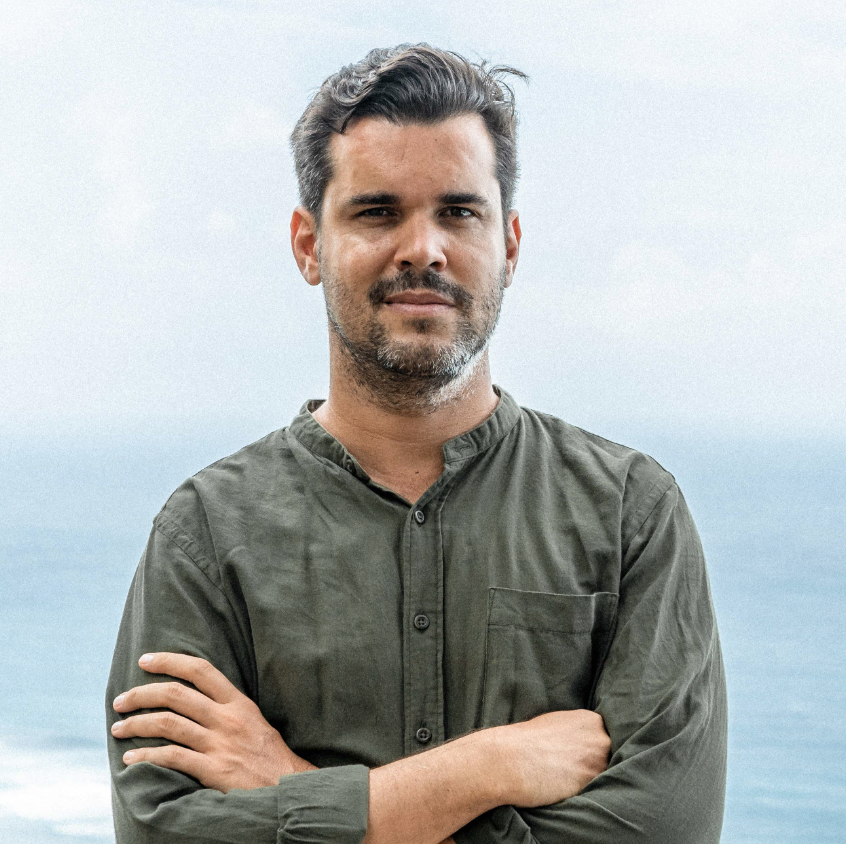
Dominic Penaloza is a Chinese-Filipino entrepreneur and investor born and raised in Toronto, Canada, with deep roots in Asia and an instinct for building platforms that connect people. He is currently the CEO and co-founder of Sync AI Technologies. Prior to this, he has a track record of founding and managing several ventures. He founded WorldFriends Networks, a pioneering social network for globally minded individuals that amassed over 5 million registered members and 220 distribution partners, including Yahoo! Japan. It was described by TechCrunch as a mix of Facebook and Match.com before either had the cultural dominance they hold today. He went on to co-found Ushi, a Chinese professional network based in Shanghai.

From there, Dominic moved into the coworking and flexible workspace world, becoming Chief Innovation & Technology Officer at naked Hub, a role he held when the company was acquired by WeWork for US$400 million in 2018. He subsequently served as WeWork China’s Head of Innovation & Technology.
Post-WeWork, he founded REinvent, Asia’s first proptech startup studio, and later launched Peace, a venture offering on-demand private work pods placed in public locations, a product born from his continuing conviction that how and where we work matters deeply to our well-being.
In this dotSpotlight interview, I asked Dominic to talk extensively about his journey and experiences as a founder: what drove him to build his first company, how it led to more companies after that, how he navigated the highs and lows across two decades of ventures, and what continues to fuel him today.
Q & A with Dominic Penaloza
Take us back to the very beginning. What was the spark that made you say, “I’m going to quit my private equity job and build something of my own”? Was there a single moment that made you decide that or was it something always at the back of your mind?
Dominic: It was 1999, I was sitting on a train speeding through the Italian countryside. I was on holiday with my mom and sister, taking a two week rest after working for two years to take one of our private equity investee companies through a bankruptcy restructuring process to an IPO in 13 months. I was reading my cardboard mandarin flashcards when it occurred to me that people might love to get flashcards by email to help them learn languages. That moment eventually led to me resigning from my great private equity job to become the founder of HungryForWords.com, something like a Duolingo before its time. Of course, behind this spark was the DotCom boom. It was an exhilarating era when the application layer of the Internet was being invented. I feel the same way now about 2026: the application layer of AI is being invented.
“It was in 1999. I was reading my cardboard mandarin flashcards. That moment led me to become the founder of HungryForWords.com, something like a Duolingo before its time.”
But the foundational spark was my grandmother and mother, both entrepreneurs who ran their own businesses that they created. The spark was surely kindled by growing up around them, in a family of entrepreneurs. They gave me the confidence to believe that I could be a founder and leader when I grew up. In high school I looked for the best undergraduate business in Canada because I believed I would be the best preparation for life as an entrepreneur. For the same reason, after business school, I wanted to get into venture capital and private equity.
BUILDING HUMAN CONNECTIONS
You’ve been building companies since I first met you! I remember WorldFriends was one of the early social networks focused on internationally minded people, before “social networking” became popular. What was it like building something that didn’t quite have a category yet?

Dominic: Honestly, it was equal parts exhilarating and exhausting. We launched WorldFriends in 2003, before Facebook had gone beyond Harvard, before LinkedIn was a household name, before anyone was calling anything a “social network.” We had to explain the entire concept from scratch to every investor, every partner, every user. You’d sit in a pitch meeting and spend the first twenty minutes just educating people on why someone would want to meet strangers on the internet. Today that sounds absurd. Back then it was a real conversation.
The upside of building before the category exists is that you get to define the rules. We didn’t have to position ourselves against Facebook or Match.com, they weren’t dominant yet. We could ask a different question entirely: what if the point isn’t reconnecting with people you already know, and it isn’t transactional dating either? What if it’s about discovering people who share your worldview? That’s a very different product. That’s why TechCrunch described us as a mix of Facebook and Match.com, because we genuinely didn’t fit neatly into either box.
“We launched WorldFriends in 2003, before Facebook had gone beyond Harvard, before LinkedIn was a household name, before anyone was calling anything a ‘social network.‘”

The downside is that you’re building the market and the product at the same time. We grew to over five million members and 220 distribution partners, including Yahoo! Japan. We built a groundbreaking white label platform that let partners create their own revenue-generating social networking services on our platform. We had users in 230 countries. And we were profitable, which almost nobody in social networking was at that time. But because there was no category, there was no obvious benchmark, and that made fundraising harder than it should have been. Investors would say, “This is impressive, but what is it?” And I’d think: it’s the thing you’ll understand in five years.
“We built a groundbreaking white label platform that let partners create their own revenue-generating social networking services on our platform. We had users in 230 countries. And we were profitable, which almost nobody in social networking was at that time.”
That experience taught me something I carry to this day: if you’re building something truly new, your hardest job isn’t engineering or design. It’s language. You have to give people the words to understand what you’ve made. If they can’t name it, they can’t want it.

We will face the same challenge with Sync, our new AI venture. Most people and investors strongly dislike “dating apps”. Sync (link) is deliberately designed to not be a dating app. Sync is the pioneer of a brand new category. Sync is a “love agent,” an “AI agent for your love life” that coaches you and matches you at the same time, then coaches the couples.
“If you’re building something truly new, your hardest job isn’t engineering or design. It’s language. You have to give people the words to understand what you’ve made. If they can’t name it, they can’t want it.”
NAVIGATING BETWEEN CULTURES
So you built WorldFriends and Ushi in Asia, with China as a central stage. For someone who grew up in Toronto and has Chinese-Filipino roots, how did that shape the way you approached building products for the China market? I would assume the high number of Chinese population in Toronto has tremendously helped.

Dominic: You’re right that growing up in Toronto was a huge advantage, though maybe not in the way most people think. Toronto didn’t just give me exposure to Chinese culture, it gave me fluency in the experience of navigating between cultures. When you grow up Chinese-Filipino in one of the most multicultural cities on Earth, code-switching isn’t something you learn. It’s something you live. You understand intuitively that context changes meaning. That a gesture of respect in one room is a sign of weakness in another. That’s an enormous asset when you’re building products across cultural boundaries. Put it this way, my babysitter was named Mrs. Mersa and my highschool French teacher was named Mr. Hakim Soobratti. Toronto’s greatest feature is its multicultural DNA.
I believe empathy is one of the most valuable skills when building products. You need to deeply understand the various user personas, seeing the pain point, and the world, through their eyes. Whether Chinese-Filipino in Toronto, or a Canadian in China or the Philippines, I am always a foreigner. I guess my background helped me develop empathy. I learned how to see the world through other people’s perspectives.
“Toronto didn’t just give me exposure to Chinese culture, it gave me fluency in the experience of navigating between cultures.”
BUILDING PHYSICAL SPACES
I remember you posting about naked Hub and then WeWork in China years back. During that time you’ve moved from consumer internet into the coworking and proptech space. That is such a significant pivot. How did you navigate that transition, the differences, and what did you learn about yourself as a builder by stepping into a very different kind of company?
Dominic: It’s funny, from the outside it looks like a pivot. From the inside, it felt like a natural evolution. If you look at everything I’ve built, the through-line is: how do we use technology to connect people to environments and experiences that make their lives better? WorldFriends connected people across cultures. Ushi connected business people for more opportunities. naked Hub and the coworking world was the same question applied to physical space: how do you create environments where people do their best work and build their best relationships?

What was different was the physicality of it. When you’re building software, you can ship a feature overnight. When you’re building physical spaces, there’s concrete drying and lease negotiations and construction timelines. That was a real education in patience and operational complexity. At naked Hub, I was the Chief Innovation & Technology Officer, and my job was to make that physical experience intelligent, to use technology to make the spaces responsive, data-driven, and deeply personal for the members using them. It was about positioning naked Hub as Asia’s most technology-forward coworking company, and that work was a big part of what made us attractive enough for WeWork to acquire us for $400 million in 2018.
“What was different was the physicality of it. When you’re building software, you can ship a feature overnight. When you’re building physical spaces, there’s concrete drying and lease negotiations and construction timelines.”


After the acquisition, I became WeWork China’s Head of Innovation & Technology, which was a completely different scale. Suddenly you’re inside a global organization with hundreds of locations, thousands of employees, and a very strong culture of its own. Navigating that taught me the difference between being a founder and being an executive. As a founder, you’re the gravitational center. As an executive inside someone else’s company, you have to find ways to drive impact within existing structures. I’m glad I did it because it gave me a masterclass in operating (and not operating) at hyperscale and how to build and lead a tech organization of 150 top talents recruited from Google, ByteDance, Meituan, Uber, Didi, Microsoft, LinkedIn and other top firms.
“As a founder, you’re the gravitational center. As an executive inside someone else’s company, you have to find ways to drive impact within existing structures.”

ASIA’S FIRST PROPTECH STARTUP STUDIO
Post-WeWork, you then founded REinvent. It was described as Asia’s first proptech startup studio, a model not many people were doing at that scale or with that focus. What drew you to the studio model during that time (rather than just founding another single company)? What were the main challenges for you in building a business that builds businesses (versus the previous ones)?
Dominic: When I left WeWork in early 2020, I looked at the real estate industry and I saw an enormous gap. Here is one of the largest industries on Earth, and it was dramatically underinvested in technology compared to almost every other sector. At the same time, I had spent the previous several years assembling an incredible team of product managers, engineers, designers, AI specialists, many of whom had worked with me at naked Hub and WeWork. I didn’t want to pick one bet and put that entire team on it. I wanted to create a machine that could generate multiple bets simultaneously, each with built-in advantages.

That’s the studio model. REinvent was founded by 45 veterans from companies like Alibaba Cloud, CapitaLand, Autodesk, and Google, along with major backing from JustCo, Frasers Property, and Daito Trust. Our thesis was simple: a startup studio eliminates the biggest risks that kill early-stage proptech companies. We had the team, so there’s no “team risk.” We had deep relationships with major property companies, so there’s no “go-to-market risk.” And we could run multiple products through the same disciplined process, so we could learn faster and allocate resources to the winners.
“When I left WeWork in early 2020, I looked at the real estate industry and I saw an enormous gap. Here is one of the largest industries on Earth, and it was dramatically underinvested in technology compared to almost every other sector.”

We launched Switch, the world’s first workspace-on-demand platform, which brought 25 Singapore locations with 2,000 desks together under one app for pay-per-minute access. We also built SixSense, software for spatial analytics and social distance detection. Both products came out of our conviction that the future of real estate is when people consume it as a service.
The challenge of building a business that builds businesses is that you need two kinds of discipline simultaneously. You need the creative, zero-to-one energy of a founder for each venture, and you need the portfolio-level rigor of an investor across the studio. Those two mindsets are in tension.
The founder says, “Give me more time, more resources, I can make this work.” The studio operator says, “The data says to reallocate.” Holding both of those perspectives honestly is the hardest part of the model. But when it works, the compounding effect is extraordinary because every venture makes the next one smarter.
“Both products (Switch and SixSense) came out of our conviction that the future of real estate is when people consume it as a service.”
SELLING PRIVACY-ON-DEMAND
Peace, your on-demand private work pod concept, feels like it came from something deeply personal, not just a market opportunity. You’ve said you’re “selling privacy on demand.” What does that mean to you, beyond the business case? What does it say about where we are as a society and how we work?

Dominic: Peace came from a very deep conviction that we’ve normalized something that should alarm us: the total disappearance of private space from public life. Think about it. You walk through any major city in the world and try to find a place where you can make a private phone call, have a quiet conversation, do focused work, or just be alone with your thoughts for thirty minutes. It barely exists. We’ve built cities for crowds, for efficiency, for commerce. We haven’t built them for the human need for privacy. And I think the mental health implications of that are profound and largely unexamined.
When I said “we’re selling privacy on demand,” I meant it literally, but I also meant it as a provocation. Privacy shouldn’t be a luxury product. It should be infrastructure. Just like we have public water fountains and public restrooms, we should have public private space. That’s what Peace is trying to create: the “last meter” of city design for the future of mobility, future of work, and future of cities.
The pods themselves are 3.5 square meters, seating up to four people, soundproof, equipped with Wi-Fi, smart locks, ventilation, and anti-Covid air cleaning. No cameras. I wanted our users to feel it was genuinely 100 percent private. No one can hear what they’re saying. No one can see their screen. That matters enormously, especially in places like China where surveillance infrastructure is everywhere.


“The pods themselves are 3.5 square meters, seating up to four people, soundproof, equipped with Wi-Fi, smart locks, ventilation, and anti-Covid air cleaning.”
We launched in Shanghai with partners like Swire Properties, HKRI Taikoo Hui, and Henderson Land. We placed pods in malls, office towers, exhibition centers, and transport hubs. The vision was always to deploy at scale: a thousand pods across Shanghai and then beyond.


On a personal level, Peace connects to something I’ve felt my whole career. Whether it was WorldFriends creating space for cross-cultural connection, naked Hub creating space for creative work, or Peace creating space for private thought, I keep coming back to the same fundamental question: how do you design environments that respect human dignity and bring out the best in people? I believe that question is one of the most important ones of our time, and I don’t think we’re taking it seriously enough.
“I keep coming back to the same fundamental question: how do you design environments that respect human dignity and bring out the best in people?”
CREATING THE WORLD’S FIRST AI MATCHMAKER
Now you’re currently the CEO and co-founder of Sync AI Technologies. What problem is Sync solving, and what excites you most about this chapter of your entrepreneurial journey?
Dominic: Sync is the culmination of everything I’ve learned across two decades of building platforms that connect people. But it’s also deeply personal. I have a teenage daughter approaching dating age, and that reality has given me an urgency that goes beyond the business case. The dating app industry is fundamentally broken, and I don’t want my daughter to have to endure that toxic, “necessary evil” as my co-founder Matthew Hussey put it.
Think about what dating apps actually do. They commoditize human beings. They reduce you to a photo and a one-line bio. They incentivize endless swiping because the platform’s business model depends on you staying on the app, not on you finding someone and leaving. The average dating app user spends hours per week swiping and comes away feeling more pessimistic about love than before. Pew Research found that over a third of app users feel worse about dating after using them. That’s not a bug. That’s the business model.

“The dating app industry is fundamentally broken, and I don’t want my daughter to have to endure that toxic, ‘necessary evil‘ as my co-founder Matthew Hussey put it.”
Sync is the world’s first AI matchmaker and relationship coach combined. I co-founded it with Matthew Hussey, who is the world’s most popular love life coach. He has over half a billion YouTube views, millions of followers, and he’s a two-time New York Times bestselling author. Matthew’s IP and deep understanding of what actually makes relationships work is embedded in the product.
This isn’t a dating app. There’s no swiping. You don’t compete for attention. Instead, you talk to Sync — by voice or text, anytime, anywhere — and it gets to know you deeply. We call the result a SoulPrint: a rich, multi-dimensional profile of who you are, what you need, and what kind of person you’re genuinely compatible with.

Sync then compares SoulPrints to surface a focused list of high-compatibility matches. Not hundreds. Not thousands. A small number of people who actually make sense. When compatibility reaches a certain threshold, a private chat room unlocks. And when two people become a couple, Sync transitions from matchmaker to relationship coach, helping the couple navigate the real challenges of building a life together.
Our product vision is: “I came for the matchmaking. I stayed for the coaching.” Our tagline is: “Sync meets everyone, so you only meet the one.” And our metric of success isn’t time-on-app. It’s second offline dates. We’re measuring how many real-world relationships we help create, not how many people we can keep swiping.
“Sync is the world’s first AI matchmaker and relationship coach combined. I co-founded it with Matthew Hussey, who is the world’s most popular love life coach.”
What excites me most is that I genuinely believe voice AI has crossed the threshold to make this possible for the first time. The technology to have a deep, nuanced, emotionally intelligent conversation with someone — to ask the questions a great matchmaker or therapist would ask, to remember everything, to identify patterns you can’t see yourself — that technology exists now. And we’re applying it to what might be the most important decision of someone’s life: who they choose to be with.

“When two people become a couple, Sync transitions from matchmaker to relationship coach, helping the couple navigate the real challenges of building a life together.”
WHAT KEEPS HIM GOING
Anyway, you’ve been building companies for more than two decades. At this point in your journey, what still keeps you motivated? When the hard days come (and they always do), what’s the voice inside your head that keeps you going?
Dominic: There are really three things.
The first is the innate thrill of watching something you imagined become real in the world and change someone’s life. The first time a WorldFriends user told me they’d met their best friend on our platform. The time Ushi went viral and grew to 40,000 users before we had a marketing team and before we raised money. The first time a private beta user tried Sync and said, “YES! This can be the better solution that the world has been waiting for.” Those moments are addictive in the best way. They remind you that building things isn’t abstract. Real people wake up tomorrow with better lives because of something you and your team created. I literally can’t think of work I’d rather do. I believe that technology innovation is literally the best thing we can do to make the world better.
“The first is the innate thrill of watching something you imagined become real in the world and change someone’s life. The second thing is my kids, creating a better world for them. The third is the conviction that in the big picture, it is technology innovation that has been the greatest source of good for the world.”

The second thing is my kids, creating a better world for them. For example, my daughter. She’s approaching the age where she’ll start dating, and I look at the toxic digital landscape we’ve built for her generation and I’m not okay with it. I’m not okay with a world where the primary way young people find love is a system designed to keep them lonely and scrolling. Sync is, on one level, a business. But it’s also a father’s answer to a question I take very personally: can we build something better? I believe we can, and I believe we must.
The third is the conviction that in the big picture, it is technology innovation that has been the greatest source of good for the world. Over millennia, most of humanity’s greatest problems have been solved by technology. So, it’s both a privilege and responsibility to work on technology innovation.
On the hard days — and Cheryl, you’ve known me long enough to know there have been many — the voice in my head is pretty simple. It says: “The fears, the problems, the rejections, the doubters, these hardships comes with the territory. It’s part of the responsibility. Real innovation is always doubted, at first.”
“Over millennia, most of humanity’s greatest problems have been solved by technology. So, it’s both a privilege and responsibility to work on technology innovation.”
LESSONS FOR STARTUP FOUNDERS
As a final question for you: For the up-and-coming generation of startup founders, what are the fundamental, non-negotiable lessons about building a business that are the most important that you could share?
Dominic: Think about it as success equals skill times will.
About skill, technology innovation boils down to ingenuity. Ingenuity comes from having enough empathy to stand in customers’ shoes and deeply understanding the pain points and envisaging potential solutions they’d love, and the ability to connect dots — new ideas come from combining disparate existing ideas. These are both skills that can be learned and trained. Ingenuity can also be said to be a function of obsession. Because when you’re obsessed about something, you think about it all the time. By thinking about it all the time, you automatically collect adjacent ideas.
“Ingenuity can be a function of obsession. Because when you’re obsessed about something, you think about it all the time. By thinking about it all the time, you automatically collect adjacent ideas.”
About will, being a founder is lonely. People think you’re crazy. But getting a startup off the ground boils down to the sheer force of will of the founders. Do not start a startup unless you’re sure that you have enough force of will, enough conviction about your idea. Find a problem you’re truly obsessed with. That should give you both ingenuity and sheer force of will.
“Being a founder is lonely. People think you’re crazy. But getting a startup off the ground boils down to the sheer force of will of the founders.”
We’re all in the early stage of a major technology platform shift. AI is changing the way startups and businesses are built, so many of my experiences and learnings may not be so relevant anymore. But that’s an exciting opportunity for the up-and-coming generation. To them I would say:
- Don’t try to resist the AI wave, figure out how you can surf it.
- If you’re not technical, I’d recommend focusing on the AI application layer. Up to now, mainstream zeitgeist has focused on AI models and GPUs, but those are the underlying infrastructure. The entire application layer of AI is still in the very early stages of evolution. In other words, the generational applications of the AI era have not yet been built.
- Product Market Fit. Research it, learn the Rule of 40% (credit: Sean Ellis), and use it every week. Steering a startup is like driving a car in the dark; product market fit, rule of 40%, is the headlights.
- Business model is something to be crafted, just as much as the product. Stay away from AI applications that will be crushed when Anthropic or other big tech company launches their own version of that application. Look for applications with a marketplace business model, or where you can use, or create, proprietary data that the big tech companies cannot access.
- One of the biggest startup mistakes is choosing a market that turns out to be too small. We can all create slides that portray huge TAM (Total Addressable Market). But be honest and critical in your self-assessment of market size.

Do not start a startup unless you’re sure that you have enough force of will, enough conviction about your idea. Find a problem you’re truly obsessed with. That should give you both ingenuity and sheer force of will.
– Dominic Penaloza
IN CLOSING
Doing this dotSpotlight interview with Dominic Penaloza literally felt like being in one of those founders masterclasses, getting topnotch pointers from a very experienced serial entrepreneur. I learned a lot from him doing this interview. When the last question was reached, I was almost really convinced that I should stop hesitating and continue to pursue a couple of products that I’ve always wanted to build. This was truly inspiring and I really appreciate the time Dominic gave to dotSpotlight for this interview.
When I met Dominic a couple of decades ago, I knew that he built companies, but I didn’t realize that he would build this many, successful ventures. With everything he shared, there is a remarkably consistent thread running through all of it. From HungryForWords to WorldFriends to Ushi to naked Hub to Peace to Sync, every single thing Dominic has built comes back to the same question: how do we use technology to connect people to each other, and to better versions of their lives? That’s not a pivot story. That’s a life’s work with a very clear north star.
His formula is: success equals skill times will. And the will, he says, has to come from obsession. Find a problem you can’t stop thinking about, and build from there. I also didn’t expect to be so moved by his answer about what keeps him going. When he talked about his daughter approaching dating age, and how that personal reality gave him a deep urgency to build something better than what exists today, that to me is what separates the best founders from everyone else. They’re not just looking for the next opportunity. They’re trying to fix something, or make something better. And after over two decades of doing exactly that, Dominic Penaloza is very much still at it.
About the Author