A conversation about pop culture, conventions, and being in the fandom game since the dial-up internet era
An interview by Stefan Janssens
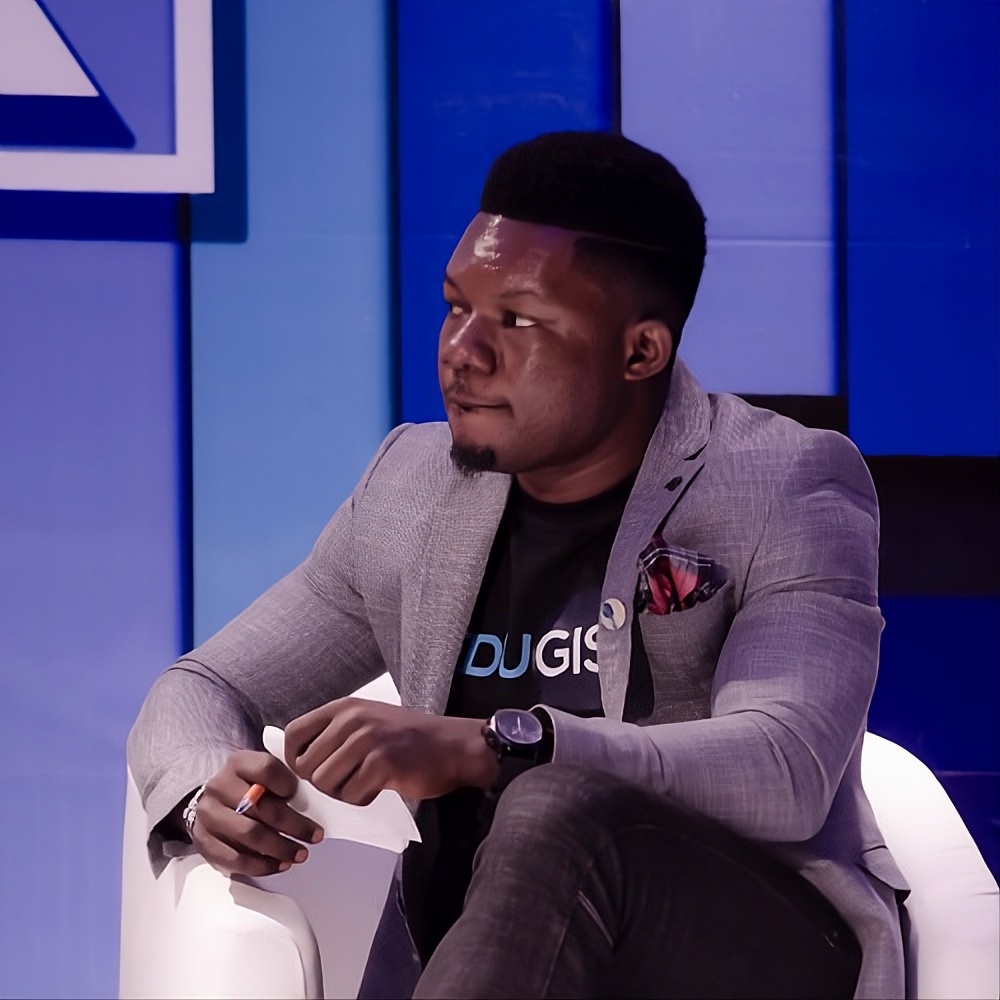
Elvis Boniface works where education, journalism, technology and public accountability meet. I came to our conversation interested in the conviction behind Edugist: the belief that education deserves sustained reporting, difficult questions and a voice of its own. What followed was a conversation about missed opportunities, uneven access to information, building an independent newsroom and the discipline of stepping away from social media long enough to think.
I got connected to Elvis when he reached out to us on LinkedIn, after he saw the dotSpotlight article from Brian Yeung‘s feed.

Q & A with ELVIS BONIFACE
Before we get into how Edugist developed, could you introduce yourself and explain what the platform does?
Elvis: My name is Elvis Boniface, and I am the founder and managing director of Edugist.
Edugist is an education-focused newsroom and innovation lab devoted to telling the story of education in Africa. We have an online readership of more than a million people, and in Lagos we produce a weekly radio programme called Education Dialogue. We also develop civic technology around education.
One of those platforms, Safe2Report, allows students in emergency or conflict-affected areas to report safety concerns. We have also worked on a platform through which communities can report problems with school infrastructure.
Then there is the storytelling side. We help people in the education sector explain their work properly, and our newsroom reports on policy, innovation, accountability and what is happening inside the system.
That is Edugist in the broad sense. It has grown into quite a lot.

Was there something in your own education that made this work feel personally important?
Elvis: Absolutely. The origin of Edugist is tied very closely to my own experience.
I am Nigerian, and I attended a local community school in a rural area, in one of the poorest states in the country. I still had that love for education. I wanted to move forward, so I applied to study Computer Science at the University of Lagos, one of the leading universities in Nigeria.
When I arrived in Lagos, I discovered that I needed a credit pass in Further Mathematics.
That was the first time I had even heard that there was a subject called Further Mathematics. Where I came from, we knew Mathematics. That was it. My school did not offer this other subject, and nobody had told me that I would need it for the course I wanted to study.
My admission was cancelled.
“Where I came from, we knew Mathematics. That was it. Nobody had told me there was another subject I would need.”
Can you take us back to that period? What did you do when you found out?
Elvis: I was 19, and I fought it. I contested the decision and went to court.
I had received the admission on merit, so from my perspective, I had done what I was meant to do. Then I arrived and was told I could not register because my previous school had never offered a subject I did not know existed.

The internet was still at a relatively early stage in Nigeria then. Nairaland was one of the major online forums, so I went there and started writing about what had happened.
There was no mercy, honestly. There was no reversal. I still did not get the admission.
I had to spend two extra years trying to enter university again, eventually applying for another course that did not require Further Mathematics.
“Those were two years caused by [not being aware of such] information. The information existed somewhere, obviously, but it had not reached me”
Many people would have tried to forget the experience once they had found another route. But you did not and you kept writing about it.
Elvis: I began writing about the subject requirements for different university courses.
If you wanted to study engineering, what did you need? If you wanted to study a science, what subjects should you take? I was trying to make sure another student did not arrive at the university gate and hear something for the first time, the way I had.
So Edugist really began as advocacy. I was fighting for myself, but I was also beginning to understand that this was bigger than me.
I wrote on Nairaland first. Then I discovered WordPress and set up a free blog. It was very basic. There was no business plan and no team. It was simply a place where I could share information and write about education.
The name came from “Edu”, meaning education, and “gist”, which in Nigerian parlance is conversation, news or an update about what is happening. Edugist was a place for conversation around education.
Eventually, I returned to university and studied Education rather than Computer Science, which was what I had originally planned to do. I kept the blog going while I was studying. It was a hobby at that stage, although I suppose it was already becoming more serious in my mind.

“The name came from “Edu”, meaning education, and “gist”, which in Nigerian parlance is conversation, news or an update about what is happening. Edugist was a place for conversation around education.”
What did that early version of Edugist look like? Who did you imagine was reading it?
Elvis: It was a free WordPress site, so you can imagine. I was writing mostly from my own experience and from what I was learning about the education sector. I was not thinking in a sophisticated way about audience yet. I did not have audience profiles or anything like that.
It was more: here is useful information, and somebody should be able to find it.
After graduating, I joined an education consulting firm. I started as a research associate and was later promoted into a role covering research and corporate communications.
That experience exposed me to another side of education: organisations, schools, policy, communications and how decisions were made. About a year into that work, I started asking whether Edugist could become a full-time project.
“It was a free WordPress site, so you can imagine. I was writing mostly from my own experience and from what I was learning about the education sector. I was not thinking in a sophisticated way about audience yet. ”
In 2016, I bought the Edugist domain. That sounds like a small thing now, but for me it represented a change. I began structuring the platform more carefully. I learned how to use Google Analytics. I started paying attention to who was reading, where they were coming from and which stories mattered to them.
Was there a particular moment when you realised other people saw value in it too?
Elvis: In 2017, the World Innovation Summit for Education was organising a regional gathering in Accra.
Until then, its main summit had taken place in Doha, but it was also beginning to organise regional events. They contacted me. They had been looking for data and information about education in Africa, found Edugist and asked whether we could become a media partner for the Accra gathering.

“They saw Edugist as a credible media organisation before I had fully started to see it that way myself.”
That was the moment when I thought, okay, this could work.
Someone outside my immediate circle had found the platform because of the information it contained. They saw it as a credible media organisation, even before I had fully started to see it that way myself.
It changed how I thought about the possibilities.


Recognition gave Edugist more weight, but it did not immediately turn it into a stable organisation. The next phase involved a series of practical decisions, followed by one much larger choice about where you wanted to place your energy. How did you move from that recognition to building an actual organisation?
Elvis: I formally incorporated Edugist as a media organisation in 2019. The plan was to leave my consulting job and focus on it fully in 2020.
Then COVID came, and every plan went back to zero.
I moved to the UK for postgraduate study. While I was there, I was preparing for a possible role in Sweden connected to Soundtrap, Spotify’s education platform. They needed someone who understood both media and education, and a professor recommended me.


“That presented a real decision. I could continue preparing for the opportunity in Sweden, or I could return to Nigeria and build the thing I had been carrying since 2012.”
Around the same time, the Media Development Investment Fund (MDIF) was setting up the Nigeria Media Innovation Program. It was designed to support independent Nigerian media organisations with consolidation, sustainability and experimentation.
I applied, and Edugist was selected for an early cohort.
That presented a real decision. I could continue preparing for the opportunity in Sweden, or I could return to Nigeria and build the thing I had been carrying since 2012.
What made you choose Edugist?
Elvis: I moved back and committed to it full time.
Edugist had been with me for years by then. It began from something I had experienced personally, and the problem behind it had not disappeared. Students were still missing opportunities because information did not reach them. Education policies were still being discussed without enough attention to the people living with their consequences.

The opportunity connected to Sweden was important, of course. But Edugist was the thing I had already been building, even before I fully understood what it could become.
So I returned to Nigeria.
We found a proper space, developed a newsroom and recruited the people we needed. By January 2023, we had what I call Edugist 2.0, with a team of 16.
Before then, much of Edugist depended on me personally. I was writing, presenting, researching and trying to manage everything. Building the team allowed it to become an organisation rather than one person working at all hours.
“The opportunity connected to Sweden was important, of course. But Edugist was the thing I had already been building, even before I fully understood what it could become.”

Is Edugist primarily funded through grants and NGOs?
Elvis: We are a social enterprise.
Support programmes have played a role in helping us build capacity, of course, but the question is how you create an organisation that remains independent and sustainable.
You cannot build serious journalism if the organisation disappears as soon as one project ends.
That question is still very real for us. How do you protect the editorial work while also paying people and keeping the organisation functioning?
There is no easy answer. We keep working on the model.

“That question is still very real for us. How do you protect the editorial work while also paying people and keeping the organisation functioning?”
Edugist describes itself as pan-African. It may sound like a single editorial subject from a distance, but the reality is a continent of different systems, languages, histories and political pressures. How do you work across countries with very different education systems?

Elvis: One of the first problems is that people sometimes speak about Africa as though it were one country.
It is a continent of 54 countries, with different systems, languages, politics and local realities. The structure of our work has to reflect that.
At the time we spoke, we had a small team in Rwanda and had established another African office in Ghana. We had people in the UK looking at the African diaspora, volunteers in Botswana and a freelancer in Kenya.
We had received meaningful reporting or contributions from teams in around 13 countries. When there is a specific pan-African project, we may also report from places where we do not yet have a permanent presence.
Recently, for example, I had been trying to report a personal story from rural Cameroon. Through that work, we began receiving tips from Gabon, a neighbouring country where we previously had very little visibility.
Sometimes one story creates a connection to another place.
It is still incomplete. There are parts of the continent where we do not yet know enough. I think it is important to admit that rather than pretending we cover everywhere equally.
“Sometimes one story creates a connection to another place.”
What differences have stood out as you have looked across those countries?

Elvis: There are shared problems, but they do not always appear in the same way.
In Nigeria, insecurity has become a major issue affecting education. In Ghana, there has been significant work around the adoption of technology in education. Kenya has done important work in areas such as foundational learning.
Our job is partly to identify those differences and ask what countries can learn from one another. We spotlight the people, practices and policies driving education.
Where we have the resources, we also investigate.
It is one thing for an institution to announce a policy. It is another thing to ask whether the learner in a classroom has experienced any change.
That is where journalism becomes important. You cannot understand an education system entirely through announcements made in capital cities.
“That is where journalism becomes important. You cannot understand an education system entirely through announcements made in capital cities.”
What do you think the wider media misunderstands about education in Africa?
Elvis: If you search online for education in Africa, much of the coverage is built around deficit.You see the frightening statistics. You see stories that suggest nothing is working.
I do not say this to disrespect anybody, because the challenges are real. Governments can do better. There are children who are not in school, teachers working without proper resources and communities dealing with insecurity.

But that cannot be the whole story.
“The core of our mission is to tell a balanced story about African education.”
There are people doing important work. There are countries testing approaches that others can learn from. There are teachers, researchers, founders and local organisations solving problems under very difficult conditions.
The core of our mission is to tell a balanced story about African education.
Balance does not mean avoiding criticism. It means reporting the failures and also documenting the innovation, the effort and the progress.
Otherwise, somebody outside the continent searches for African education and sees only crisis. Meanwhile, the people building solutions remain undocumented.
What does giving education a voice mean in practice?
Elvis: It means allowing the people affected by education policies to speak about whether those policies are working.

Students need to be heard. Teachers need to be heard. Parents and communities need to be heard.
When there is a safety problem, a broken classroom or a lack of basic facilities, there should be a way to report it and make it visible.
That thinking is behind our civic technology work. A reporting tool can create a direct line between a learner or community and the authority responsible for responding.
It also produces evidence. Instead of saying, “Schools are in poor condition,” you can begin to show where the problems are and what people are reporting.
Our journalism, radio work and technology products are all connected by that idea.
Information should lead to conversation, and conversation should make accountability possible.
We are not there to praise every institution, and we are not there simply to attack people either. We have to remain constructive while asking hard questions.
“Information should lead to conversation, and conversation should make accountability possible.”
You have looked at education systems outside Africa too. What makes the context here different?
Elvis: I have had opportunities to look at education in places such as Thailand and Hong Kong. Some education questions are global, but context changes what is possible.
People talk about twenty-first-century education, innovation and disruption. Meanwhile, many African communities are still dealing with basic access to electricity, computers and the internet.
Even within one country, the difference can be huge. The experience of education in Lagos can be very different from the experience in a rural community. The same is true between Accra and parts of northern Ghana.

A computer is still a major resource in many schools. Then, when you have the computer, you need electricity. After electricity, you need connectivity.
“People talk about twenty-first-century education, innovation and disruption. Meanwhile, many African communities are still dealing with basic access to electricity, computers and the internet.”

These things cannot be treated as minor implementation details. They determine whether the innovation works at all.
Sometimes ideas are imported from places where access to a personal device is considered normal. Here, owning the device may be the first barrier.
That is why the conversation between the Global North and Global South needs to be more honest.
You also mentioned language as a barrier.
Elvis: Yes. Across Anglophone and Francophone Africa, English or French often remains the main language of instruction.

In Nigeria, we have major languages including Yoruba, Hausa and Igbo, alongside many others. Yet the formal education system still places English at the centre.
We can end up assessing whether somebody is educated through their ability to use English, rather than through what they understand.
A learner may understand a concept but struggle to explain it in the official language of assessment.
Other societies are more confident about learning through their own languages and expecting the wider world to translate. We should be asking what children lose when the language spoken at home has little place in the classroom.
Politics is another part of the context. Education policy requires time, but ministers and officials may change frequently. A new person arrives with a new programme, a new slogan and a new set of priorities.
The learner should be at the centre of the system. Too often, political survival becomes the centre.
“A learner may understand a concept but struggle to explain it in the official language of assessment.”
Much of Edugist’s content is detailed and long-form. How do you compete for attention when people are watching five-second videos?
Elvis: We keep evolving.
We look at what audiences are doing and how platforms are changing. Short-form video is an area we have been working to develop.
But there is also a reason our journalism takes time. Education problems are deep and structural. You cannot always explain a policy failure, an infrastructure problem or what is happening inside a university in a few seconds.
Good journalism is expensive.
In our environment, anybody building a media organisation is trying. There is very little funding available, and education as a sector does not have the kind of advertising budget you find in entertainment, consumer goods or politics.
So you are torn. You want to produce independent education journalism, and you also need the organisation to survive.

There is a temptation to become a promotional marketing agency because that is where the immediate money may be. But Edugist came from a lived experience. The original problem has not disappeared.
Students are still affected by decisions they do not understand. Institutions still make mistakes without being questioned.
We need to adapt the format without losing the substance.
So the goal is not to reject short-form content?
Elvis: No, not at all. The goal is to use it responsibly.
A short video can introduce a subject, reach somebody who would never read a long article and bring them into the conversation. But the short video cannot always be the entire conversation.
We have to build the people and processes that allow us to do both.
That takes time because you need researchers, journalists, editors, producers and people who understand the platforms.
You cannot solve a staffing or funding problem by telling one journalist to become six different people.
Well, you can try. Many of us have tried. It is not very healthy.
“You cannot solve a staffing or funding problem by telling one journalist to become six different people.”
How do you personally manage the demands of the work?

Elvis: I would not pretend there is some perfect work-life balance, because this work is deeply tied to my identity and my convictions.
At this stage, Edugist takes a very large part of my life. I have also been fortunate to build an amazing team. They work around the clock, and the organisation is no longer dependent on me doing every single task.
Our newsroom is close to several universities, so we have created opportunities for university students to intern with us. That brings young people into the work and helps us discover talent. It also reminds us who education journalism is meant to serve.
On a personal level, I try to create discipline around my life.
I try to take care of my health, although I have added a lot of weight during this period. I try to walk between 5,000 and 10,000 steps on a typical day. I do not always achieve it, but that is the aim.
The other discipline is disconnecting from social media.
It is strange because I lead a media organisation with a large online audience, but the work has taught me that you cannot remain online every minute.
There is a temptation to keep checking what is happening because you want to stay informed. If you are not careful, social media consumes all your time and leaves you with very little understanding.
“The other discipline is disconnecting from social media.”
What do you do when you disconnect?
Elvis: I read.
For me, reading is not separate from the work. It is part of how I continue learning, thinking and placing what I am seeing in Nigeria and across Africa into a wider global context.
I think reading is especially important when your work involves information, policy and public conversations.
Two books I recommend are Learning Reimagined by Graham Brown-Martin and Global Warning: The Last Chance for Change by Paul Brown.
- Learning Reimagined: How the Connected Society Is Transforming Learning examines innovation in teaching and learning through international case studies and conversations with educators. It asks how technology and social change are reshaping education while keeping the purpose of learning in view.
- Global Warning: The Last Chance for Change presents the science and consequences of climate change in an accessible, extensively illustrated format. It connects environmental change to the decisions societies make about their future.

We work in a knowledge economy. Before you report on a policy or produce a radio programme, you have to understand the subject. You cannot base everything on what is popular that morning.
So I read a lot. I have a library at home, and we also have a library in the newsroom.
Reading helps me slow down. It gives me the depth to make decisions, and it helps me compare what is happening locally with developments elsewhere.
The unglamorous answer is that much of my life is work, walking, reading and trying to get off social media before social media takes the rest of the day.
We work in a knowledge economy. Before you report on a policy or produce a radio programme, you have to understand the subject. You cannot base everything on what is popular that morning.
– Elvis Boniface
IN CLOSING
Sitting down with Elvis Boniface stayed with me long after we finished talking. His story begins with real disappointment. A spot at university disappeared because no one told him about Further Mathematics back in his rural school. Two years gone.
What he did next changed everything for me. He started writing so other kids would not lose time the same way. That decision grew into Edugist. I saw how he chased this work through years of uncertainty and built a place where students get to speak up and earn real attention.
The part that sticks with me is his daily rhythm. He walks. He reads. He steps away from constant updates to think clearly.
I came away knowing information is most valuable when it reaches the people who need it. Elvis turned his setback into a mission that helps others succeed.
About the Author
Stefan Janssens is a Founder and Director of Analytics of 2nd.digital UK and is a co-founder of dotSpotlight. He writes long-form interviews exploring the lives of founders, scientists, and creative builders navigating multiple cultures and careers.