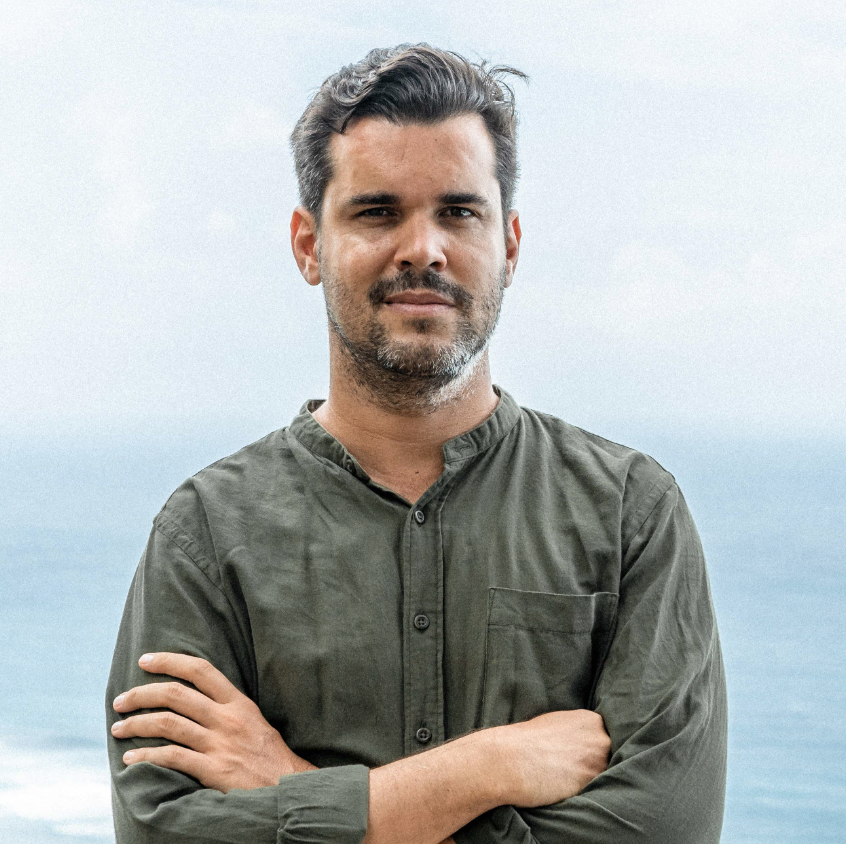
A candid conversation with the horror film fanatic, the filmmaker and the community builder
An interview by Stefan Janssens
Jonny Hideout is the founder of The Hideout Film Club London, a thriving horror community that has become a genuine home for so many people, with over 2,700 members. He is also the co-founder, alongside his pal Tom Harris, of the much larger Movie Roadhouse London, a vibrant cinema-loving community that embraces all genres, including international cinema, and now brings together more than 22,700 people who share a deep passion for film.
Both clubs bring together a mix of film fans and filmmakers who meet regularly across London to watch movies, socialise and create projects together.

Primarily based on Meetup.com, the clubs also cross over into different areas of social media, including Telegram, Discord, Instagram, Reddit and two very active WhatsApp Communities. Here, members regularly discuss the movies they’ve seen, plan road trips, passionately explain why certain films have moved them, organise spontaneous meet-ups to catch the ones they may have missed on the big screen, and get together for online watch parties.
I met Jonny through The Hideout about a year and a half ago, after joining one of his horror film meet-ups in London. I had expected screenings, maybe a drink afterwards, and a few conversations about whether the latest horror release was worth the hype. What I did not expect was to find a group of people who seemed genuinely pleased to see each other again.
Although people will always have their own opinions about specific movies, I found that the atmosphere is less about proving how much you know and more about having somewhere fun and easy-going to be. Somewhere you can keep coming back to, where you can geek out over the things you love without ever having to explain yourself.

For this interview, Jonny and I met at the W Hotel Bar in London to talk about films, the horror genre, filmmaking, London, America, books, community, and why he believes it is especially important now to keep building spaces for people to gather. At one point, Jonny also complimented our wonderful waiter on his fancy glasses, and somehow the conversation became about robotics, prosthetics and hospitality. It felt like a natural detour, though interestingly and strangely perfect. Jonny does not really seem to believe in keeping people in fixed categories. The person sitting next to you at a screening might become your friend. The person behind the bar might end up in your feature film. The horror meetup might just turn into a village of friends.
Q & A with JONNY HIDEOUT
You said earlier that you were building meet-ups long before social media platforms existed. How far back does that go?
Jonny: Since I was growing up in the 90s, believe it or not. I’ve always liked organising meet-ups, planning cinema trips and inviting people over. I would always find myself curating and structuring things in a way that brought people together. It was something I really enjoyed, and once social media became more effective and available, I would use whatever platform was popular at the time.
When I was at school in Guatemala, we had a TV room which I would convert into a little cinema, with all the concessionary perks, including service and hospitality. I would invite my friends over and set everything up in a way that meant my buddies would go home remembering the whole experience. But I didn’t really think of it as anything at the time. It was just something I enjoyed doing. I thought I was just having fun with my friends and sharing some of my favourite adventures. That was it.

Later, when I discovered I could do these things online, I started on Facebook before officially moving to Meetup and eventually across other networks. But the basic idea was always the same: connecting people, watching films, creating projects and making friends.
When I came to London in the late 90s, my first job was at the Odeon Cinema in Kensington. Boy, that was such a fun time. It was so exciting because I got to see films as soon as they came out. We were given a certain number of tickets, and I would always give mine away. It meant a lot to me to be able to share those experiences with other people.
At the same time, I was studying film in the hope of making my own projects one day. Somehow, all of these things gradually started to merge: watching films, making films and building communities around them.

“In the ’90s, I would always find myself curating and structuring things in a way that brought people together. It was something I really enjoyed.”
The Hideout community club was initially focused mainly on horror movies, right? What attracted you to horror?

Jonny: I think horror is definitely one of the more sincere and intentional genres, creatively speaking, because it doesn’t apologise for itself or try to be anything other than what it is. It’s not necessarily attempting to appease everyone or keep up appearances. Having said that, I can totally understand why some people think horror is just blood and guts, especially when that’s how the genre has often been stigmatised. But horror is actually incredibly complex and diverse. It branches off in so many directions and can explore everything from family dynamics, faith and spirituality to politics, isolation and social anxieties. It addresses the concerns and fears we all have, especially subjects we’re sometimes discouraged from talking about or questioning. Horror can really help break the ice around those things, and it’s certainly not always as messy or bloody as the stigma would have you believe.
In fact, I think there are things outside the horror genre that can be far more disturbing. We’re constantly exposed to messaging designed to influence the way we think, including in genres and media we tend to regard as wholesome or harmless. Even the news can feel more concerned with shaping narratives and reinforcing particular ways of thinking than simply informing people. To me, those things can be far more unsettling than sitting down and watching a horror film. At least with horror, you know you’re watching horror.
“Horror is actually incredibly complex and diverse. It branches off in so many directions and can explore everything from family dynamics, faith and spirituality to politics, isolation and social anxieties.”
So when people judge horror, they’re often judging the surface?
Jonny: Yes. They hear the word “horror” and sometimes the conversation stops there. And because horror fans themselves can be judged and stigmatised, I think horror spaces can actually become incredibly welcoming. Horror fans and filmmakers are often the complete opposite of what people might expect. That’s one of the things I love about this community. Whilst some might expect it to be weird or intimidating, it’s actually a very kind, friendly and down-to-earth environment.
Sometimes when you enter certain social spaces, there can be expectations about who you should be, what you should look like, how you should speak, or even the kind of cultural language you’re expected to understand. In this fun horror community, I find there’s much less of that. It’s more, “Come as you are, because I want to know you, really.”
You can be strange, you can be passionate, or you can simply say, “I just really love watching horror films,” and people around you will probably enjoy having you around rather than make you feel bad about it. You can come alone, you can come with friends, or you can just be a little awkward if that’s your vibe. In my experience, people in the horror scene are often some of the friendliest, most grounded and down-to-earth people you’ll meet.

“Horror fans themselves can be judged and stigmatised, I think horror spaces can actually become incredibly welcoming. ”
If someone asked you for one horror film recommendation, the one you would always return to, what would it be?
Jonny: That’s a very difficult question, lol. But if I had to pick one, I think I’ll always gravitate towards A Nightmare on Elm Street. I’m an Elm Street Brat at heart, maybe for some of the more complicated reasons in my life. What can I say? A Nightmare on Elm Street and some of its sequels have meant a lot to me over the years, despite me being exposed heavily within Christian faith. I grew up with those movies, but the first one in particular means a great deal to me. I think I must have been about 10 or 11 when I first watched it alone, and somehow it stayed with me.

I mean, people remember Freddy, obviously. The glove, the dreams, the humour and the kills. But I think there’s something much deeper and more fervent underneath all of that, particularly in the original series. For me, that was very much in the spirit of Wes Craven. It was about facing your fears, not knowing who to trust, dealing with the grief of losing friends and family, but somehow carrying their strength and integrity with you as you continue fighting to survive. It’s almost as if something of them was passed on to you as a legacy, giving you the strength to keep going. And believe it or not, it says a lot about faith, friendship, inner strength, finding your place in society and, somehow, finding your tribe.
Like I said I was very young, but something about that connected with how I felt at the time and some of the fears I had to face. Those characters were living through a kind of life that I recognised emotionally, even if the story itself was fantastical. I think it stayed with me for a reason.
“A Nightmare on Elm Street and some of its sequels have meant a lot to me over the years, despite me being exposed heavily within Christian faith. I grew up with those movies, but the first one in particular means a great deal to me.
And what’s the film that people would be surprised you love?
Jonny: You probably wouldn’t believe it, but my favourite film of all time is the 1988 movie Beaches.

It’s another very significant film that I grew up with. At its heart, it’s a touching drama about the decades-long, rollercoaster friendship between two very different people. It deals with love, loss, laughter and loyalty on a much deeper level, and ultimately what it means to have someone remain part of your life through all its different chapters. There’s something about that kind of lifelong friendship that has always stayed with me.
Beaches is genuinely an unexpected first choice, but it’s the one that makes me emotional and the one that really gets me. A close second would be The Prince of Egypt, because that’s a journey that has also been very significant to me.
It’s another very significant film that I grew up with. At its heart, it’s a touching drama about the decades-long, rollercoaster friendship between two very different people. It deals with love, loss, laughter and loyalty on a much deeper level, and ultimately what it means to have someone remain part of your life through all its different chapters. There’s something about that kind of lifelong friendship that has always stayed with me.
I think people assume that if you’re known for horror, then horror is all you are. But my top ten movies are very different from my top ten horror films. In fact, A Nightmare on Elm Street only comes in at number six in my overall top ten.
Nobody is only one thing because people contain contradictions. I love horror, yes, but I also love films that make me feel, think, wonder and ask questions. I love stories about friendship, music, history and big emotions just as much.
Actually, maybe that’s not so far removed from horror after all. Horror is a big emotion too.
“I think people assume that if you’re known for horror, then horror is all you are. But my top ten movies are very different from my top ten horror films.”
The name The Hideout feels emotional too. It’s a horror group, yes, but a hideout is also a safe place, right? A place where you can be different.

Jonny: Yes, that’s exactly how I like to see it. The Hideout is somewhere you can go and feel safe. Somewhere you can be yourself. Somewhere you can be different without feeling judged.
I don’t mean hiding away from the world in a negative sense. It’s more about having a place where you don’t have to perform or pretend to be something you’re not. Everybody needs that sometimes. Life can be demanding. Social spaces can be demanding. Work can be demanding. Even friendships can sometimes be demanding if you feel like you have to be a certain version of yourself around other people.
So I like the idea of The Hideout. A place where people can simply arrive as they are.
And, of course, it’s also a pretty cool name for a horror group, lol.
When I first joined the club, I noticed it wasn’t just about the film. I didn’t even mind when the movie wasn’t very good, remember M3GAN 2.0? Because discussing that afterwards and bonding with the group was part of the experience. Does that feel accurate to you?
Jonny: Yeah, I guess that’s basically it. I mean, obviously the films matter. They matter a lot. I would never say they don’t. People are there because they’re interested in the movie, curious about it, or perhaps they want to revisit something they love about the genre. So, of course, the film is important.
But if you go beneath the surface, it’s really about friendship and community. It’s about people wanting to see each other again. It’s about somebody coming back because they met someone last time and want to continue that conversation.

The film gives us a reason to come together. It gives us something in common and something to talk about, which is important because sometimes people need that. If you say to someone, “Come and meet a room full of strangers,” that can feel terrifying. But if you say, “Come and watch a film,” suddenly you’ve given them a door into the room.
So I always say that our love of film is only the dessert. The real substance is what can grow around it: friendships, shared experiences and finding people you have something in common with. Also I believe having good things in common is a good place to start when it comes to making friends.
“The film gives us a reason to come together. It gives us something in common and something to talk about, which is important because sometimes people need that.”
It’s funny because “community” is one of those words that gets used so much now that it can become meaningless. Everything is a community. A customer base is a community, right? A mailing list is a community.
Jonny: Yes, and that’s the problem. A platform is not a community. Meetup is not the community, Meetup is a platform. WhatsApp is not the community, WhatsApp is a tool. Facebook was a tool, back when Facebook worked, lol. The community is what happens between people and the connections they build with each other.
It’s also about allowing everyone to have a role in something they love, with the freedom to move around, contribute and create. If you don’t allow that, you can very easily become territorial. Then the group gradually becomes more about you than the people in it, and at that point you begin to lose the community you were trying to build.

If Meetup disappeared tomorrow, the community could potentially still exist because the connections are already there. If WhatsApp disappeared, it would be annoying, obviously, but again, the community could survive if those relationships are strong enough. And I think that’s where some Meetup groups struggle to catch on. A Meetup group can easily become more of an events page than a community if you don’t give it any substance beyond the events themselves.
“It’s also about allowing everyone to have a role in something they love, with the freedom to move around, contribute and create. If you don’t allow that, you can very easily become territorial.”

It took me a while to understand this, but creating a group doesn’t mean you’ve created a community. It just means you’ve created the potential for one. After that, you have to build relationships with the people you meet. You ask them what they would like to see happen. You give people opportunities to contribute and make something their own. You have to do the human part.
And I think you have to become part of the community you’re hoping to create, rather than positioning yourself above it. Otherwise, you’re really just managing a group. For me, a genuine community has to feel like it belongs to everyone.
“It took me a while to understand this, but creating a group doesn’t mean you’ve created a community. It just means you’ve created the potential for one.”
When did you realise that what you were doing had become more than just organising film nights, and that you were actually building a real community?
Jonny: I think it happened gradually and inadvertently, and then the pandemic came along and made it much clearer. I actually didn’t realise what I was doing until I was already in the middle of it. I was just moving forward with things I enjoyed doing. Before that, I had opened different Facebook pages and groups. I had a film company at one point, and many of the groups were connected to that. They were a little bit about filmmaking, a little bit about promoting whatever production I was working on at the time, a little bit about watching films, and of course meeting people I might eventually work with.
Then I started moving across different platforms and making things more official. But while I was juggling all of these different things, I didn’t realise that I had actually been building a community all along. Honestly, it wasn’t obvious to me. I can be quite oblivious sometimes, lol. I was mostly thinking about having fun. But over time, it started becoming less about the different mediums and platforms and more about the intention of reaching out to people and creating a support system around them.

“During the pandemic, I discovered just how many people needed company and some relief from isolation, including people who had already been experiencing isolation long before the pandemic happened.”
During the pandemic, I discovered just how many people needed company and some relief from isolation, including people who had already been experiencing isolation long before the pandemic happened. There were people who rarely left their homes, people who felt disconnected, and people who simply needed someone to talk to and something to look forward to. At that point, it wasn’t really about putting on an event anymore.
One thing to know is when people start finding each other through something you’ve created, then you have a responsibility to be careful and respectful with it. We sometimes forget that those people are also giving us a chance. They’re trusting us with their time and with the space we’ve created together. You have to care for that space and put a lot of love into it. You can’t just treat it like a product. To me, that’s very important.
There are a lot of film groups in London, but The Hideout and Movie Roadhouse seem to have that thing where people actually want to hang around. They don’t just watch the film and go home. How do you create that?
Jonny: If I had to nitpick, I would say that a lot of people who create communities don’t necessarily see them as communities. Sometimes they become more like event pages. It’s a bit like going to a show. You turn up, you enjoy yourself, maybe hang around for a little while afterwards, and then you go home. But there needs to be some kind of human hook that makes you want to come back. When you announce an event, of course you’re going to post the information, and that’s totally fine. You need to do that. But if you consistently post events without any engagement, communication, reaching out or thought about what happens around them, then you’re relying almost entirely on your own marketing. I don’t think that’s enough to build a lasting community.
You can’t expect people to keep coming back just because everything looks good from the outside or because the movie was good. There has to be something human underneath it. You have to love community and friendship enough to give the group some essence, because ultimately the people themselves matter more than the event.
You have to love what you do, but you also have to genuinely enjoy serving the people who are part of it. I think that’s the important part.

“You have to love community and friendship enough to give the group some essence, because ultimately the people themselves matter more than the event.”
It’s a different skill from programming films, right?
Jonny: Completely. Programming is one thing. Hosting is another. Hosting means you notice people. You ask questions, you take an interest, and you introduce people to each other so they can engage. You don’t leave the new person unattended standing alone in the corner, who is probably just pretending to look at their phone when, in many cases, they simply don’t know how to break the ice.
I think people have a natural need to talk about themselves and the things they’ve lived through, and I don’t mean that in a selfish way. People want to share because they don’t always get the opportunity to. So it’s important to listen and genuinely care about what someone is telling you. That isn’t always easy, depending on who you’re speaking to, but everybody has a story. And when the moment is right, of course you get to share your own story too. It’s a neat exchange. But if you’re hosting, I think you have to understand that your first responsibility is to give other people the chance to speak and feel that somebody is actually listening.
That’s one of the differences between an event and a community. An event can simply be one person talking at everyone. A community gives everyone the opportunity to sit with someone and say, “This is who I am too.”
Let’s talk about your own filmmaking. You’ve made short films and talked about potentially making a feature.
Jonny: Although the opportunities in Guatemala were scarce at the time, I eventually studied film because I knew that’s what I wanted to do. So far, I’ve only managed to make short films because of how much life gets in the way, lol, and how complicated and busy things can become. But I haven’t given up yet. (You can find The Legacy of Frankenstein on The Hideout’s YouTube channel.)

The hard part is that making films can leave you feeling quite vulnerable. When I watch a film, I’m there for the story, and I also want to have fun. But when I make something myself, suddenly I’m putting something personal out into the world. The stories I want to tell come from a much more personal place, and that makes it harder because you’re opening yourself up to judgement and criticism. It’s very easy to sit down and talk about what somebody else has made. But when it’s yours, watch out, because suddenly you’re the one who’s exposed.
I’m not necessarily the most confident writer, but I can go very, very deep with the things I want to say. Writing them is hard enough, but making them work and then turning those ideas into an actual project is even harder. That’s me being honest. But I still want to do it.
“Writing them is hard enough, but making them work and then turning those ideas into an actual project is even harder.”
Is making a film together one of the things you’d like to do with the community?
Jonny: I guess, in a way, yes. It’s actually one of the ideas that excites me most. I would love to make a project and have people from the group involved. After all, we’re a mix of hosts, creators, film buffs and filmmakers, so it would be fun to create something together while people continue to be part of the community.
Because then it isn’t simply me making something and showing it to everyone afterwards. It’s us making something together. Something that belongs, in some small way, to the community that helped create it.
For now, that probably sounds idealistic, and maybe it is. But I like being idealistic because that’s how creation starts.
You’ve also organised meet-ups in the US, where you spend a few months each year. Do people experience cinema differently there compared with the UK, particularly London?
Jonny: I think so. Even though there are obviously similarities between audiences, I’ve noticed that people can have different expectations and different ways of processing what they’ve seen, probably because of cultural sensibilities. In my experience, UK audiences can sometimes be more analytical and perhaps a little more demanding. They’ll peel a movie like an onion, breaking it down layer by layer and then discussing what worked and what didn’t.
In the United States, there are certainly similarities, but I sometimes find there’s a greater emphasis on the overall entertainment value and how the film made you feel, if that makes sense. Of course, that also really depends. The US is enormous, and those cultural sensibilities can vary from state to state. Sometimes it’s about substance, sometimes it’s about the vibes, and sometimes it’s simply about the feeling the film leaves you with. I find those differences fascinating because we can actually see them when we do our scoring, reviews and discussions afterwards.
“The films almost always seem to score slightly higher with our US groups than they do with our UK groups.”
The films almost always seem to score slightly higher with our US groups than they do with our UK groups. For example, Michael might end up being a four-and-a-half or five-star film with the US crowd, while the same film might land closer to three-and-a-half or four stars with the UK crowd. Neither response is necessarily right or wrong. People are just bringing different cultural experiences and expectations into the cinema with them.

What are you hoping to build over the next few years?
Jonny: The goal is to keep building spaces where people can connect, whether it’s through movies, music, books, or even things we haven’t thought of yet. But whatever happens, it has to grow naturally. I don’t want to force it. If the community wants to move into books, we explore books. If people want to make films, we make films. If people want to talk about something else, maybe we create a space for that too. The important thing is that the values remain the same: acceptance, curiosity, friendship and sharing.
It would also be really awesome to see more people find their confidence through those things and eventually feel able to host their own events, start new projects, or create something they previously thought they couldn’t. Because ultimately, we don’t just want to build things that people can join. We also want to create spaces where others can discover that they have the capacity to build things too.

After everything you’ve built so far, what still motivates you?
Jonny: Technically, I’d say we’ve all built this together. But I guess my motivation would be seeing people happy. Really. Seeing things happen through collaboration. Seeing new friends become more confident, or seeing someone who came alone leave having made a new friend or even found a relationship.
When a community gradually moves from I to we, the support starts to come from within, through people being there for each other. It feels like such a blessing, and that’s incredibly motivating. At the end of the day, what else is all this for?
And finally, if anyone here wants to find you or the groups, where should they go?
Jonny: You can find our horror and sci-fi crowd at thehideout.online, and for all movies, movieroadhouse.com. Both will take you straight to our Meetup pages, and registration is completely free. And if you want to follow me personally, you can find me on Instagram at @JohnnyHideout.
Jonny, thank you so much for joining me. It’s been an absolute pleasure.
Jonny: Thank you for having me. I’ve really enjoyed it.
When a community gradually moves from I to we, the support starts to come from within, through people being there for each other. It feels like such a blessing, and that’s incredibly motivating. At the end of the day, what else is all this for?
– Jonny Hideout
IN CLOSING
I left the W Hotel Bar thinking less about the films we had talked about and more about something Jonny Hideout kept returning to. People need somewhere they can arrive as they are.
London is full of places that expect you to perform, to network, to stay interesting. Jonny is building the opposite. The movie is only the reason people show up. What matters is that the stranger next to you might become a friend.
That is rarer than it should be. And it is why The Hideout feels different from most film groups I have been to.
About the Author