Diving deep, summiting high, riding fast, and filming well
An interview by Cheryl Fuerte

I met Genevieve Reyes through Terence Ver Angsioco, one of our first featured profiles here in dotSpotlight. I was looking for talented creatives to feature when Terence immediately referred Gen to me. The more I looked into her work, her passion for beauty and nature, and her somewhat magical kindred connection to animals, the clearer it became: she is a dotSpotlight profile to feature.
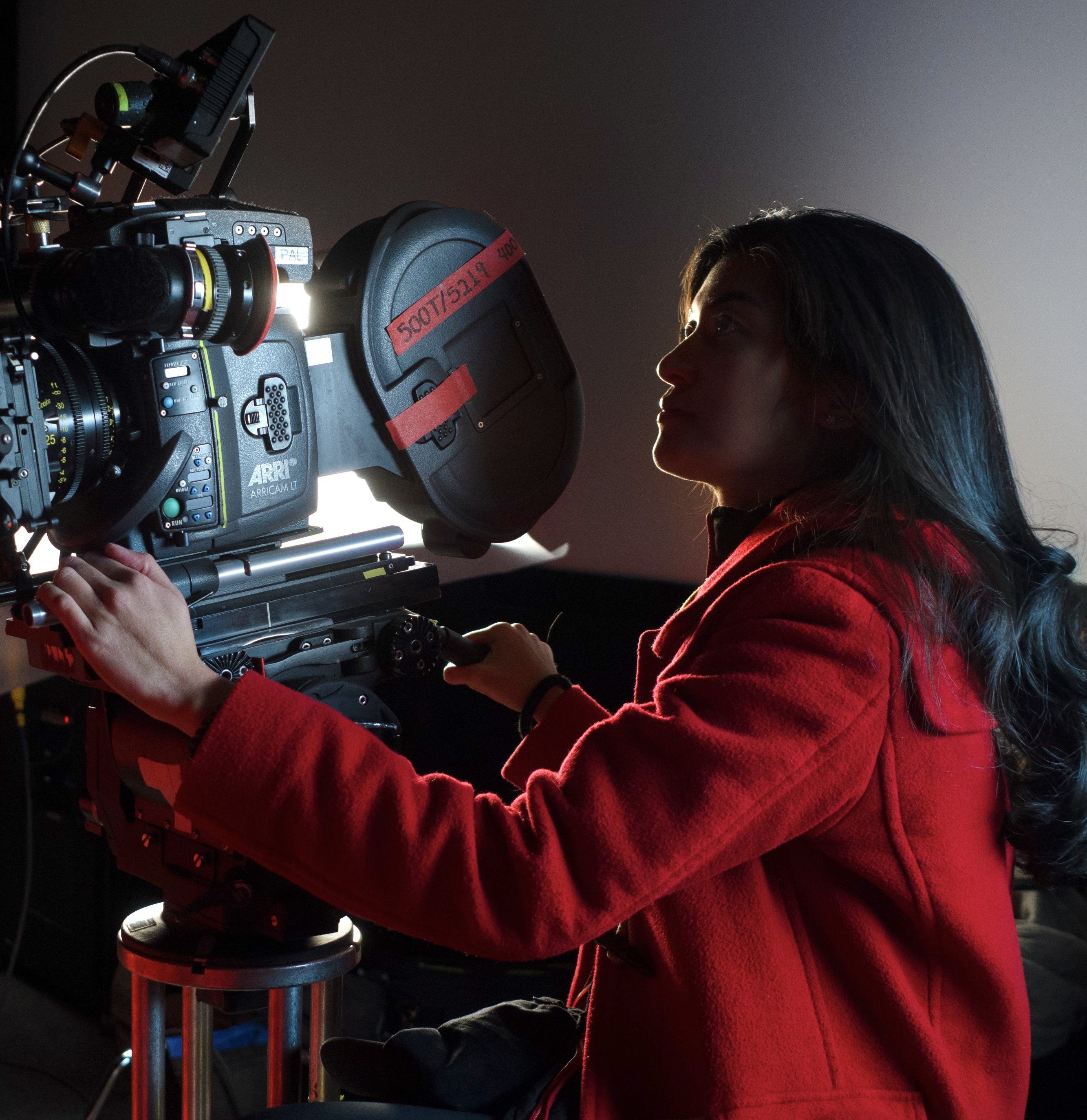
A Filipina cinematographer with credits across film and television, Gen has built a body of work that moves between narrative storytelling and physically demanding environments. She is the cinematographer of Incognito, a popular Netflix series in the Philippines, alongside other film and series projects reflected in her growing portfolio. She films underwater. She performs underwater diving stunts. She rides horses and summits mountains. She takes photographs professionally. She is also a canine trainer and canine life coach. It is not a typical combination of disciplines. To me, it’s simply amazing.
Over a couple of good cocktails and some snacks, I spoke to Gen about her work, what she builds outside of it, and what she does in between.
Q & A with gen reyes
Origins & the Pivot into Photography
You’ve worked across multiple film and television projects. What continues to draw you to cinematography?
Gen: I love the part of my job where I get to be involved in building worlds. I’m always exploring what lighting and framing can do. I take inspiration from the things I see in everyday life, whether it’s as simple as how light enters a window, hits the water, or shadows created by moving objects. I get excited when I’m able to replicate those moments on set for the right story.

Another thing is how the technical and creative sides come together. You can have a creative idea in your head, but there’s also this whole technical process of figuring out how to achieve it. I really enjoy that balance between having a creative vision and problem solving to bring it to life.
“I take inspiration from the things I see in everyday life, whether it’s as simple as how light enters a window, hits the water, or shadows created by moving objects.”

Your work includes projects like Incognito and other film and series credits. What were the challenges you faced shooting Incognito versus the others?
Gen: Incognito is a long form TV series on Netflix, so it was definitely a demanding project, but also a really rewarding one. Before filming, we were encouraged to join stunt and tactical training to influence the way we approached movement and cinematography. It was quite physical, and we had to be very adaptable throughout the production.
We also filmed across different locations in Asia and Europe, so we were constantly adjusting to new environments and working with limited resources while still trying to create a cohesive visual world for the series. At the same time, I was trying to bring a different visual approach to Philippine television while establishing myself as a woman in what is still a very male dominated field.
It was intense and deeply immersive, but I had a lot of fun working on it.


“I was trying to bring a different visual approach to Philippine television while establishing myself as a woman in what is still a very male dominated field.”
With other things I’ve worked on, the biggest challenges weren’t necessarily the locations or physical demands. I’ve had the chance to film in some extreme environments, from the snowy mountains surrounding Mount Everest to the icy waters of the North Pacific. I found the physical training involved in preparing for those conditions just as rewarding as the experiences themselves. What I’ve found more challenging has been working in some environments, whether on a big budget production or a smaller project, where unrealistic expectations, degrading treatment of crew, or dehumanizing conditions become normalized. I feel incredibly lucky to have a strong support system around me. Kindness costs nothing, but it can make all the difference.


Have you always thought you’ll be in film and photography? From what I’ve seen on your Instagram page, you also take beautiful photographs. Who are your film/art/design influences?
Gen: Thank you! I don’t think I always knew I’d end up in film. I simply take photos to remember important moments. I actually imagined myself working in the medical field. But photography has always been present in my life. My grandfather and my father both enjoyed film photography as a hobby, and my family has always loved watching films together. My dad used to manage a movie theater called Malolos Cinema for 30 years, so growing up, I spent a lot of time there and sometimes stayed up watching movies til 3 am. Those were some of my earliest influences, and they gradually drew me towards filmmaking.
I’ve always loved taking photographs because it helps me remember, be intentional and be present in the moment. I’ve also really enjoyed shooting on film over the past few years, and this year I’ve been exploring underwater film photography as another creative outlet.
There are so many film and art influences for me. Ami Vitale, Sebastião Salgado, and Zoe Lower. I’m particularly inspired by artists whose photographs tell powerful stories and explore the connection between people and the natural world.
“I don’t think I always knew I’d end up in film. I simply take photos to remember important moments. I actually imagined myself working in the medical field. But photography has always been present in my life.”

Philippines, shot on 35mm film. Photo: @thegenreyes (link)


“I’m particularly inspired by artists whose photographs tell powerful stories and explore the connection between people and the natural world.”
I’m so impressed you did stunts and underwater filming. Have you also planned doing these or did they all just came naturally?
Gen: I didn’t plan to get into stunt work. It was one of those moments where they needed someone, and I asked if I could try. I started doing stunt work in 2014 when I didn’t have any background in film. At the time, I was trying to get onto as many film sets as possible, taking on different roles wherever I could because I wanted to learn by observing cinematographers.
During this time, I was a member of the University of the Philippines varsity team, spending my weekdays training after class and most weekends learning to work with mountain horses. My film journey began when productions needed a female athlete for physically demanding stunts. That’s how I started doubling for female actresses.
My underwater work came about in a similar way. I learned to swim and freedive in 2010 while studying at university and getting involved in marine conservation activities. This eventually led to three years as an aquatic performer at the MGM Grand Hotel Underwater Department, followed by underwater stunt work on Dyesebel, a popular Filipino TV series about a mermaid. Through the series, I had the opportunity to observe and work closely with the underwater cinematographers. At one point, the VFX team needed footage of fish and coral, so I asked if I could film it for them. That experience inspired me to pursue underwater cinematography.


Looking back, everything happened quite naturally. The opportunities that came my way resonated with me while still allowing me to stay true to what I really wanted to pursue, cinematography.
With stunt work, if I had to choose a favorite, I’d probably have two. The first would be doing the underwater stunts for Anne Curtis, who played the lead in the TV series Dyesebel, in Palawan. The second would be working with a very good stunt horse, Phantom, a black stallion, for the film Lakambini. I was as Lovi Poe’s stunt double, portraying Gregoria de Jesus, a revolutionary heroine in Philippine history.


Your IMDb profile reflects work across different roles and departments. Has that influenced how you collaborate? How does doing stunts affect your perspective behind the camera?
Gen: Safety is always a priority for me, especially after experiencing multiple accidents myself over the years. When I started in the film industry, there wasn’t dedicated insurance for stunt or camera departments, so productions relied heavily on the skills and experience of the people they hired to minimise risk. I then had to learn to assess each job carefully, communicate potential risks to the production, and make sure everyone understands their responsibilities when it comes to safety.
There’s a lot to consider, including the skills and physical limits of the people and animals I work with, along with the environmental conditions and production needs. From there, I find practical ways to achieve the visual idea while minimising unnecessary risks and retakes, so the people and animals I work with feel safe and supported, whether we’re shooting on land or underwater.
My experience with stunts and animal work has helped me better understand what others need to perform at their best and feel safe on set.


“There’s a lot to consider, including the skills and physical limits of the people and animals I work with, along with the environmental conditions and production needs.”
Do you have a favorite project in mind (or a project you really had so much fun doing)?
Gen: I’ll mention some of my favorites, they’re not in order though.
I loved working on the science and natural history documentary film Marismeño. It’s about the lives and traditions of Spanish horsemen and their Andalusian horses in southern Spain. I got to spend so much time with the locals, learn about their way of life, film them, go trail riding, and observe wild horses with the crew on horseback. The cultural immersion was a big part of what made the experience so special. I would do it all over again.


Second would be filming a narrative sequence for the science and natural history documentary film The Halcyon Days. I had the opportunity to work at an underwater studio in London, filming a scene inspired by Greek mythology, specifically the story of Alcyone and Ceyx, which tells the mythical origins of the kingfishers. I really enjoyed the process of planning this sequence with the team.

Third would be training horses and stunt work for GMA Network’s Encantadia Chronicles: Sang’gre. After filming the TV series Incognito, a director asked if I could work with horses for the series and help the actors and stunt women with riding. We got to be queens and warriors on horseback, which was so surreal and a lot of fun.

Fourth is the narrative comedy Bad Indian: The Villain Origin Story for Prime Video. It was a highly collaborative experience and loads of fun. We shot around 90% of the film in a studio during winter, which required us to be more technical and strategic with lighting while creating different environments within the same space. I really enjoyed working through those challenges with the director and shaping the visual world of the film with my camera and lighting team.

Photo: @thegenreyes (link)
A lucky click into one of your photographs on IG (the one with your Golden Retriever Luke) took me to a Canine Life Coach account which surprisingly is also yours! You’re also a Canine Life Coach. I’ve never met one so I’m very new to this. Can you tell us more– how did that begin? Do you do this full-time?
Gen: I love my retrievers Storm, Luke and Skye. I’ve always had a thing for observing animals, and when I adopted my first retriever, Storm, I started learning more about canine psychology and how dogs communicate so we could better understand each other and develop our own way of communicating.
Eventually, National Geographic Asia took notice when they were looking for someone to represent the Philippines and apprentice with Cesar Millan, the Dog Whisperer, on his TV show. It was to help educate people and improve relationships between people and their canine companions across Asia. From there, my work expanded beyond dogs to birds, cats, and horses, and I continued developing my skills in behavior modification and rehabilitation.
While gradually taking on fewer stunt jobs, I trained animals for film and TV commercials, apprenticed under a commercial director, and assisted cinematographers on set, getting hands on experience in cinematography.
“I’ve always had a thing for observing animals, and when I adopted my first retriever, Storm, I started learning more about canine psychology.”

You studied cinematography in the UK (you’re an NTFS alumna) after studying geology, art and photojournalism from the University of the Philippines. For me living in another country is a life-changing moment. It widens one’s perspective in so many ways, personally and professionally. How has it influenced you and your work?
Gen: Living in another country was definitely life changing. I lived alone for years and loved living independently. It taught me to take more responsibility for myself and my decisions. Being outside of what I grew up with also led me to appreciate and reassess a lot of things about myself and the society I grew up in. Despite the ups and downs, I enjoyed every part of the experience. I eventually moved to North London and shared a home with talented dancers. I was also in a multicultural environment, which helped me learn to adapt and understand different ways of thinking and living.

Artistically, being exposed to different approaches gave me more to experiment with, and it helped me understand what actually reflects my own style. That has happened gradually, through a lot of trial and error. The more I’m exposed to, the more I have to draw from, and over time, that has helped me have a better idea of what feels authentic to me as an artist.
I’m also really grateful for the talented cinematographers from my year, teachers, mentors, and members of the British Society of Cinematographers in London who I was able to learn from and work alongside. Their encouragement meant a lot, especially after the challenges I faced over the years. There is still so so much I’d love to develop in my craft, and so much more I want to learn and do, but it means the world when great, kind and talented people recognise your work and encourage you to keep developing it.

“Artistically, being exposed to different approaches gave me more to experiment with, and it helped me understand what actually reflects my own style.”
Okay let’s talk a bit now about you outside work. You summit mountains, do diving, horseback riding, and love pets. What draws you to those environments? How long have you been doing them?
Gen: I find it peaceful. Most of the things I do come from my connection to nature, whether that’s the water, mountains, or animals. My family often visited the mountains, and I’ve been horseback riding there since I was three. I’ve loved being around animals for as long as I can remember. I only got into mountaineering and freediving when I was at university.
I’ve always found animals really interesting because they’re so perceptive. They respond to how you carry yourself and reflect the energy you bring into an interaction, regardless of their own personality. I think there’s a lot we can learn and discover from that.

I love and enjoy living in the city, but I’m happiest outdoors. There’s something about natural light and being away from the constant stimulation of everyday life that helps me reset. Being in nature is good for both our mental and physical wellbeing, and I find it gives me space to slow down and really observe what’s around me.

I love observing whales and documenting moments that I want to remember, and a lot of those experiences naturally become inspiration for my work. Being in those environments is also humbling, reminding me of our place within something much bigger than ourselves.
I just came back from Japan, where I got to freedive with whales and spend time with a mother and her calf. We had so many special moments together.
Filmmaking is about the world and the stories within it. How can we tell those stories if we don’t experience the world ourselves? I like getting out there, seeing, learning, and doing as much as I can, then bringing all that back into my work.
“I love and enjoy living in the city, but I’m happiest outdoors. There’s something about natural light and being away from the constant stimulation of everyday life that helps me reset.”
Is there anything else that you do to unwind?
Gen: I usually do simple things that help me switch off. After long workdays, I’ll drive, go for long walks with my dog, listen to music, hang out at the park, or spend time with my family and closest friends. I also really like freediving with friends, and I’ve been training my cat, Miti, to do some tricks because she’s so entertaining. You can view our posts on Instagram, the account is @lifewithmiti (link).


I guess I can safely assume you like to travel. There’s no way that an outdoorsy person like you would be cooped indoors. What’s your favorite city to visit and why?
Gen: Tahiti and Moorea, French Polynesia, has pretty much everything I love in one place. It reminds me of the Philippines with its mountains, forests, ocean, and outdoor activities, but everything is much more within reach. The best part is that you can sometimes spot dolphins and humpback whales from the shore.

You can do so much in a single day. We had this unbelievable day where we went from swimming with whales in the morning to walking through a forest in the afternoon, kayaking at sunset, and then stargazing at night because there’s no light pollution. It was such a full day, but that’s what I love about the place.
I also really love the peaceful lifestyle. I stayed at a friend’s seaside home with two lovely Bull Terriers, and I really liked how the community appreciates an active but laid-back lifestyle, cetaceans, and marine conservation.
“Tahiti and Moorea, French Polynesia, has pretty much everything I love in one place.”

I have a few more short (fun) questions for you.
Ocean or mountain? (It’s hard to choose, I’m just making your life hard haha)
Gen: Ocean
Horses or dogs? (Again, I’m just making your life hard)
Gen: Humpback whales, Dogs
London Soho or Poblacion?
Gen: Poblacion
Top 3 adjectives for London and Manila (and another city if you lived elsewhere aside from these 2). Can be quirky!
Gen: Diverse. Contrasting. Multicultural
Behind the camera or in the action? (A lame question I might remove this later fyi)
Gen: Behind the camera
Lastly, if Gen is not a cinematographer, a stuntwoman or a canine life coach, what would she be?
Gen: A student of marine biology and cetology
Filmmaking is about the world and the stories within it. How can we tell those stories if we don’t experience the world ourselves?
– Gen Reyes
IN CLOSING
Spending time knowing and talking to Genevieve Reyes made one thing clear to me: her work is rooted in love for the outdoors, a kindred connection to nature and animals, and most of all, discipline. Whether she is directing a frame, diving underwater, swimming with whales, riding through open terrain, or guiding a dog and its owner toward better understanding, she approaches each role with the same level of focus, commitment, and passion.
Cinematography may anchor her career, yet it does not limit it. Gen is constantly learning, and perfecting her craft. She swiftly moves between worlds with intent, empathy, openness, and beauty.
Links
About the Author