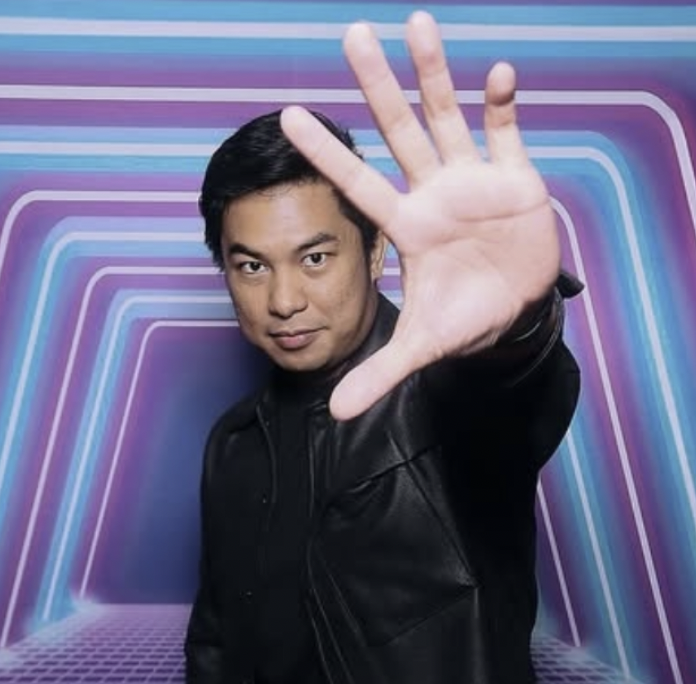
A conversation about pop culture, conventions, and being in the fandom game since the dial-up internet era
An interview by Cheryl Fuerte

Long before anime conventions became the massive, sold out weekends they are today, someone had to do the work of building the circuit from the ground up. Tom Croom is one of the people who actually did it. More than two decades ago, he helped turn a small group of Florida anime fans into Wasabi Anime, an organization whose programming and production work would go on to shape anime and fan conventions across the country.

I first connected with Tom back in 2015 when I was still doing global online marketing partnerships for an Asian fashion e-commerce firm. We worked together on a small sponsorship project that helped feature the Asian fashion brand to attendees of the Florida Anime Experience 2015 in Orlando, Florida. After that, although we were not regularly in touch, we’ve kept each other as connections on LinkedIn. So when I was looking at my LinkedIn list for people to interview for the next dotSpotlight issue, Tom Croom’s name stood out. A founder of an anime fan club that has grown into a company would be great for dotSpotlight.
Tom’s story goes back to 2001, right after Anime Festival Orlando II in Kissimmee, Florida, when he and a small group of fellow fans registered WasabiAnime.com and started what would become Wasabi Anime. What began as a network connecting local anime clubs across Florida eventually grew into full convention programming and production, touching events across Georgia, California, Indiana, and Nevada. As CEO of Green Mustard Entertainment, Tom later expanded that work into fandoms well beyond anime too, from Harry Potter to Invader Zim.

More than two decades later, Wasabi Anime and Green Mustard’s programming and events are still woven into some of the longest running conventions in the American Southeast, and Tom is still in the middle of it, doing the same kind of hands-on, community first work that got the whole thing started.
In this interview, I met online with Tom to ask him everything: about how it started, the years in between, and the plans beyond. Here’s our conversation.
Q & A with TOM CROOM
Wasabi Anime started out as a small anime fan club in Florida and has since grown into a company that designs programming and produces conventions across North America. I read your blog post about Anime Festival Orlando 2001, and how you and Karen Trudeau ended up running the convention together with a couple of radios after the con chair stepped down. Take me back to that moment. What was going through your mind, and when did you realize that experience was going to turn into something bigger than a club?
Tom: In 2000, I was dating a woman I met while working in entertainment at Universal Studios Florida in Orlando. She was a big Sailor Moon fan, so we would go to shops downtown to buy “fansub” videotapes of episodes that weren’t airing in America. At one of those stores, she saw a flyer for the very first Anime Festival Orlando convention. We went together, and she won the costume contest dressed as Sailor Jupiter.
A year later, we attended the second Anime Festival Orlando, and by then I had gotten to know some of the key people running it—primarily Karen Trudeau and Erik Reiss. When I arrived, the convention chair was having a rough time managing everything and had to step away before the show even began. Karen handed me a radio and earpiece, and the two of us helped take control of the event and make sure the convention was a success.
“I think that was the moment we started realizing this was becoming more than “just a club.”

Shortly after that, other conventions in the area started coming to me for assistance, so I created an anime club to support them all: Wasabi Anime. At first, I ran it as a hobby. It was a way to stay involved with friends and gave us an excuse to meet up at conventions. Then, in 2006, we were asked to host content at Anime Weekend Atlanta outside of Florida—and they offered to cover our expenses.
I think that was the moment we started realizing this was becoming more than “just a club.”
Before Wasabi Anime, you spent years working in entertainment for Universal Orlando and Disney, coordinating shows and even performing as a character yourself. Looking back, you probably didn’t expect to run anime and fan conventions full-time after that. What made you decide to leave that world behind and commit to this full time?
Just to clarify: I created Wasabi Anime while I was still working at the theme park.
In the summer of 1999, Universal opened Islands of Adventure, hired a lot of people, and launched a lot of new initiatives. Before long, though, they realized they had overexpanded and hired too many people. My girlfriend at the time, Shannon—the aforementioned Sailor Moon fan—was also working as a coordinator at the parks and was becoming overwhelmed as jobs were eliminated and those responsibilities were pushed onto other staff.
In the summer of 2001, we decided to take a hiatus from Universal and move to a small beach town in South Florida for about six months to decompress. The plan was derailed later that year when September 11th happened and the theme park industry took a major hit.
At that point, we stayed in South Florida, got “real jobs,” and eventually got married. During that time, though, I kept Wasabi Anime going by designing events that would gain national attention. One of our largest projects, the Wasabi Animusical, put us in the spotlight for its ambition: a stage show that mixed anime, video games, cosplay, and Broadway musicals. It was very much a live-action TikTok before TikTok existed.

“One of our largest projects, the Wasabi Animusical, put us in the spotlight for its ambition: a stage show that mixed anime, video games, cosplay, and Broadway musicals. It was very much a live-action TikTok before TikTok existed.”
In 2011, I was headhunted by the Society for the Promotion of Japanese Animation to develop a B2B conference for anime convention runners. Subsequently, I also assisted with their primary event: Anime Expo 2012.
At that point, I was still working a nine-to-five job while managing convention projects on nights and weekends. We ran several successful events, including InvaderCON, Florida Anime Experience, and WasabiCon, along with some less-than-stellar productions like ASSIMILATION, a sci-fi convention, and PinUpalooza, a rockabilly and retro festival. We also had an annual contract to provide anime-related content for Gen Con, the largest tabletop gaming event in North America.


In 2013, I asked my day job for a thirty-day leave of absence to get my “hobby” in order, since it had started taking up so much of my time. Both WasabiCon and Florida Anime Experience were successful, and suddenly I was in a position where the work from all of this could cover my bills.
In 2015, I was sought out by FAN EXPO. The newly formed division of Informa Exhibitions had purchased MEGACON in Orlando, Florida, and they asked me to help design anime content for the event. Soon after, we signed a multi-show deal to manage anime and Asian pop culture content across their events.
At that point, I realized: oh sh**. This is my actual job.
Thinking back to the early days of Wasabi Anime, do any specific memories stand out to you? Any special moments, people, or events from those first years that you still think about?
Tom: I would have to say it was meeting George Takei… twice.

The first time was in high school in the early nineties. Friday nights were D&D nights. We were all playing at my friend John’s house while eating Pizza Hut pizza, drinking Mountain Dew, and watching reruns of the original *Star Trek* series. During the show, we saw a commercial for TrekFest, a convention taking place about an hour away in West Palm Beach.
John and I convinced our friend Eric to drive us—we didn’t have our licenses yet—to Kmart, where we bought supplies to make costumes. The next day, we all piled into Eric’s Trans Am and drove to the convention, where John and I won Best of Show in their costume contest.
The prize? Twenty dollars in cash and a *Dick Tracy* movie poster.
The best part? The prize was handed to us on stage by Mr. Sulu himself: George Takei. That was my first real celebrity interaction.
Fast forward a couple of decades, and I was at an afterparty at Hard Rock Live in Orlando for a convention called FX: The Florida extravaganza. I was there with my wife and best friend, who both insisted that I tell George the story of my first convention experience.
We approached him, I introduced myself, and I jumped immediately into the story. Mid-sentence, a man walked into the conversation and cut me off to ask George to follow him for an interview with a podcast.
George wasn’t having it.
He looked directly at the man and said, “Excuse me. EXCUSE ME. Tom, here, was in the middle of telling me a story about ME. Now go away so he can finish.”
Mr. Takei was a class act, and it was very much a full-circle moment from fan to “fan who does this for a living.”

“The best part? The prize was handed to us on stage by Mr. Sulu himself: George Takei. That was my first real celebrity interaction.”
Your programming and events have touched conventions across states like Georgia, home to shows like Anime Weekend Atlanta and MomoCon, as well as California, Indiana, Nevada, and even to Toronto in Canada. Fan communities in these different states would probably have different expectations for such events. Was it a challenge to build something different depending on where you are and who you’re building it for? What’s the biggest challenge you could remember so far?
Tom: Some elements of fandom are universal, but the niches within those fandoms are often regional. One of the largest challenges that continues to keep us on our toes is learning what’s popular on a city-by-city basis. Our largest client, FAN EXPO, has fourteen events in fourteen different cities. Add our WasabiCon event in Jacksonville, and that’s fifteen markets across North America.


It took a few years on the road to learn that not everything popular in one city will resonate the same way in another. Maid Cafés would sell out at one convention, but the exact same presentation with the exact same marketing might barely sell in another. Some cities have an abundance of Itasha vehicles—cars with geek-themed wraps—with dozens applying to display at the convention, while other markets receive zero applications.
One of the main trends we identified early on was that the size and strength of a city’s anime convention scene directly impacted how popular Asian pop culture programming was at a FAN EXPO event. There were a couple of cities with no dedicated anime conventions, and attendees showed far less interest in that fandom when they arrived at the show.
It may seem counterintuitive that a city would need an anime convention for Asian pop culture to thrive at a broader pop culture event, since that could easily be perceived as competition. But we learned that wasn’t the case. Instead, it became a clear example of the old saying: a rising tide lifts all boats.
“It took a few years on the road to learn that not everything popular in one city will resonate the same way in another.”

Green Mustard Entertainment eventually moved beyond anime into things like MuggleCon, InvaderCON, PinUpalooza, and more. Diversification is good, but I think what made the move work is your knowledge and passion for it. How different was it for you, though, from the usual anime conventions you organize?

Tom: Yes, we did try to diversify, but in the end, we migrated back to what we were best at: Asian pop culture.
That had to be learned through experience. We launched a science fiction convention called ASSIMILATION right as broader pop culture conventions were gaining momentum, and it failed pretty spectacularly. After that, we dipped our toes into the Harry Potter fandom with MuggleCon, only for Twilight to become the dominant focus for book fandom almost overnight.
Do we still consider other projects? Sure. For now, though, our dance card is full for at least fifteen weekends a year, so there’s not much bandwidth to spare.

Convention culture in 2001 looked pretty different from convention culture today. What’s the biggest shift you’ve had to adjust to, and is there anything about the early days you actually miss?
Tom: The cost of celebrity appearances—and the way fan interactions happen—is one of the biggest shifts in the convention industry, and it’s something a lot of people miss.
When I went to Star Trek conventions in the nineties and anime conventions in the aughts, meeting a celebrity was usually included with your event admission. You showed up, brought something for them to sign, and—if it made sense—they signed it.

“To be clear, the pay-to-sign model is the reason we have so many big-name celebrities appearing at conventions now, and it’s a permanent part of the industry. But teenage me still misses the days when we paid for a convention ticket, parking, and an overpriced hot dog at the convention center—and that was it.”
Of course, there were always “those fans” who thought they were hilarious for bringing something awkward for a celebrity to autograph. I remember one sci-fi actress who had appeared in Playboy, and fans would bring that issue for her to sign at family-friendly events because they thought they were being “clever.”
Spoiler alert: they weren’t.
Around the early twenty-tens, celebrities started shifting into the pay-to-sign model. That opened the door to a much larger revenue stream for actors through autograph sales. It became especially attractive to voice actors, many of whom weren’t exactly making a fortune in the entertainment industry.
Flash forward to today, and the celebrity meet-and-greet model is far more complicated—and almost completely monetized. Want a signature on a photo? That’s one price. A signature on a Funko Pop? That will cost more. Want a quote with the signature? That’s another fee.
To be clear, the pay-to-sign model is the reason we have so many big-name celebrities appearing at conventions now, and it’s a permanent part of the industry. But teenage me still misses the days when we paid for a convention ticket, parking, and an overpriced hot dog at the convention center—and that was it.
Social media barely existed back in 2001, and technology has changed so much since then. How has that shift changed the way you run conventions and reach fans, and are there any tools, platforms, or even AI that you find yourself relying on these days?
In 2001, we had MySpace, LiveJournal, and PHP-based online forums. Remember those?
So, is it easier to reach fans now? Yes and no.
Yes, because technology allegedly makes it easier to identify demographics with less guesswork. Facebook and Instagram will gladly charge you to put your ad in front of the exact age range of people who like a particular anime your celebrity voice actor guest appeared in. It’s all data-driven.
The problem is that there’s so much of it now that it all becomes noise.
Let’s face it: our brains have gotten better with training. We can spot—and often skip—ads in our social media feeds almost instantly. Companies are constantly trying to find new ways to stand out, and conventions are no different.
But no, because many of the marketing tools that used to work either stopped working or disappeared altogether. A lot of those tools helped you find and connect with new fans organically, not just the ones identified by an algorithm.

A great example? School newspapers.
I managed marketing for an anime convention in Orlando called JACON, and we put a lot of money into high school and college newspapers. Back then, it was the perfect way to reach fans who were actively looking to connect with other fans.
Now, of course, the phrase “print is dead” gets tossed around a lot. But print is also retro, and retro is cool again.
So who knows?
“We put a lot of money into high school and college newspapers. Back then, it was the perfect way to reach fans who were actively looking to connect with other fans.”
Is there a specific event, panel, or project you’re especially proud of, maybe one that didn’t get a lot of outside attention but really mattered to you or to the fans who showed up?
Tom: This is really niche, but I helped shape what became the modern model for in-person Vtuber appearances at conventions.

In 2021, I helped broker the deal to bring Hololive EN Vtubers to FAN EXPO conventions for live Q&A sessions. At the time, there wasn’t a clear template for how that kind of appearance should work, so we had to build the format from scratch: audio, two-way cameras, reliable internet, and a giant screen so thousands of fans could interact with the guests in person.
The goal was to create an experience fans couldn’t get at home on their computers. Looking back, many convention appearances with Vtuber guests still follow a version of the format we helped develop five years ago.
You’ve stayed in this industry for more than two decades while so many other conventions and companies have come and gone. What’s kept you in it, and has your own relationship with anime and fandom changed over the years?
Tom: What keeps me here is that this is an industry of constant change, rooted in something I love: pop culture.
The “fun factor” for me is the creative problem-solving that comes with adapting to changing trends. I remember getting off an airplane in Denver last summer after watching KPop Demon Hunters during the flight. I immediately started telling the FAN EXPO team that we needed to reach out to the voice cast from this Netflix movie, and a few people rolled their eyes at me.

Less than two weeks later, you couldn’t walk ten feet without hearing “Golden,” and we had offers out to every cast member we could reach.
KPop Demon Hunters was released on Netflix on June 20, and we had the voice of Rumi, Arden Cho, at FAN EXPO Boston on August 8.
That’s the fun part.
I helped make that happen, and I got to be there as hundreds of young fans met someone from their new favorite movie while they were still in a frenzy over it.
“I remember getting off an airplane in Denver last summer after watching KPop Demon Hunters during the flight. I immediately started telling the FAN EXPO team that we needed to reach out to the voice cast from this Netflix movie, and a few people rolled their eyes at me.
Less than two weeks later, you couldn’t walk ten feet without hearing “Golden,” and we had offers out to every cast member we could reach.”
Outside your work, anime, and watching movies, what are your other interests? How do you unwind from a busy anime weekend convention?
Tom: For lack of a better term, I “touch grass.”
I live in a small beach town in Florida. On Saturdays when I’m not at a convention, my ideal day involves putting the top down on my convertible, taking a drive with my wife and our Shih Tzu, and stopping by the local farmers market.
My life is a nonstop bombardment of movies, video games, shows, fandoms, and pop culture—and I love it. But I’ve learned that the best way to keep enjoying those things at work is to not make them the focus of my days off.


Tom and his wife in Banff, Hawaii, and Mt. Hood in Oregon.
Your blog shows you’re a serious movie buff. You keep a running Best Picture project, you’re active on Letterboxd, and you once won a contest that required you to watch 24 hours of horror movies straight through on Halloween night. One project of yours that stood out to me is Fiction Calendar, where you catalog movies and shows that name-drop a specific future date on screen, things like Blade Runner, Back to the Future Part II, and Akira. For readers who might not immediately get why that detail matters, can you explain the significance of these name-dropped dates, and what got you hooked on tracking them?

FictionCalendar.com started as a conversation with my Gen X and older Millennial friends years ago, when we realized we were beginning to pass the “future” dates from old science fiction movies and TV shows. I think the one that really triggered it was over twenty years ago, when we realized Transformers: The Movie took place in the year 2005.
After that, it became a regular conversation whenever we stumbled across another piece of older media referencing a year that had already come and gone. In 2024, I decided to create a page on my blog to track those examples as we found them, then purchased FictionCalendar.com to forward to the site.
Who knows? Maybe one day I’ll use it as the basis for a convention panel.
I’m curious—as you’re an avid, true blue movie fan, how many hundreds, or thousands, of movies have you watched overall? Do you even keep track?
Tom: Yes I keep track of the movies I watched via Letterboxd. When I signed up years ago , I decided I’m going to start logging every movie I saw. I should have over a thousand there now!


If you could go back and give yourself one piece of advice in 2001, right as you were starting Wasabi Anime, what would it be? And if you could give a piece of advice to those just starting to build and organize their own conventions now, what would it be?

Tom: My advice to my younger self would be simple: pay closer attention to the anime that annoys you.
When I first started getting into anime—really getting into anime—I focused on obscure titles because I wanted to be as non-mainstream as possible. To this day, I’m pretty sure I still have a VHS copy of Serial Experiments Lain somewhere in the office.
“My advice to my younger self would be simple: pay closer attention to the anime that annoys you.”
The issue is that, by avoiding the popular titles of the time, I’m now forced to go back and invest time in watching them for work—and I have less nostalgia for them than everyone else does.
As far as advice for starting your own convention?
Simple: DON’T.
Now, if you refuse to follow that advice, you need to ask yourself three things:
- Is there already a convention in your market serving the fandom you’re trying to promote? If so, why aren’t you working to help them grow?
- What is going to make your convention different from the other conventions out there? Are you doing more of the same, or are you doing something new and creative?
- Do you have a financial plan in case everything goes wrong? Murphy’s Law is still a thing, so always have a plan.
What keeps me here is that this is an industry of constant change, rooted in something I love: pop culture.
– Tom Croom
IN CLOSING
Talking to founders like Tom, Dominic, and Stephen who started in the late ’90s or early 2000s always reminds me of that great dotcom boom era. It was exciting even without streaming, and even without 300Mbps bandwidth. We needed to make our websites load fast for many who were still using dial-up modems. We joined chatrooms on IRC, have newsgroups, usenet, BBS, and non-personalized feeds. Eyeballs and meetups were the trend. Builders and founders of today started creating during this era.
In 2001, Tom created the Wasabi Anime network without expecting something big in return. They were simply doing what they enjoyed and what they were good at until people started knocking on their door, asking them to bring that same energy and creativity to other events. That’s what’s great about Tom’s story. Green Mustard Entertainment wasn’t the result of a grand business plan or a carefully crafted startup pitch. It grew because people recognized genuine enthusiasm, competence, and a willingness to help build communities. It grew because of something they all naturally like. The business came later.
Reconnecting with Tom after almost a decade through this interview, also reminded me that some of the most interesting people I’ve met throughout my career are those who quietly kept building…and those who love Star Trek (I am a Star Trek TNG fan)! Some may not understand the fascination we have with the show, but all I know is that watching it and being a fan of it teaches us and gives us so much back in return, more than words could ever explain. Curiosity, an ultra-hyper imagination, fascination with machines, and fascination with building things, perhaps all of these contribute to what makes today’s competitive founders and builders.
Perhaps the biggest takeaway from my conversation with Tom is that communities don’t appear successfully out of nowhere. They are built one event, one volunteer, one conversation, and one shared interest at a time. Tom has spent more than twenty years doing exactly that. Looking back at how Wasabi Anime began, it’s hard not to admire that what started as a hobby among friends has become a lasting part of convention culture for anime fans in Florida and across North America.
About the Author
Cheryl Fuerte is the Founder and Managing Creative Producer of 2nd.digital and the person behind conceptualizing dotSpotlight, a website that features the voices and stories of creators, founders, creatives, and digital builders.